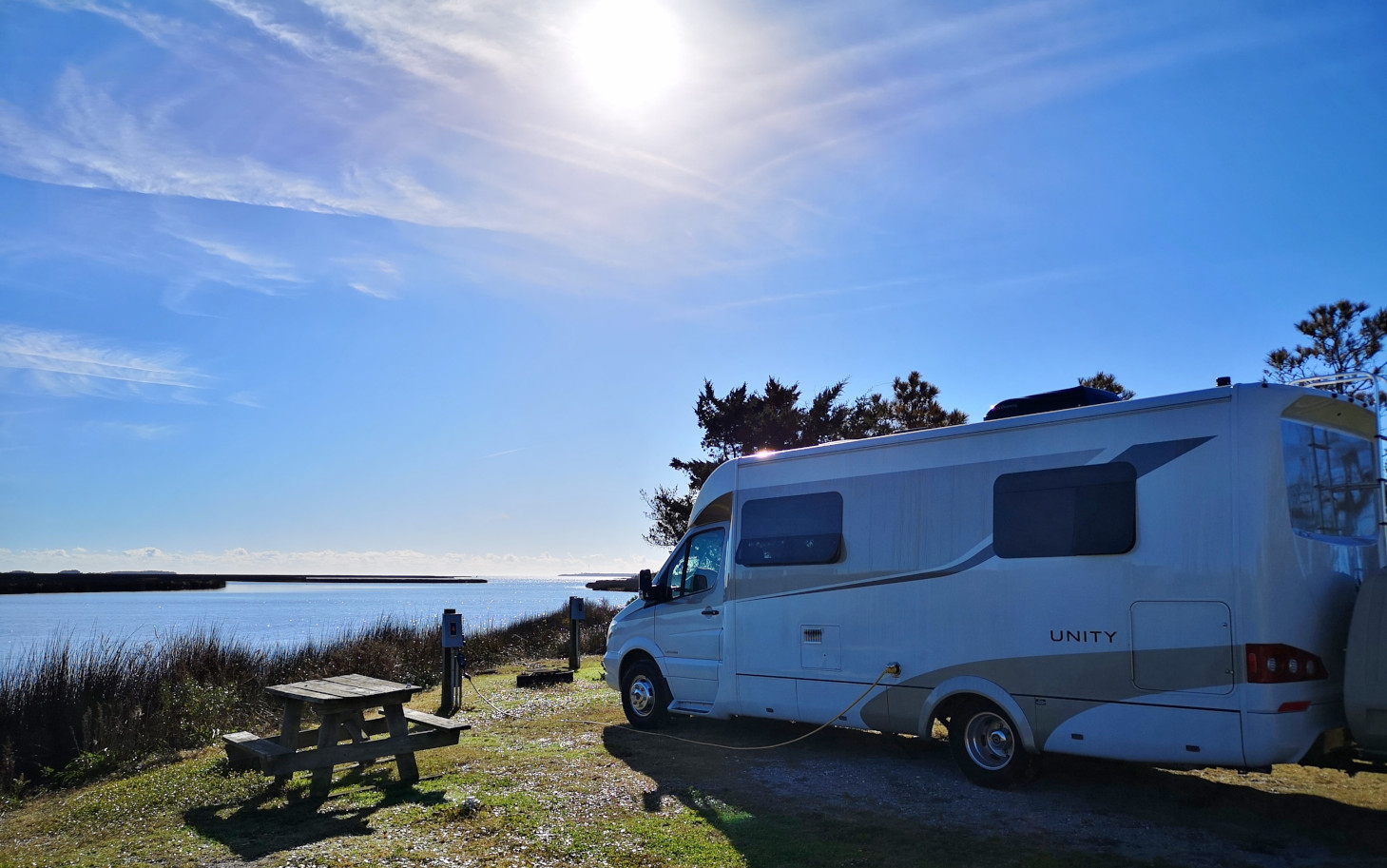
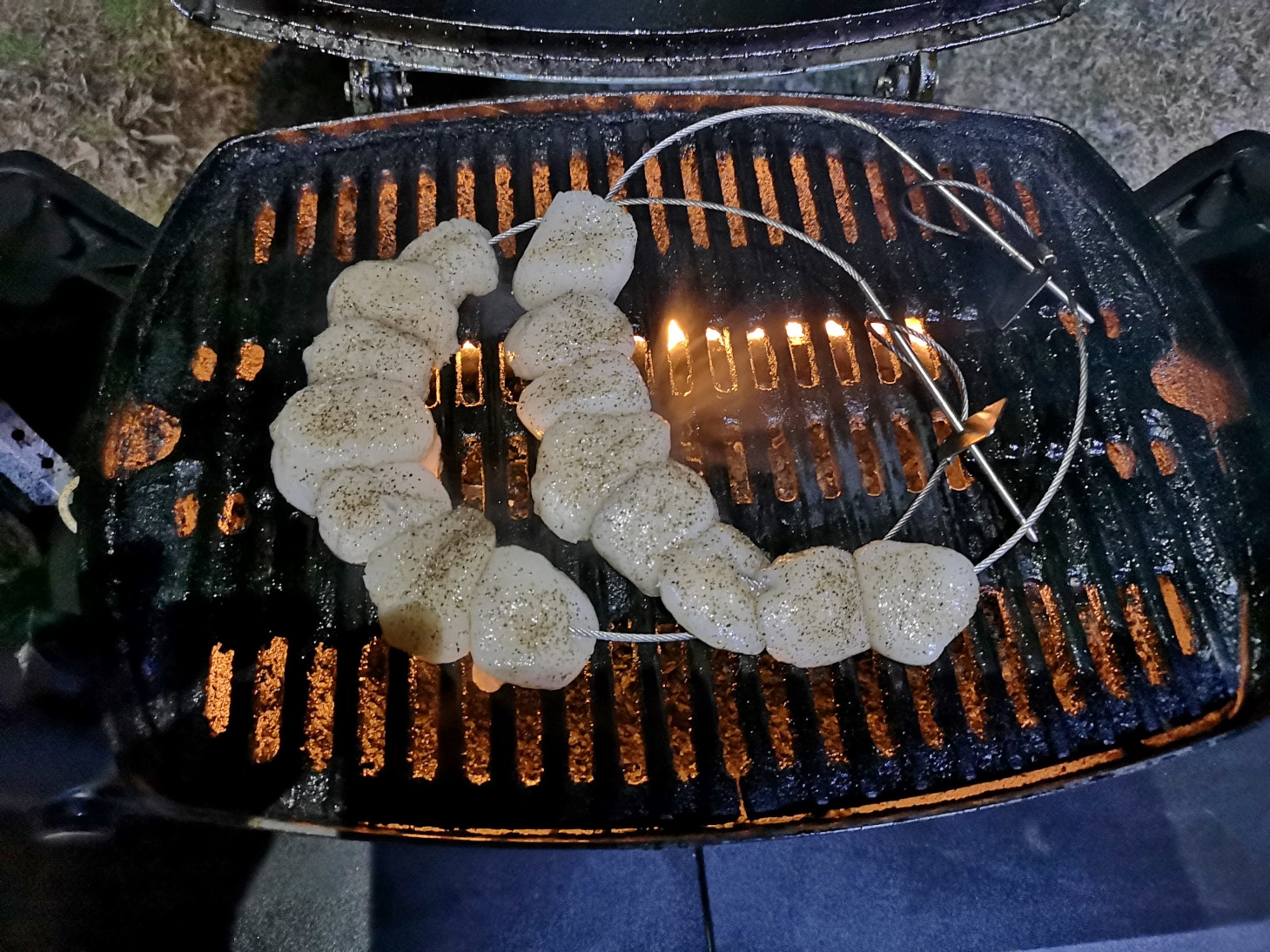
The ferry crossing from Ocracoke to Cedar Island takes about 2 hours and this one cost $30 for our size RV. The State Parks in North Carolina are closed on Christmas day (first state where we’ve encountered this) so we had decided to stay at the Cedar Island RV Ranch over Christmas treating ourselves to a nice spot right on the waterfront. We were the only campers in the section we were in. We bought 1 lb of fresh scallops at a seafood market in Ocracoke so that’s what we had for dinner that first night, very good BBQed.

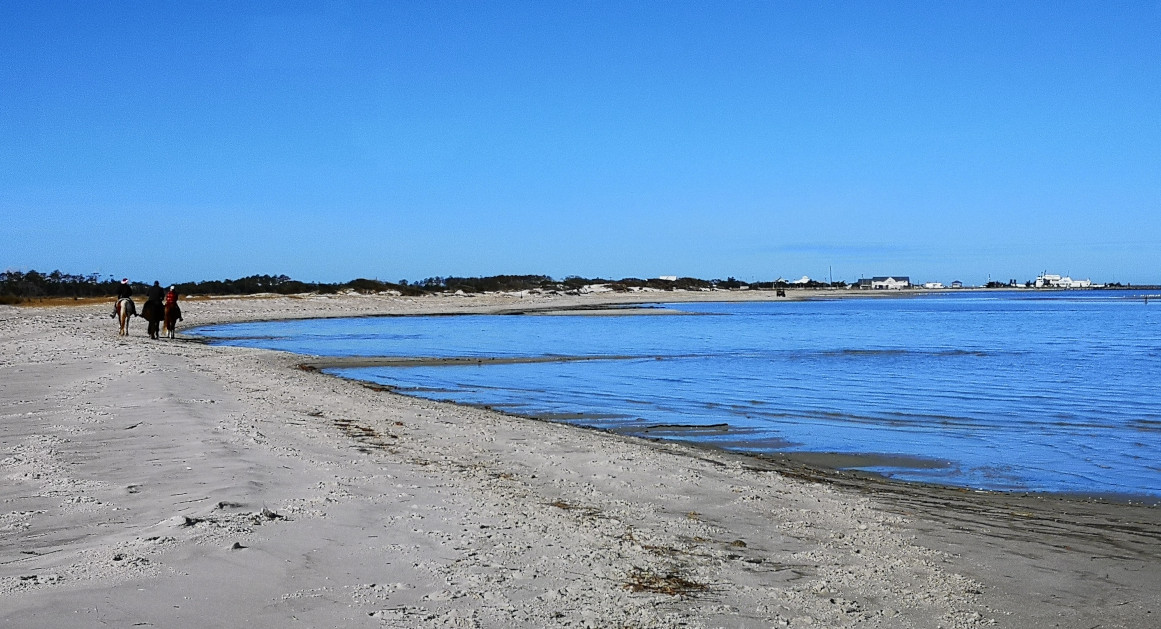
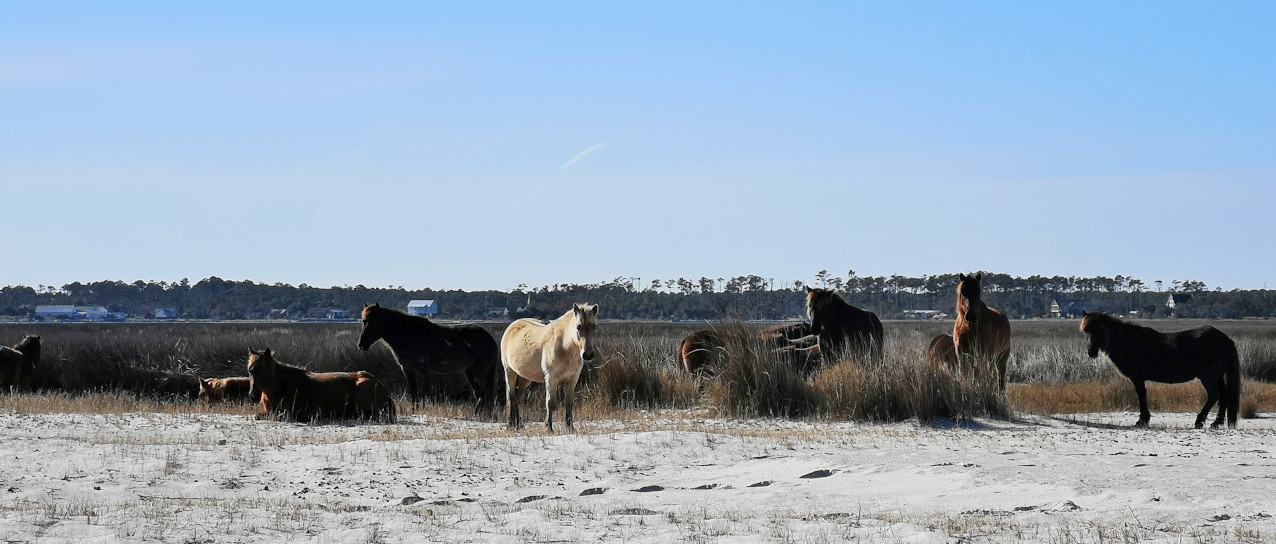
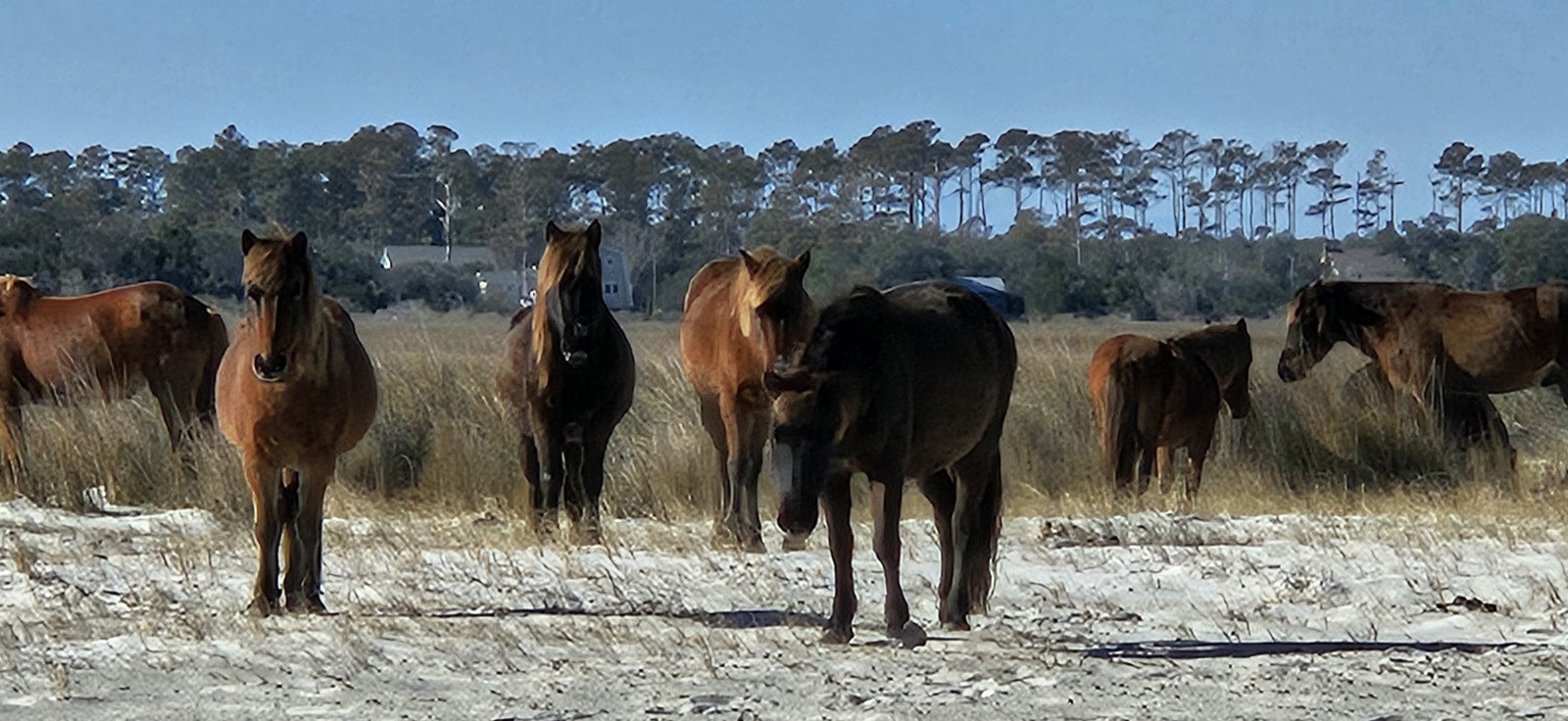
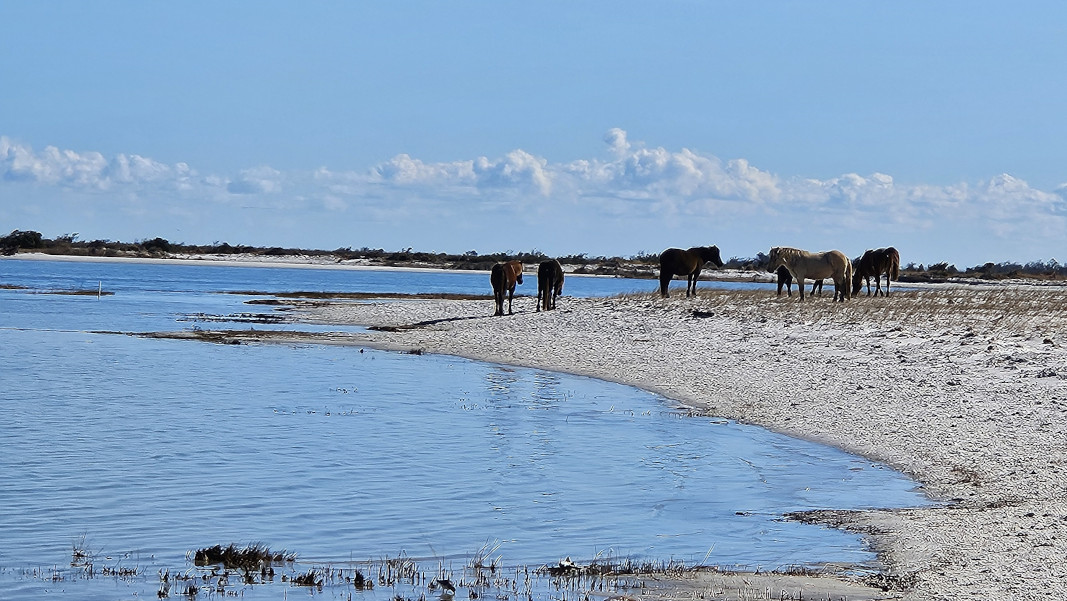
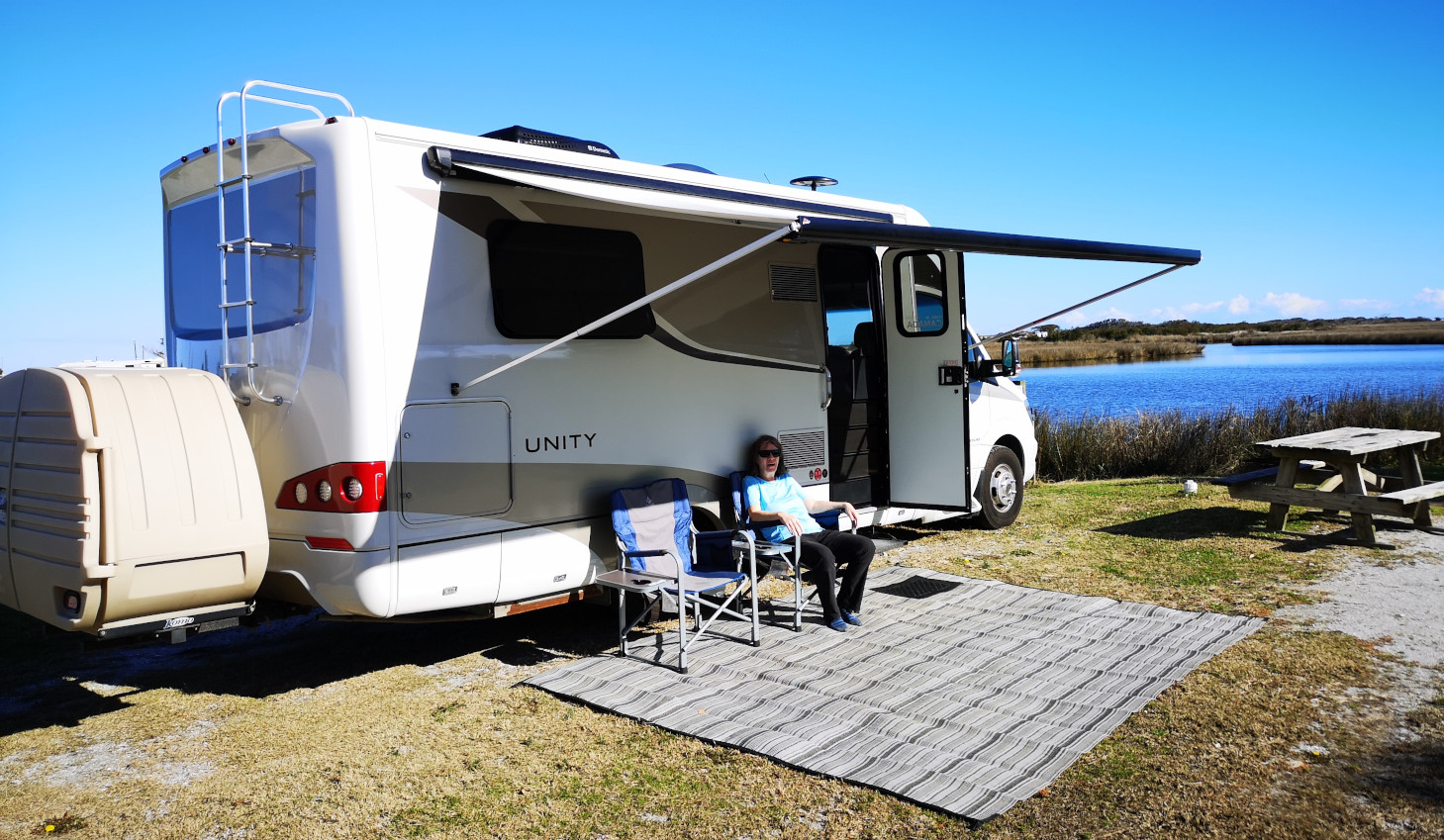
We had our first warm day on December 24th, so we took a walk down the beach. We saw 3 people riding horses down the beach but even more special was that when we got close to the point, we saw a dozen wild horses! They were feeding and staring at us wondering what we were doing😉 Eventually they wandered off down the beach and we figured they likely cross the shallow channel to get over to an uninhabited island. A camper later told us that many of the wild horses were drowned in a hurricane several years ago, but the herd is starting to recover. When we returned, we put our mat and awning out for the first time this trip and enjoyed lunch outside.
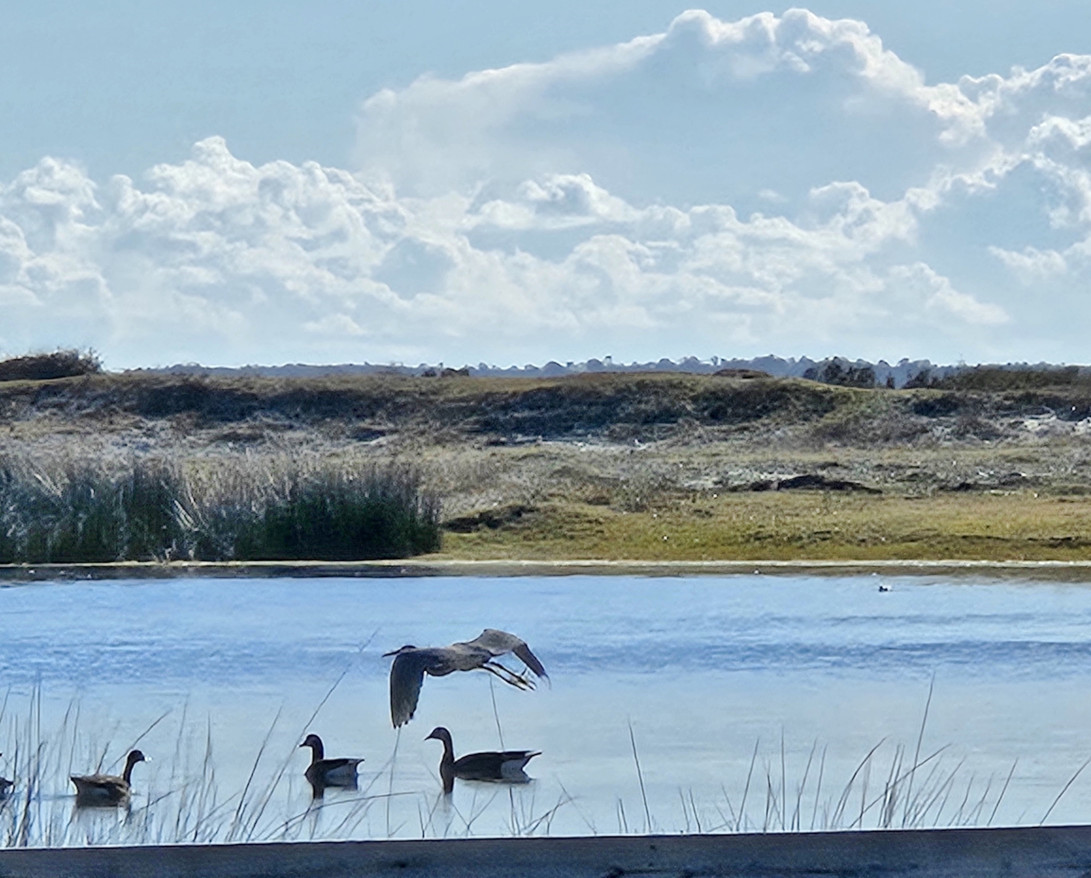
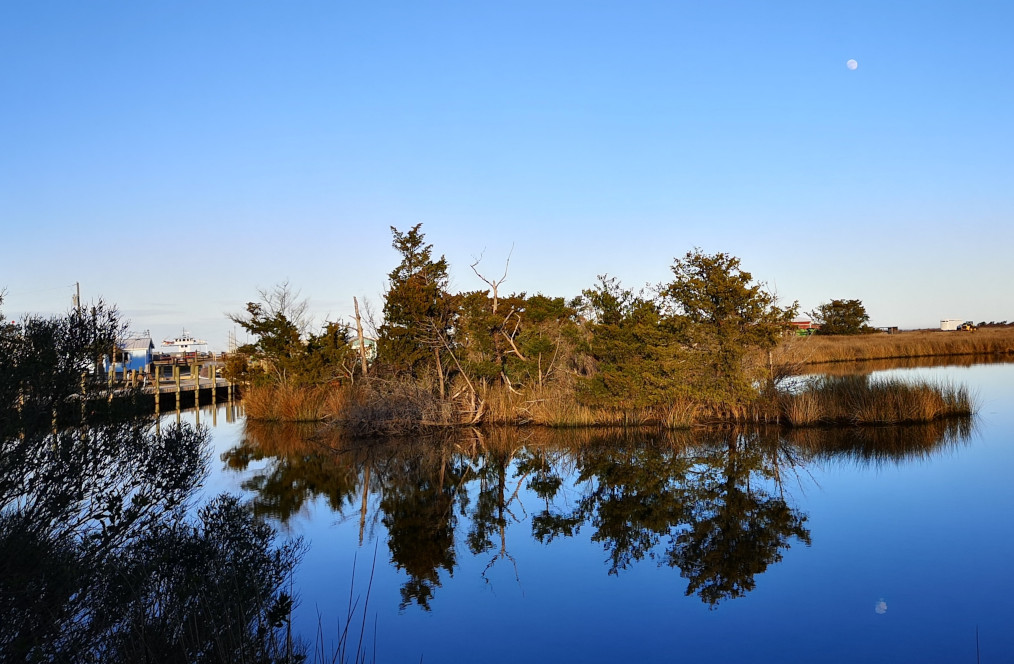
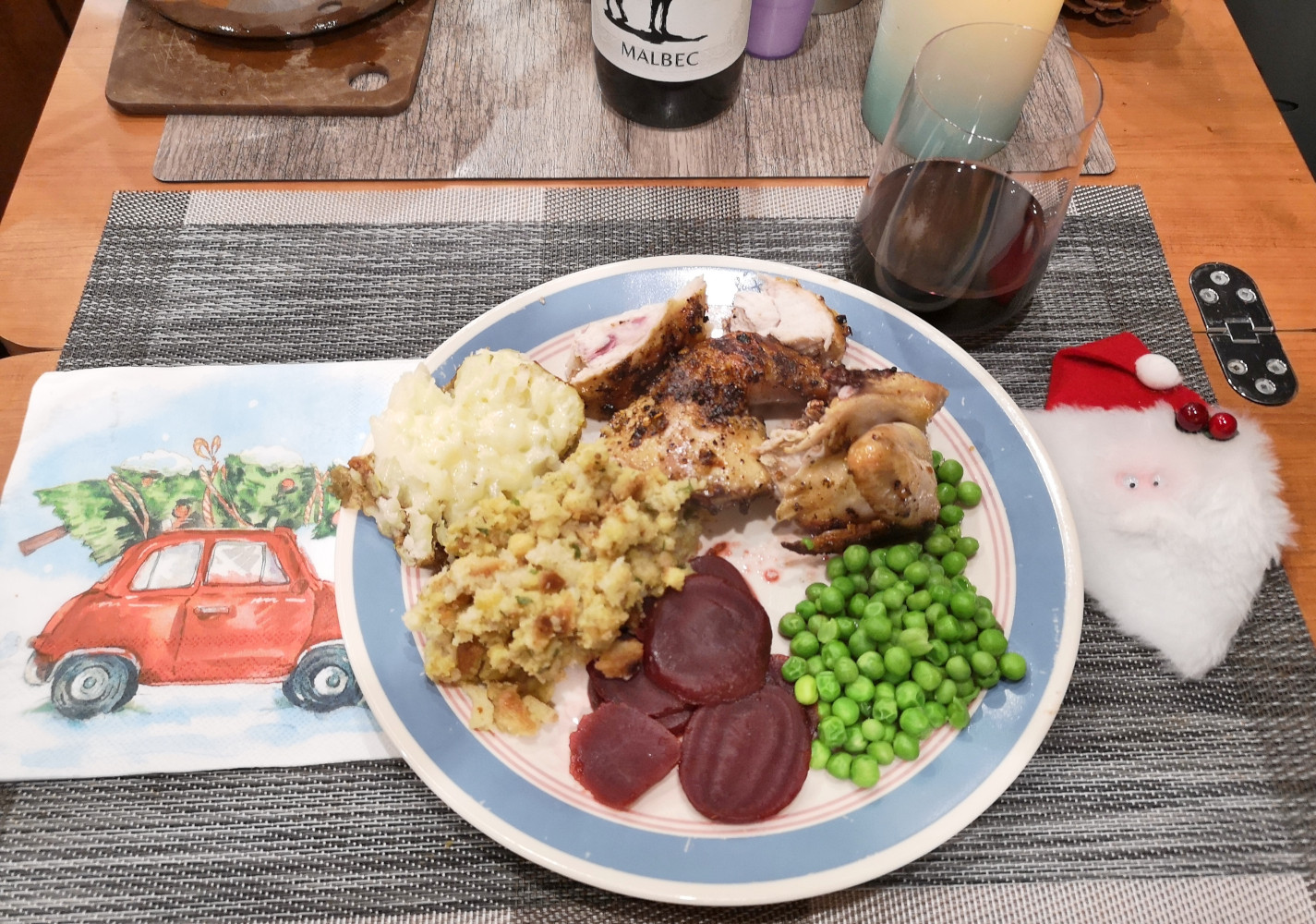
On Christmas day we took a short walk west on the beach, but the rain clouds were looking ominous, so we went back to the RV. We spent the rest of the day working on the blog and having calls with family and friends. Christmas dinner was BBQed Cornish Hens with all the fixings.
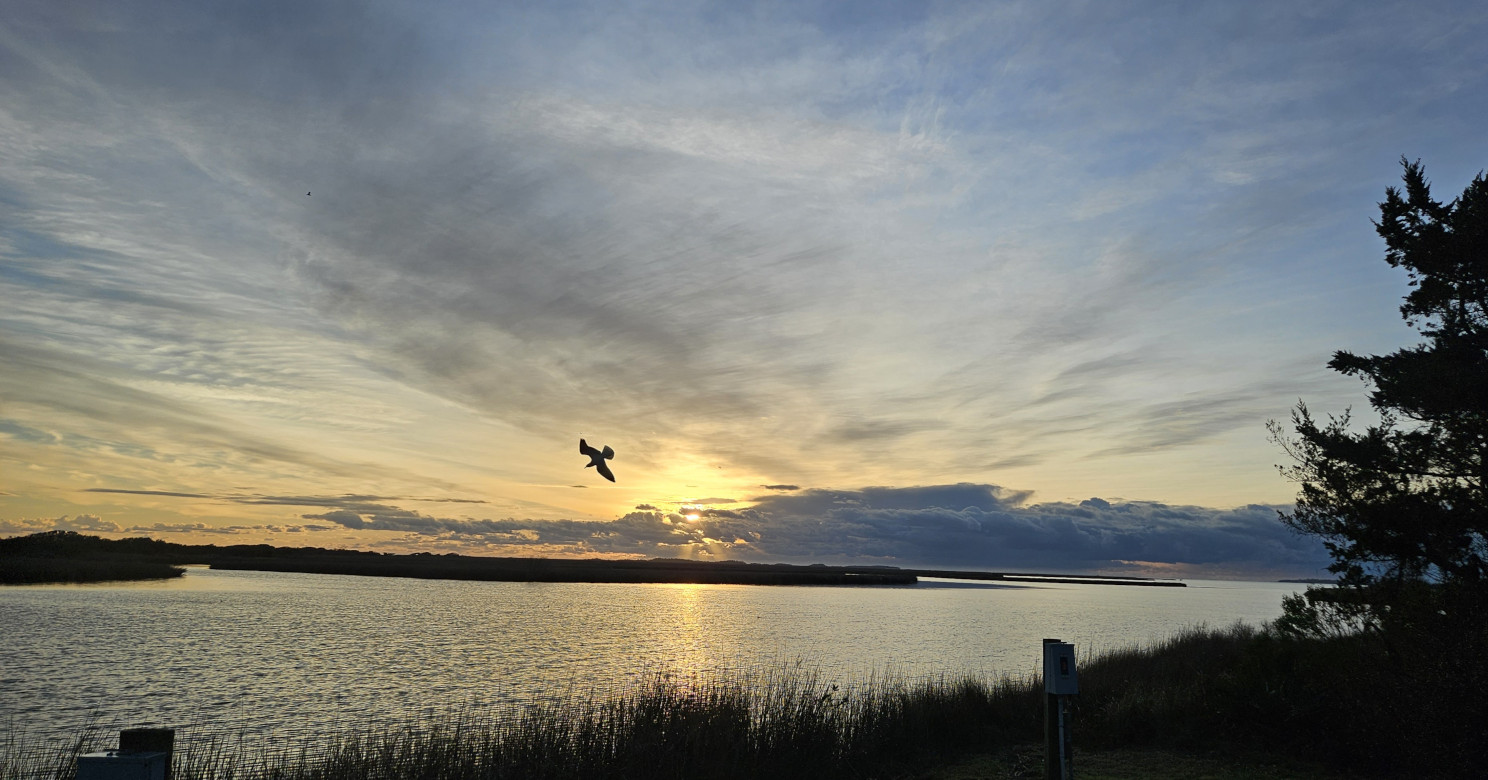
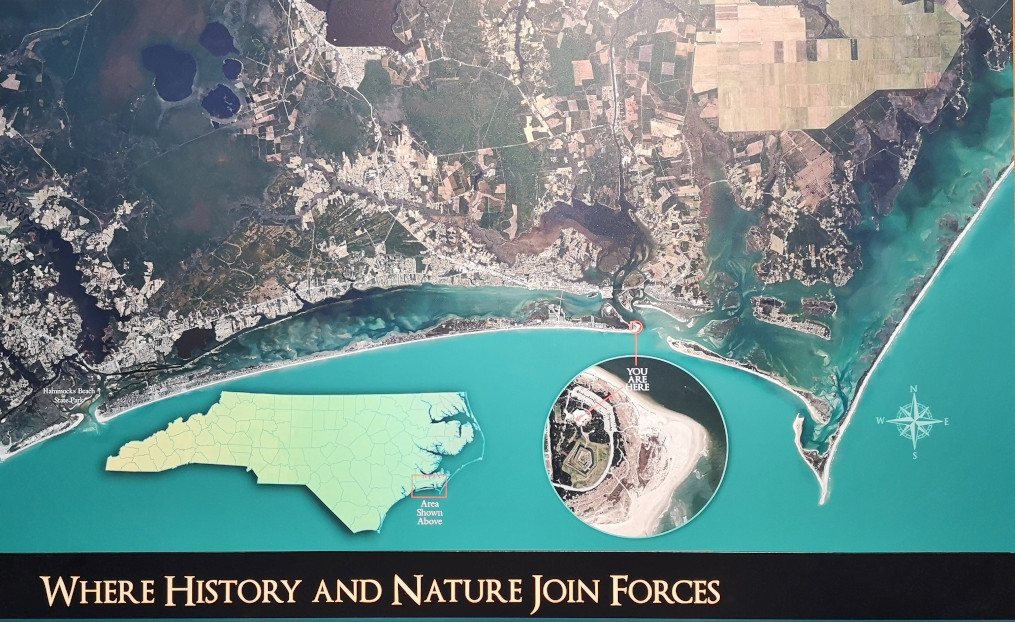
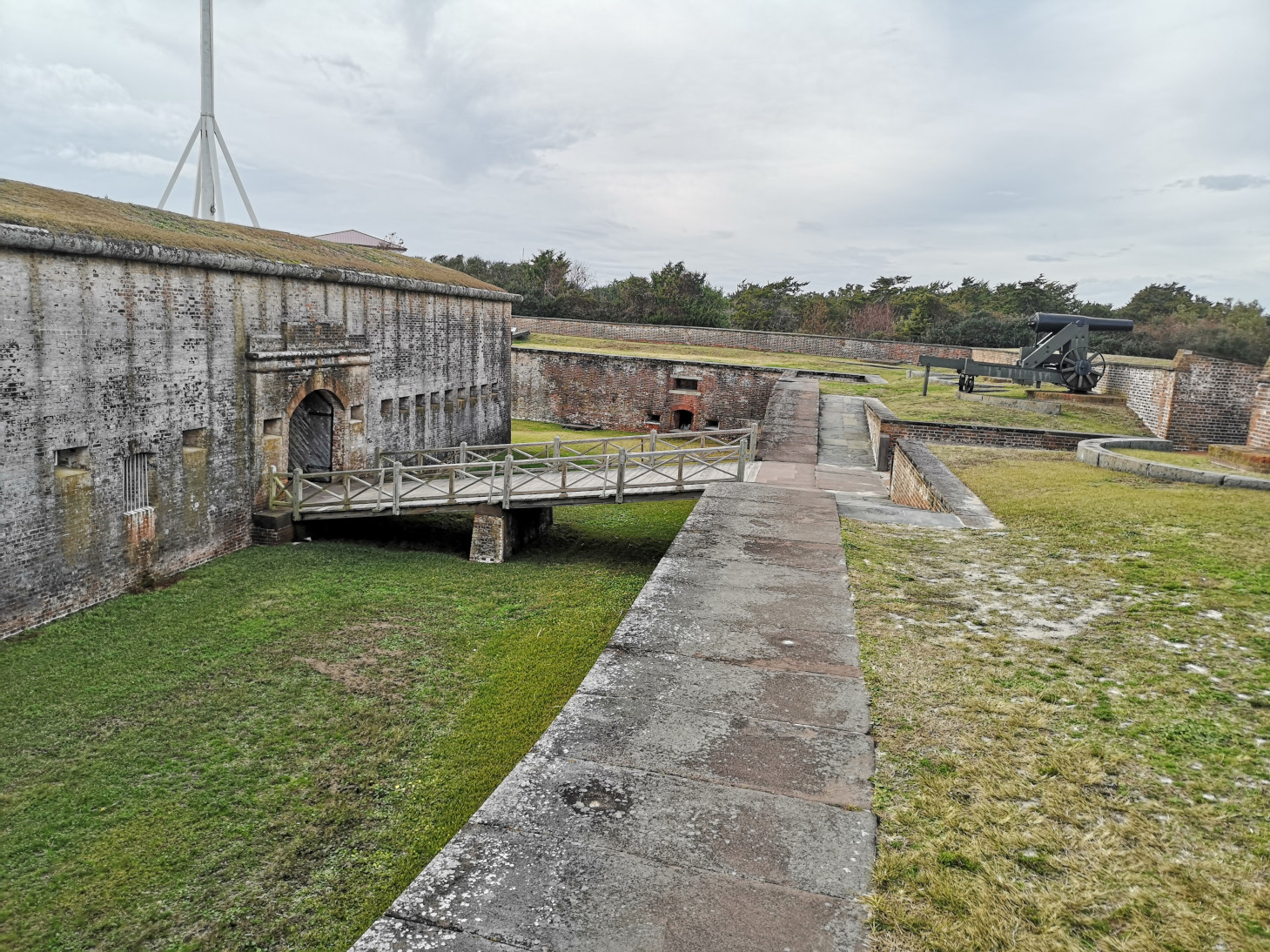
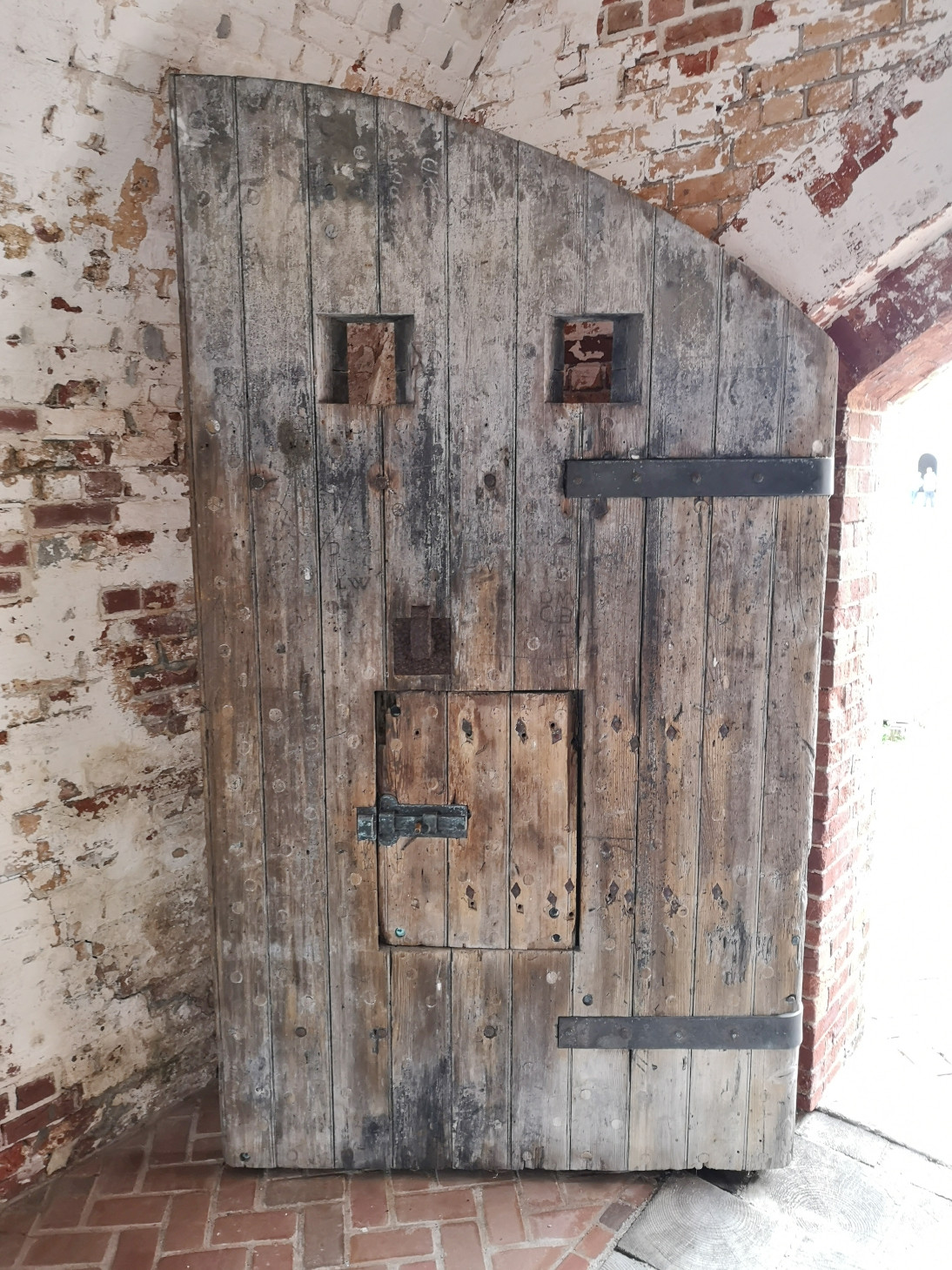
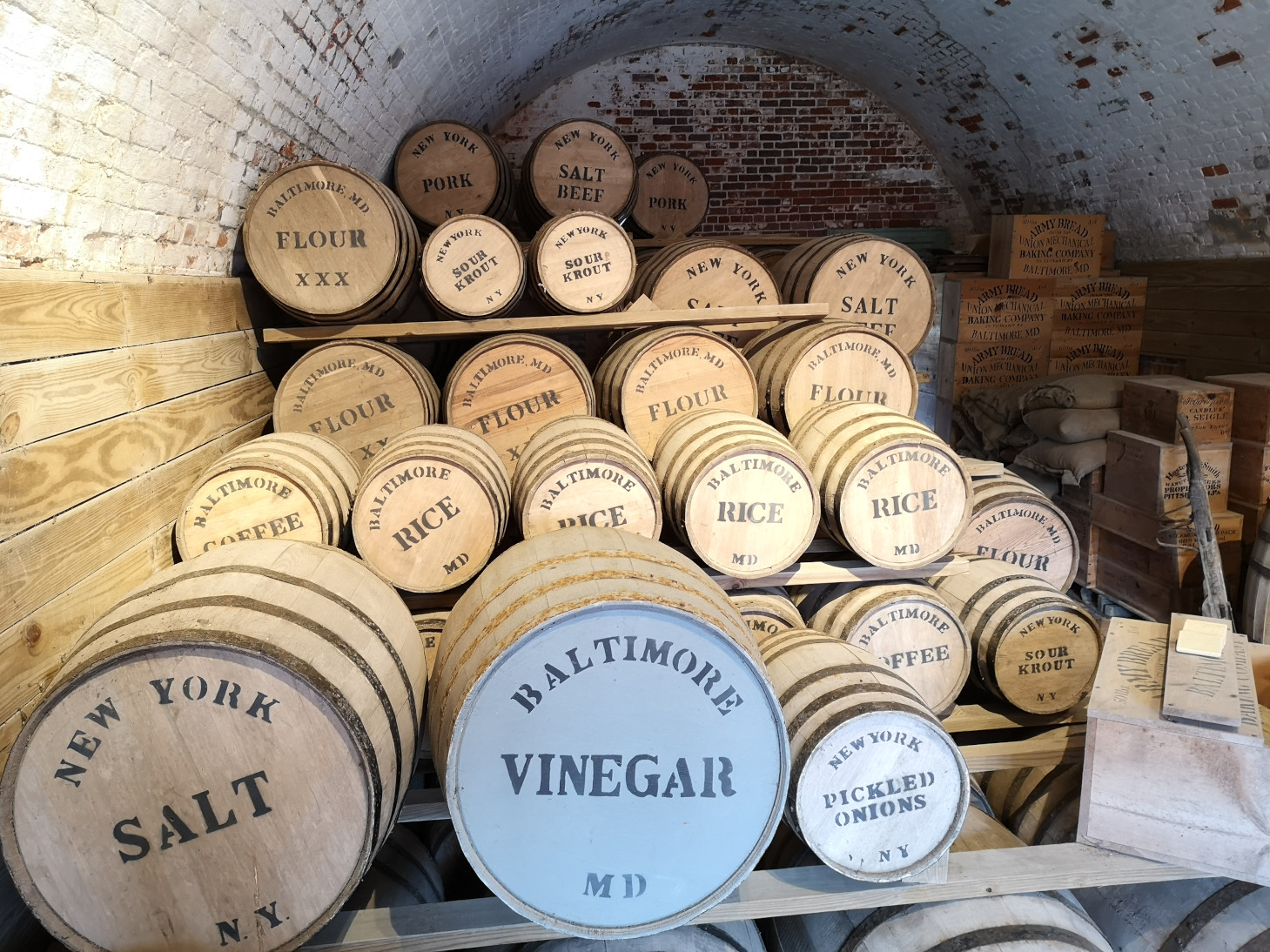
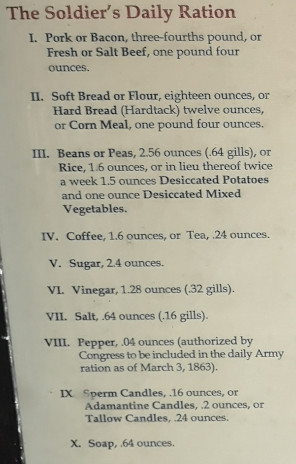
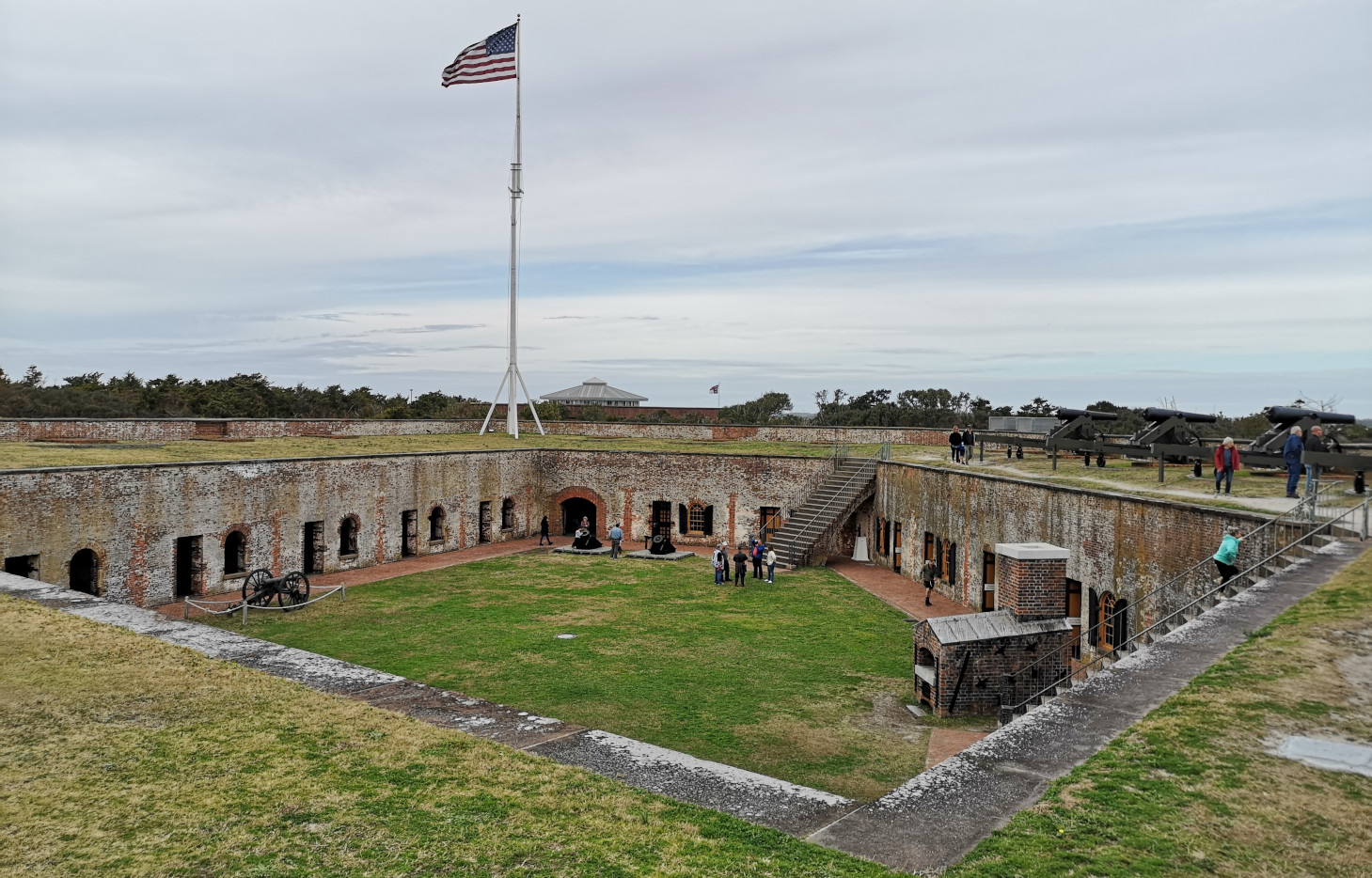
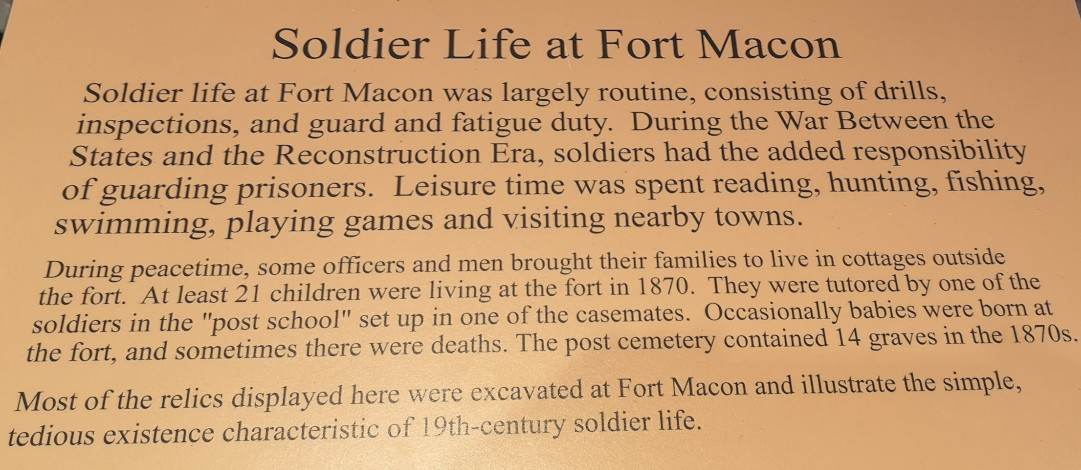
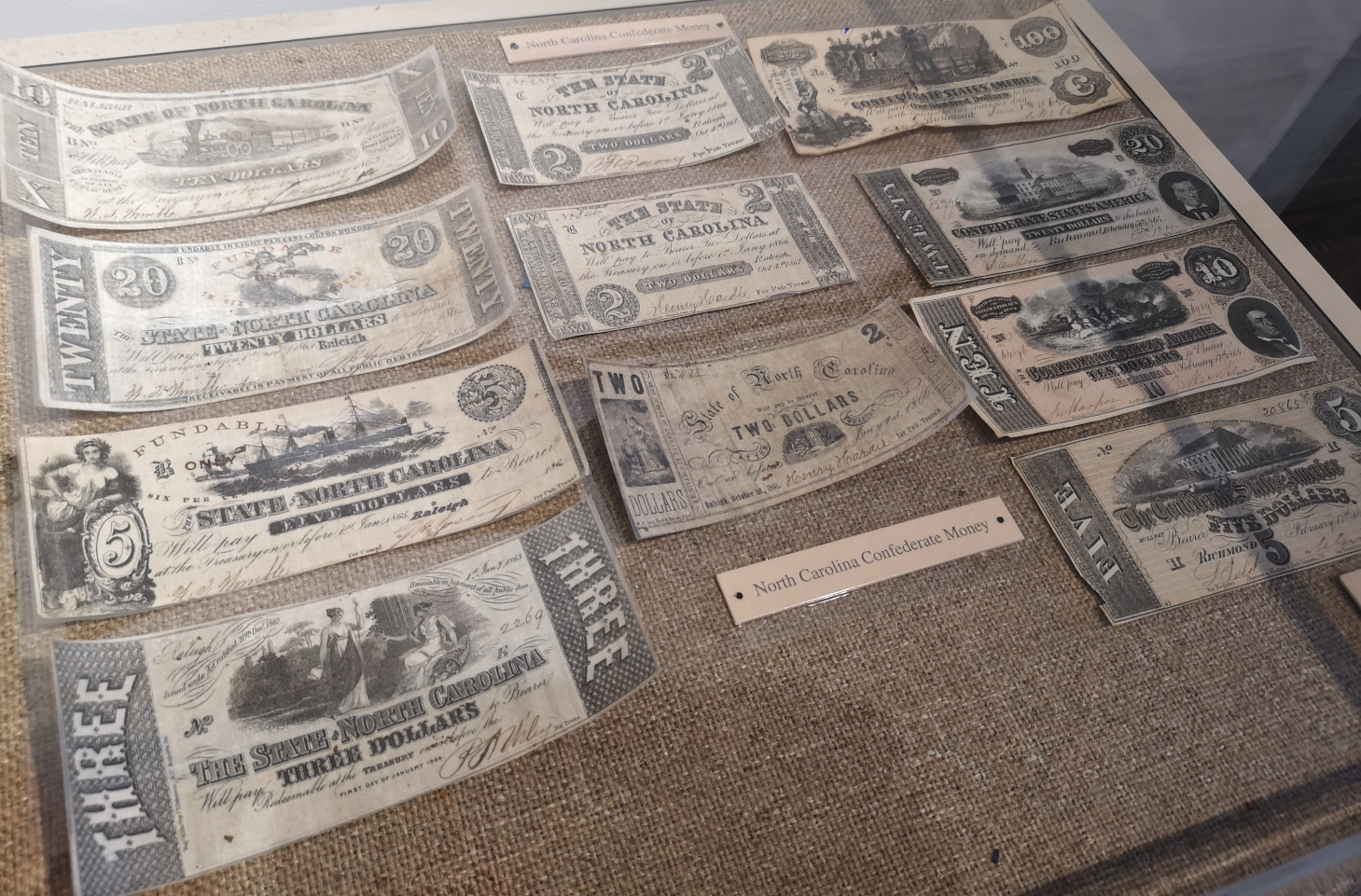
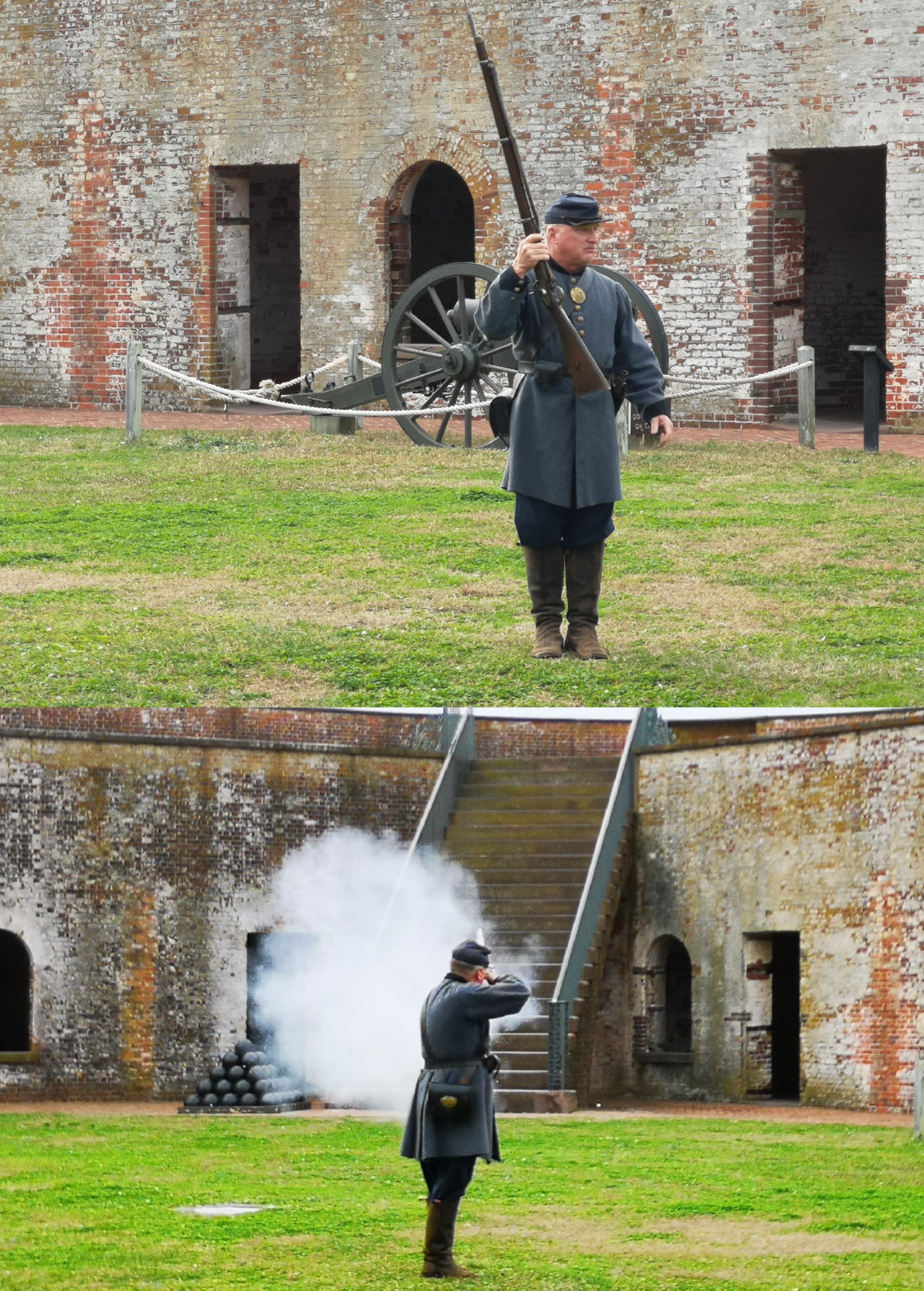
On boxing day, we drove southwest to get to Fort Macon SP and as we went through the small villages, we were struck by how uncommercialized this area was in comparison to the touristy Nags Head area. Fort Macon is on the eastern end of Emerald Isle and the state park is the most visited state park in North Carolina. When we arrived, we looked through the museum, watched the video presentation, took the guided tour of the Fort including the black powder gun firing. Here are some fun facts about Fort Macon:
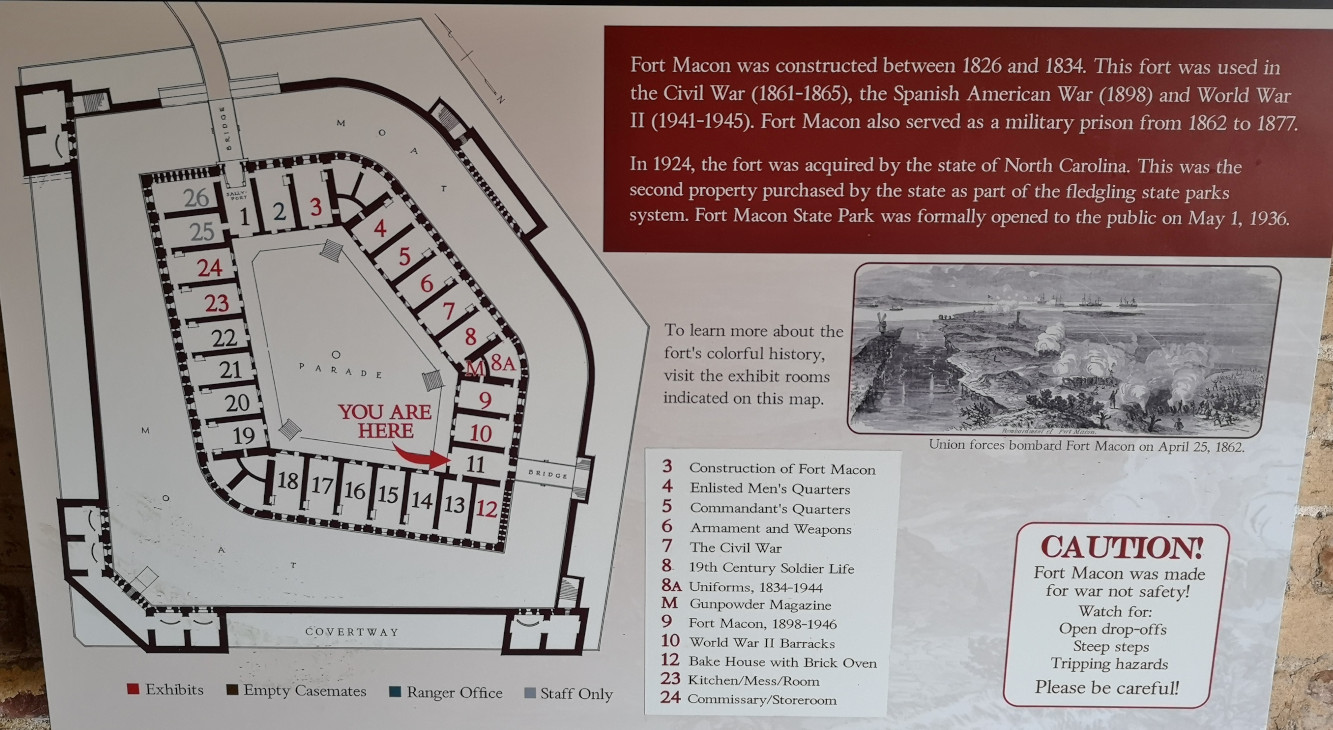
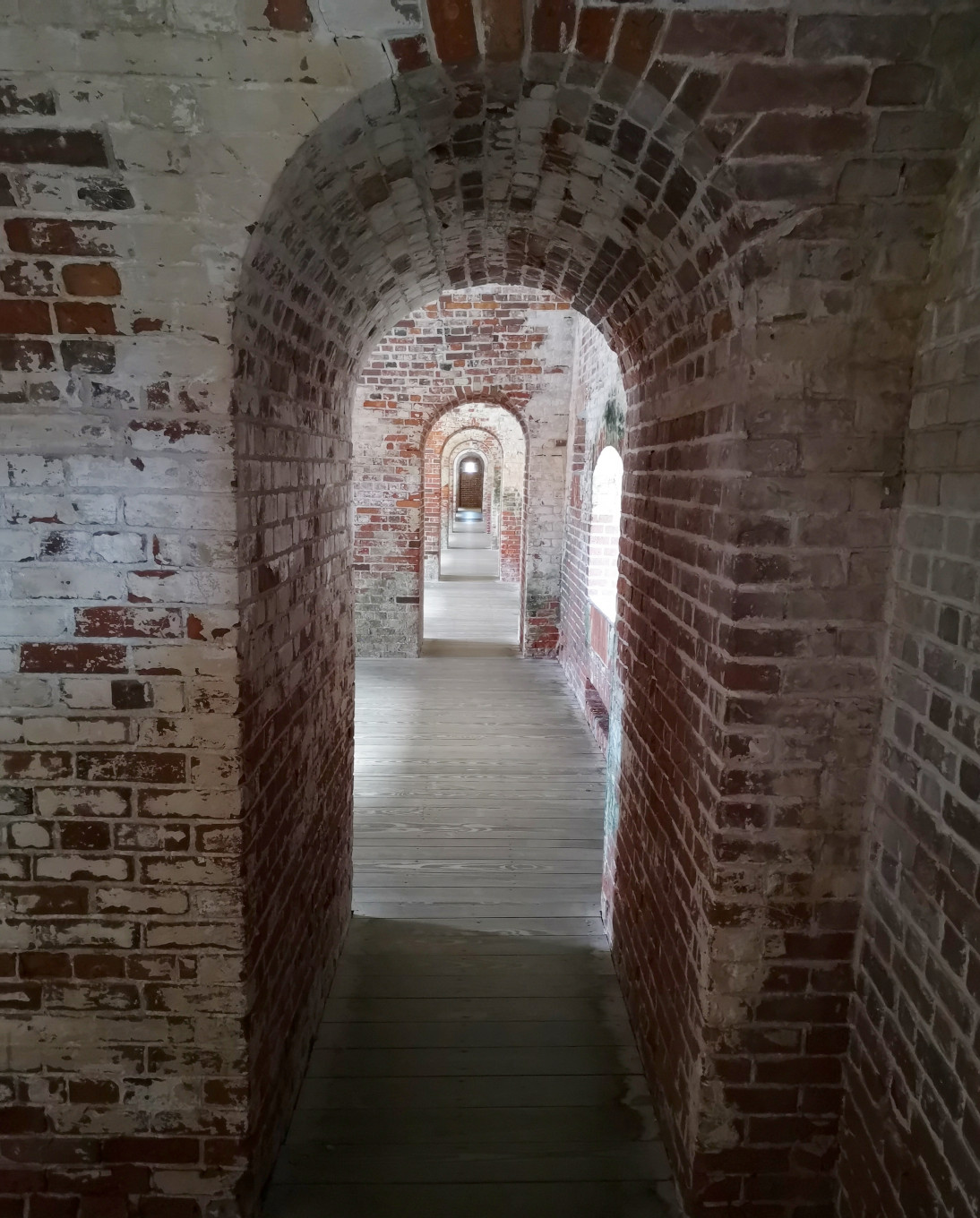
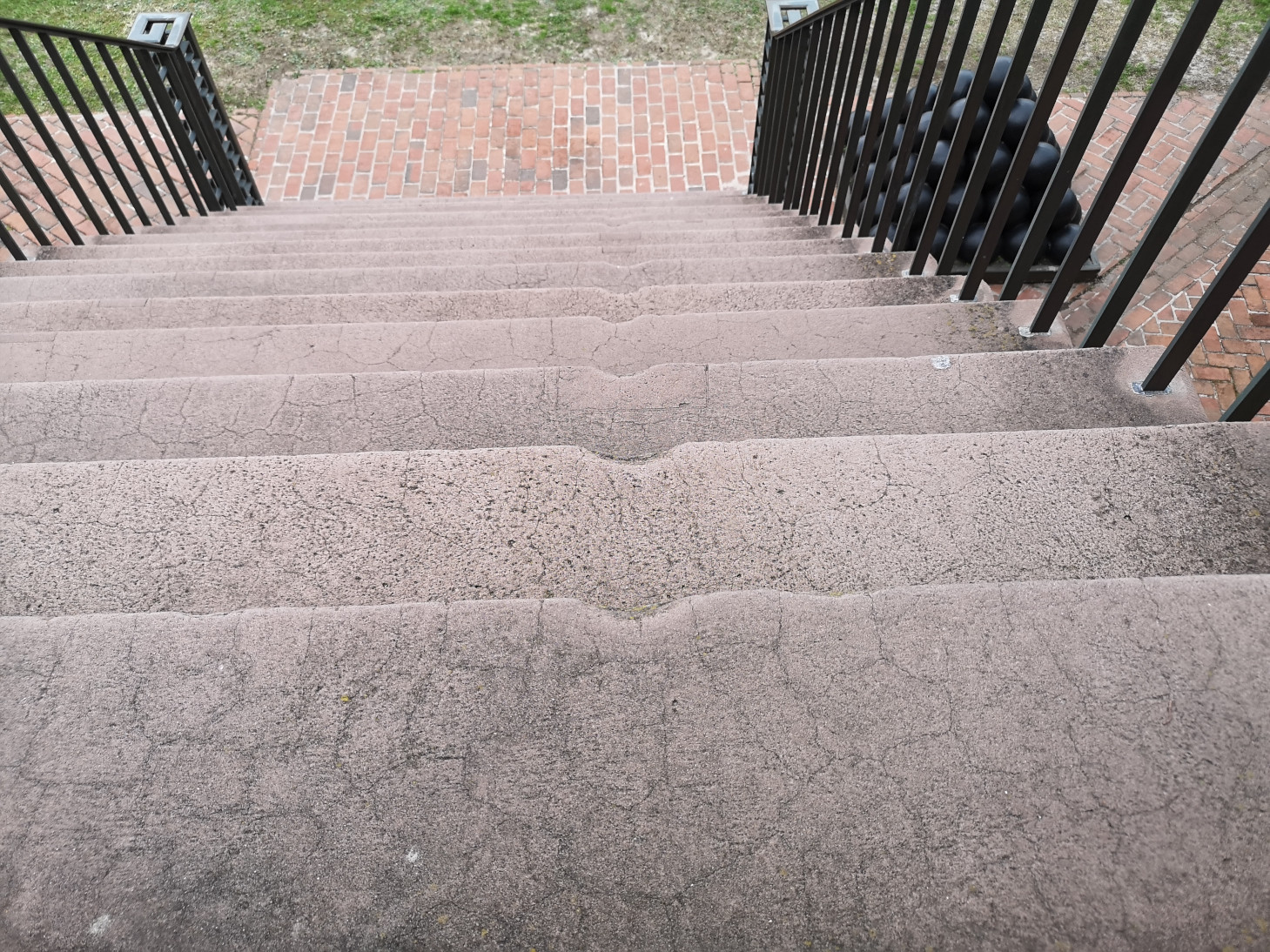
- Fort Macon is 5 sided and constructed of brick and stone. It has 26 vaulted rooms (or casemates) that are enclosed by outer walls that are 4.5’ thick. Other features include powder magazines, counterfire rooms, cannon emplacements, and a wide moat that protected it from floods from Bogue Sound.
- Fort Macon was built from 1826-1834 to guard Beaufort Inlet and Harbour which is North Carolina’s only major deep-water port.
- The fort was actively garrisoned only from 1834-36, 1842-44, and 1848-49. Often an ordinance sergeant acting as a caretaker was the only person stationed by the Army at the fort.
- On April 12th, 1861, the North Carolina militia seized the fort from the ordinance sergeant so the NC Confederate forces could occupy the fort and arm it with 54 heavy cannons to prepare it for battle.
- Early in 1862 Union forces under General Burnside were sent to capture the fort. Colonel White was in charge of the 400 Confederates in the fort and even though they were incredibly outnumbered he didn’t want to surrender. In April that year the Union forces had rifled cannons (better accuracy) on their gunboats and hit the fort 560 times. The damage was so extensive that it cracked some of the outer walls which meant it was possible a hit could reach the powder magazine which would have exploded the whole fort and killed everyone. Therefore, White had no choice but to surrender. The fort was then used as a prisoner of war location and then a military prison until 1876.
- The fort was deactivated in 1877 but then regarrisoned in 1898 for the Spanish-American war. The US Army completely abandoned it in 1903.
- From 1934-35 the CCC restored the fort which enabled it to become NC’s second state park opening on May 1st, 1936.
- During WWII the US Government leased the park from the state and actively manned it from 1941 to 1944. The fort was returned to the state on Oct 1, 1946.
- The park gets more than 1 million visitors per year now.
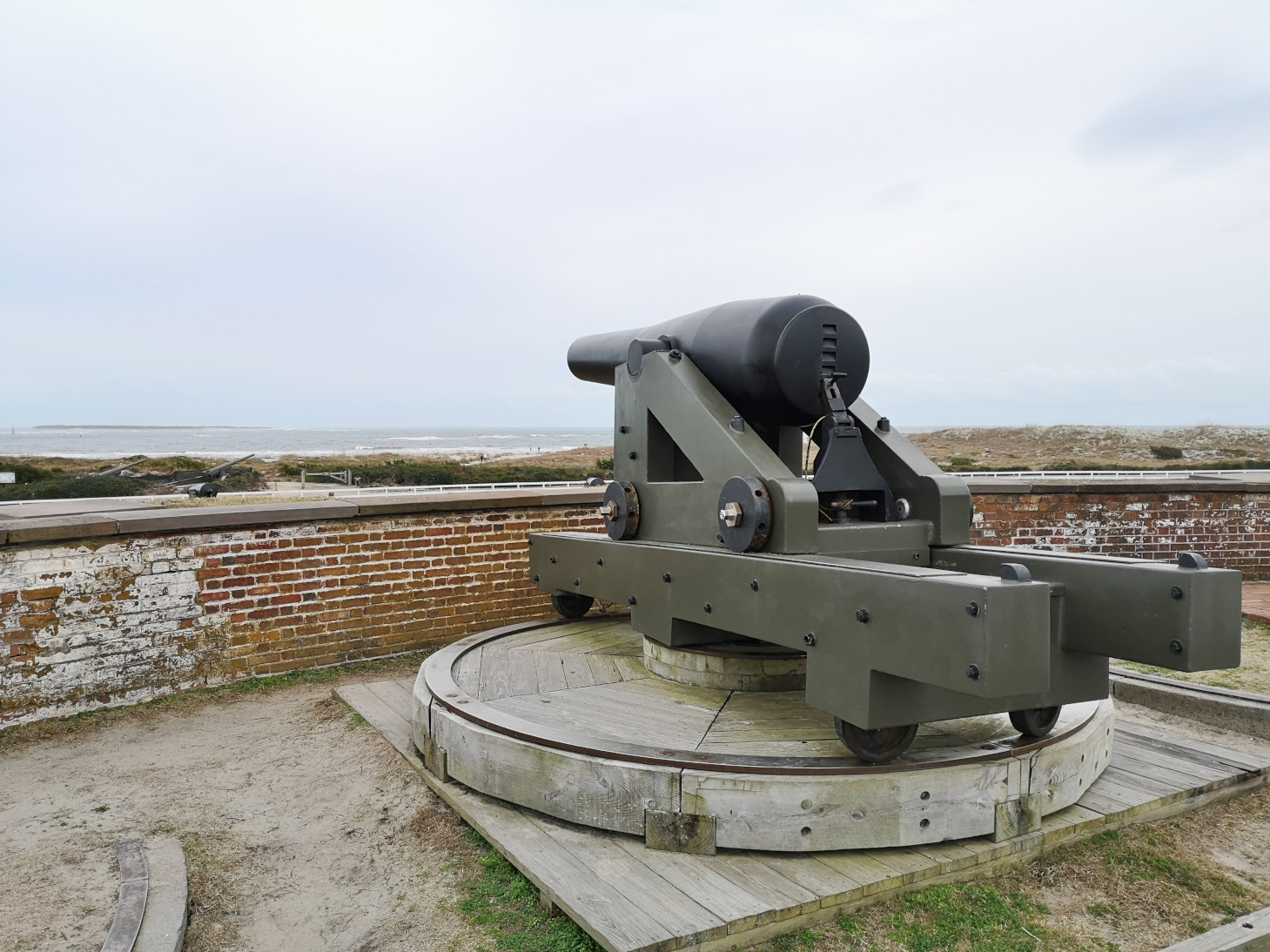
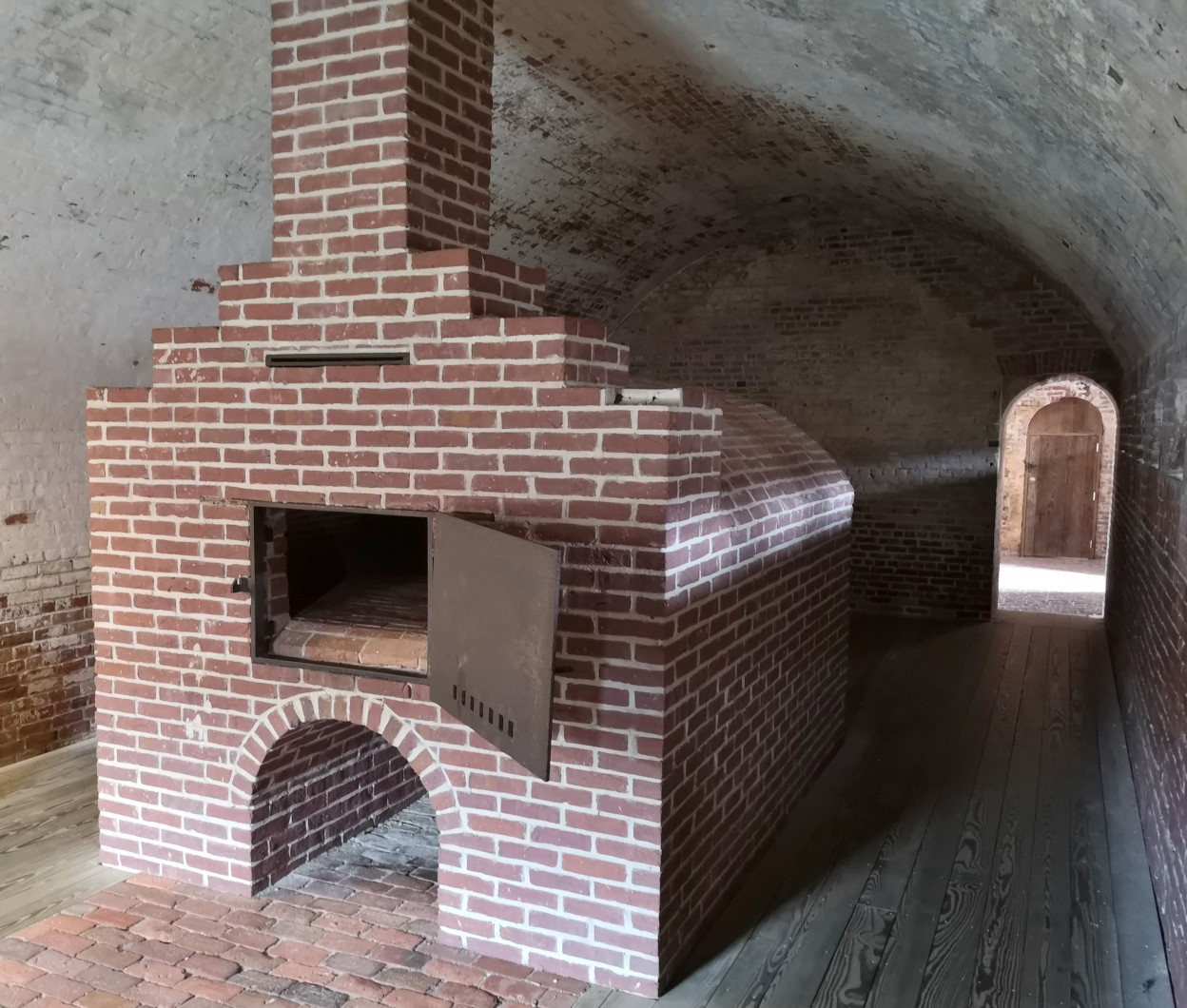
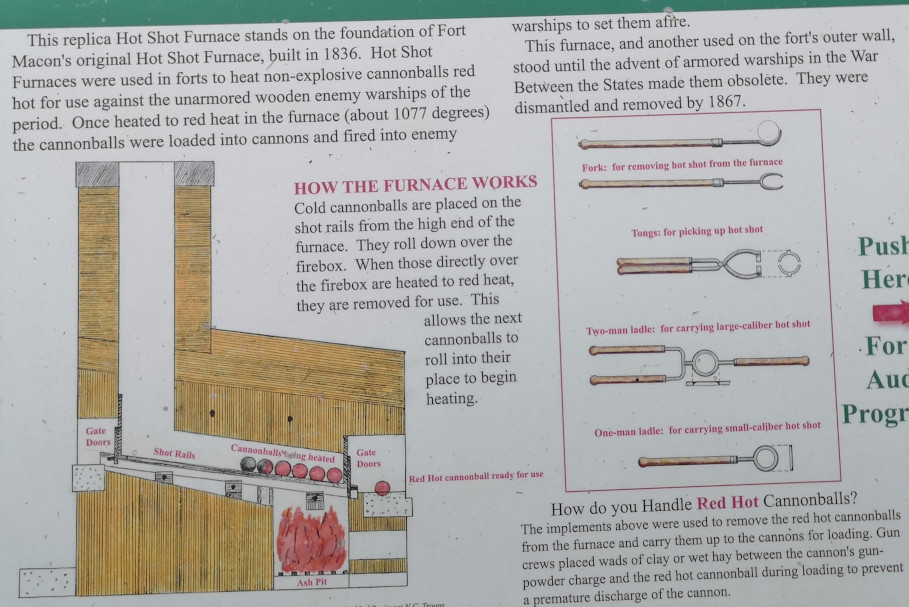
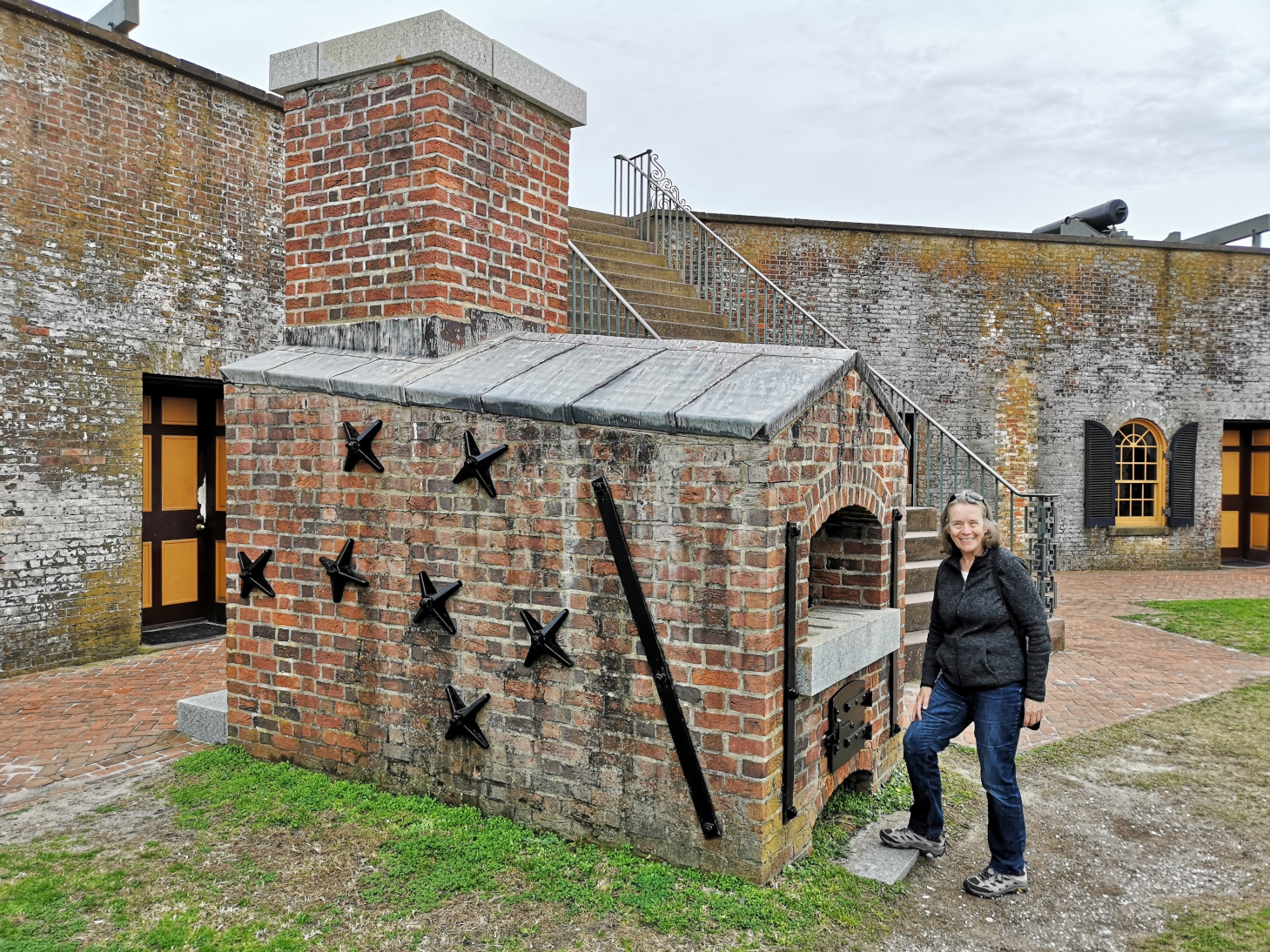
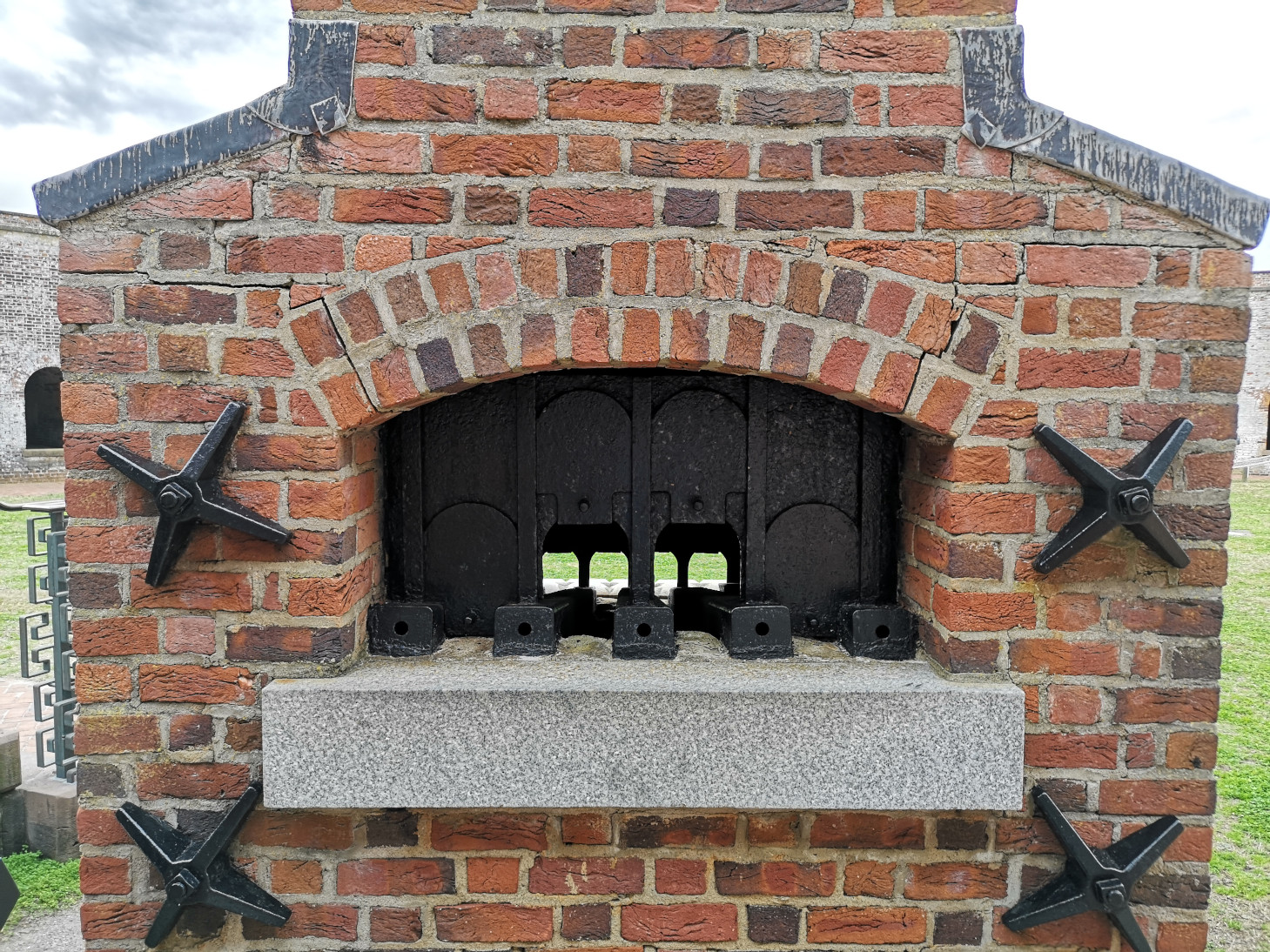
One of the unique items on display in the parade ground was the replica Hot Shot Furnace. The idea was that they could heat the cannon balls to 1077 degrees and then carry them up to the cannons so when they shot them, and they hit the wooden ship targets they would start a fire sinking the ship. The tour was quite fascinating, and we enjoyed the black powder firing demonstration.
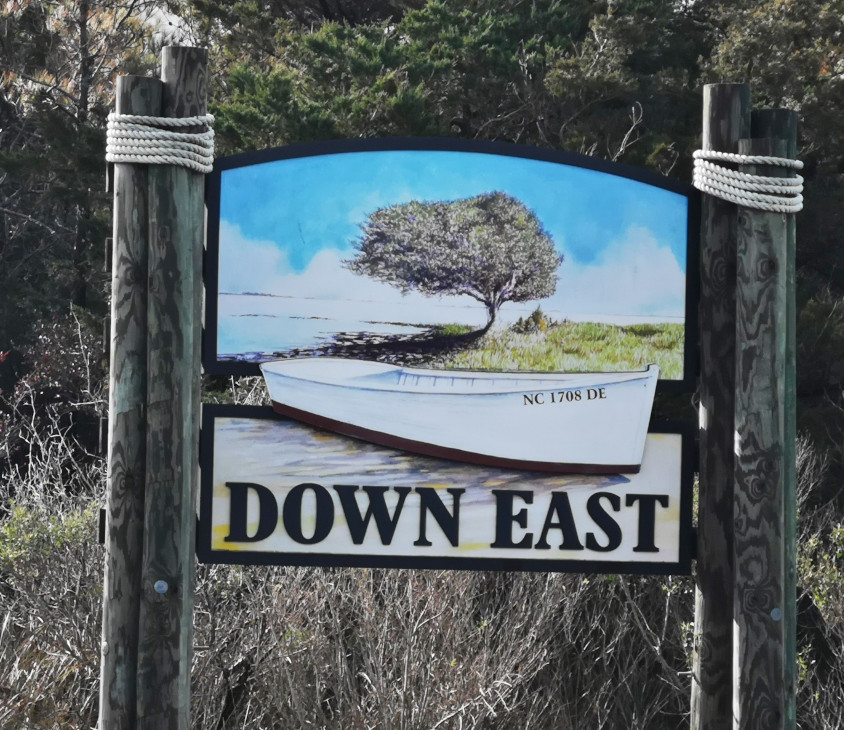

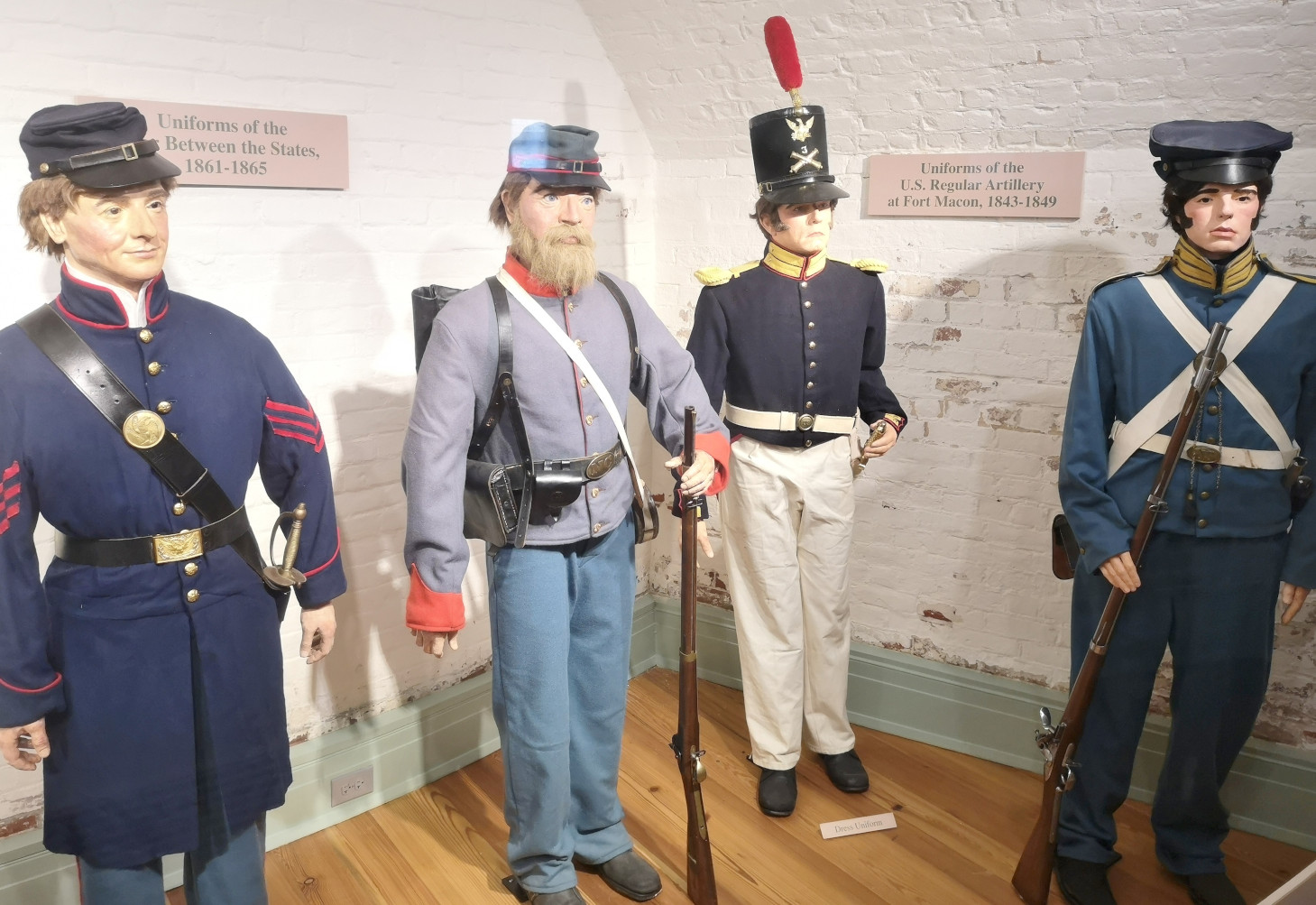
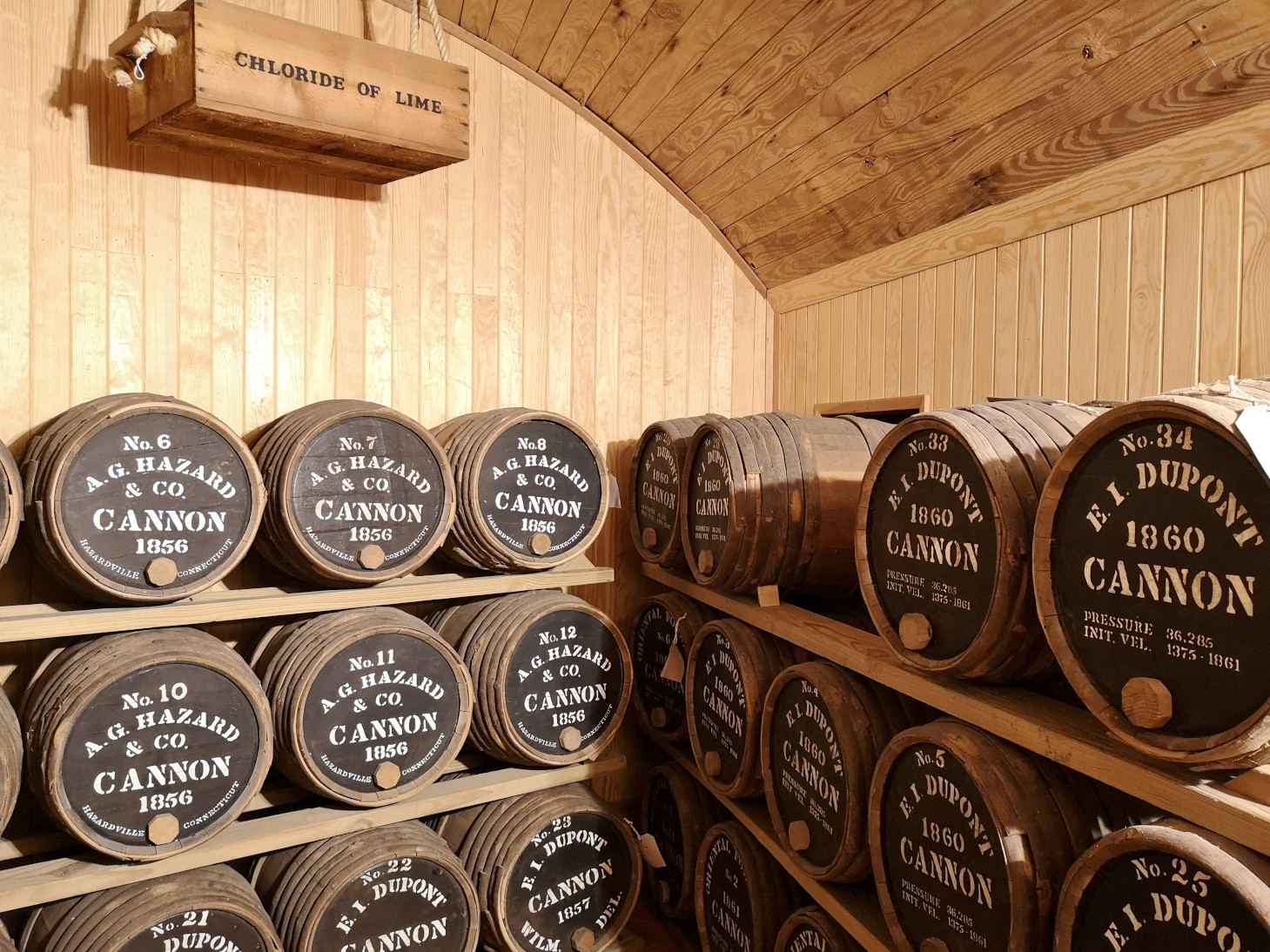
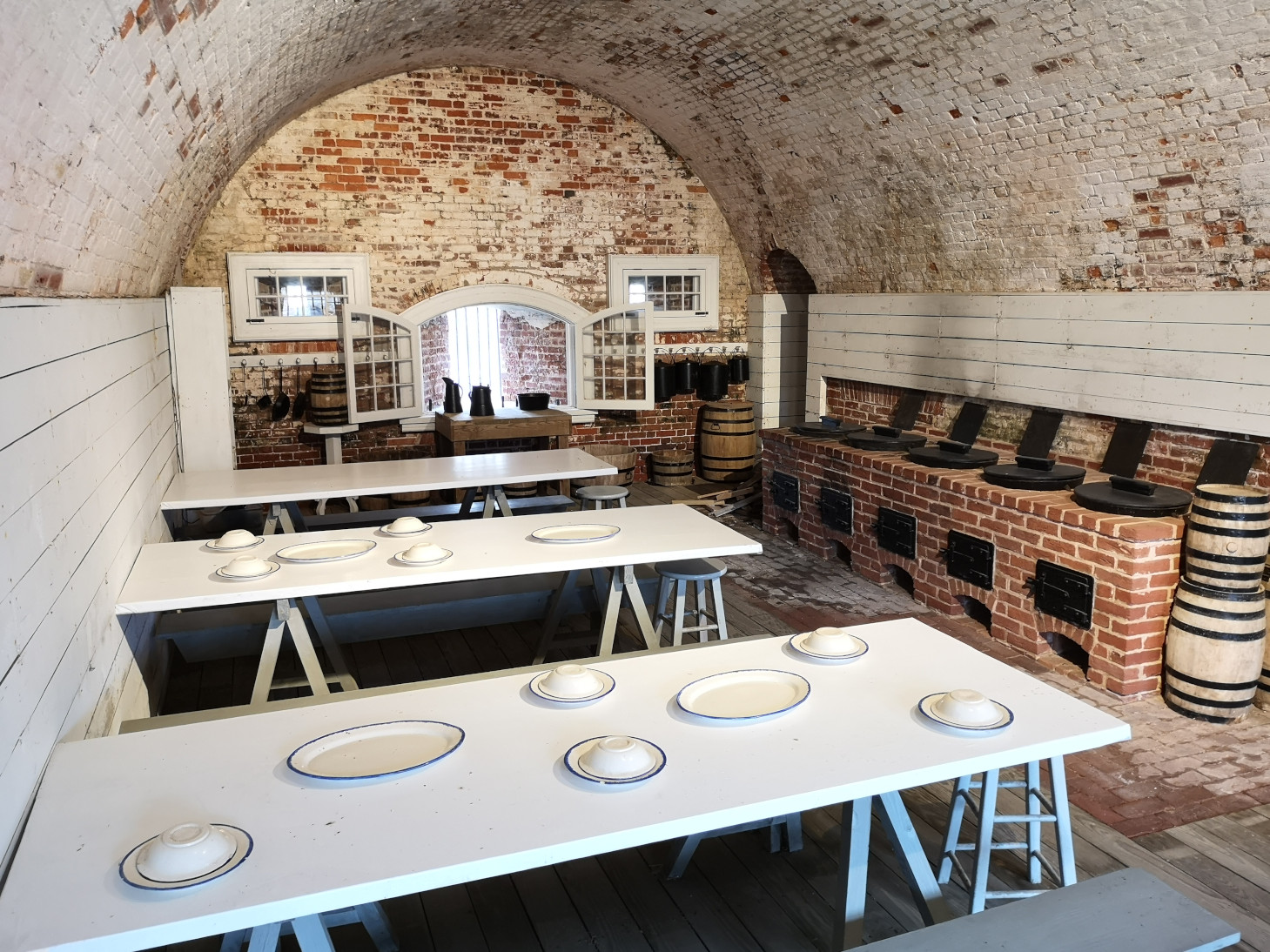
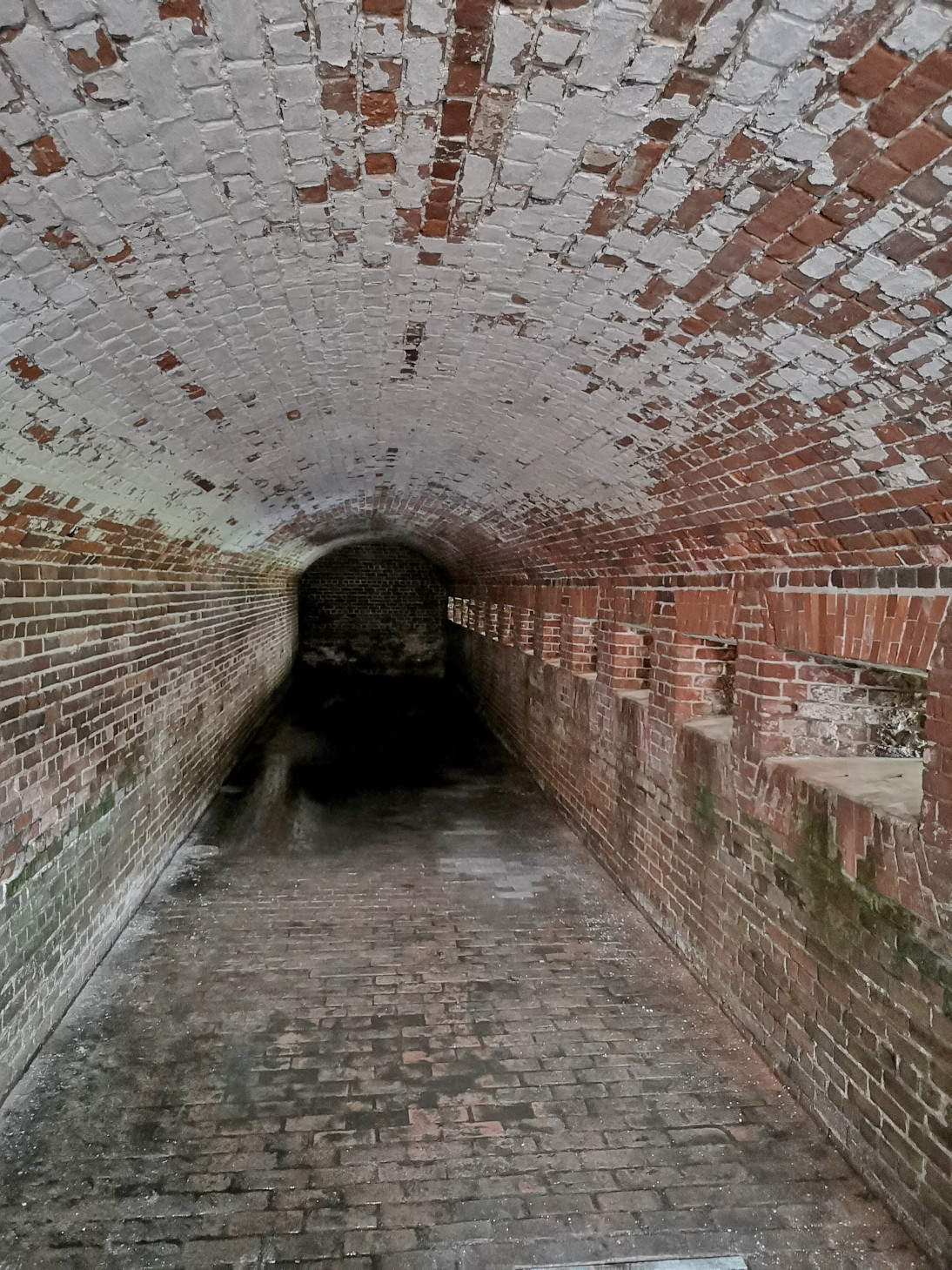

We drove along the Emerald Isle coast to get to Cedar Point Campground in Croatan National Forest. We didn’t explore this area since it rained the entire full day we were there. The campground had quite large sites and there was one hiking trail so likely worth a stop on a future trip.
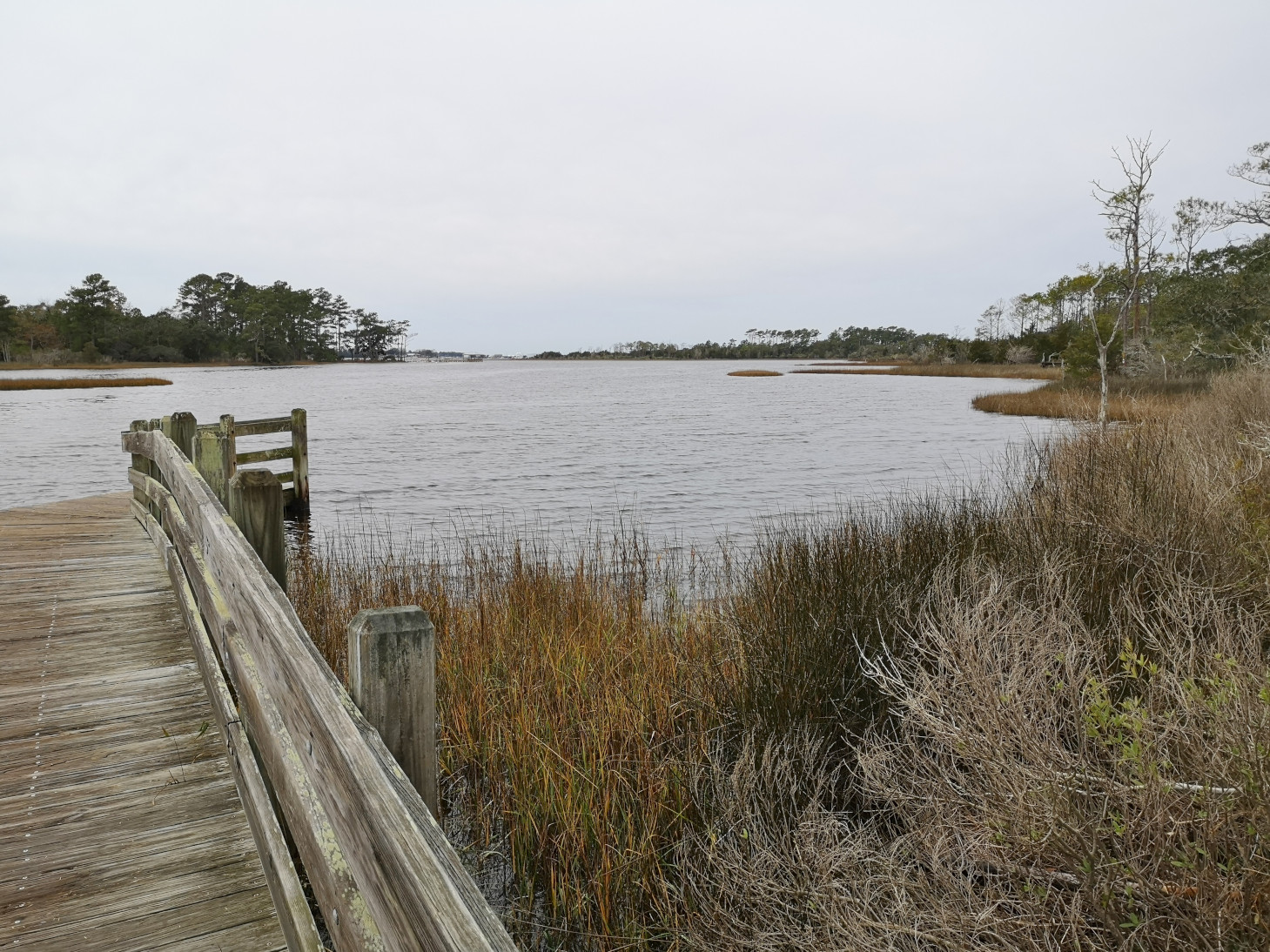
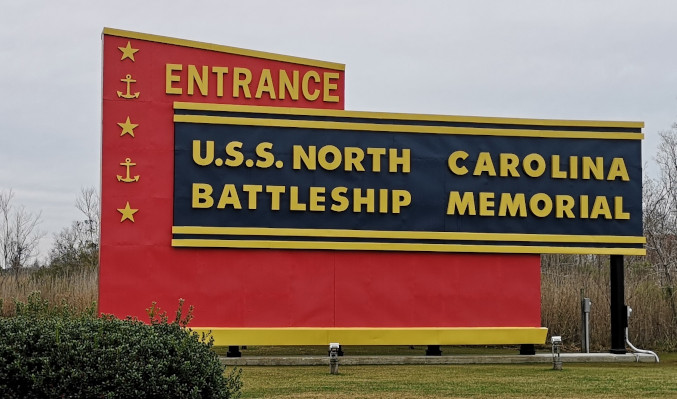
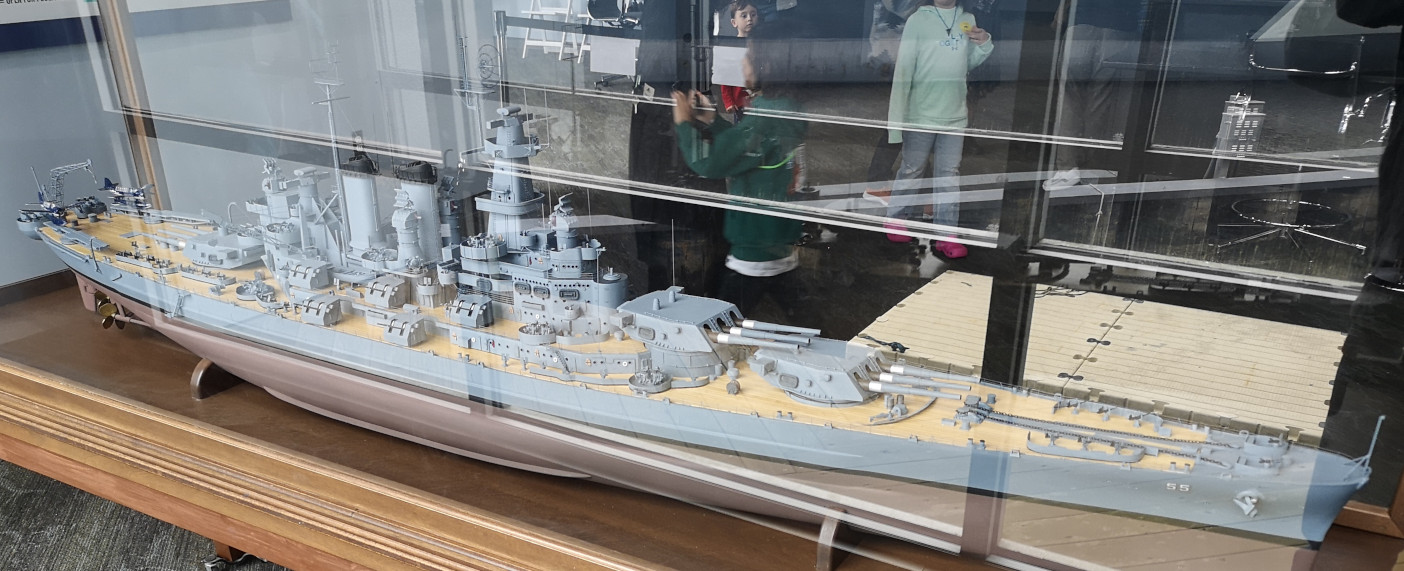
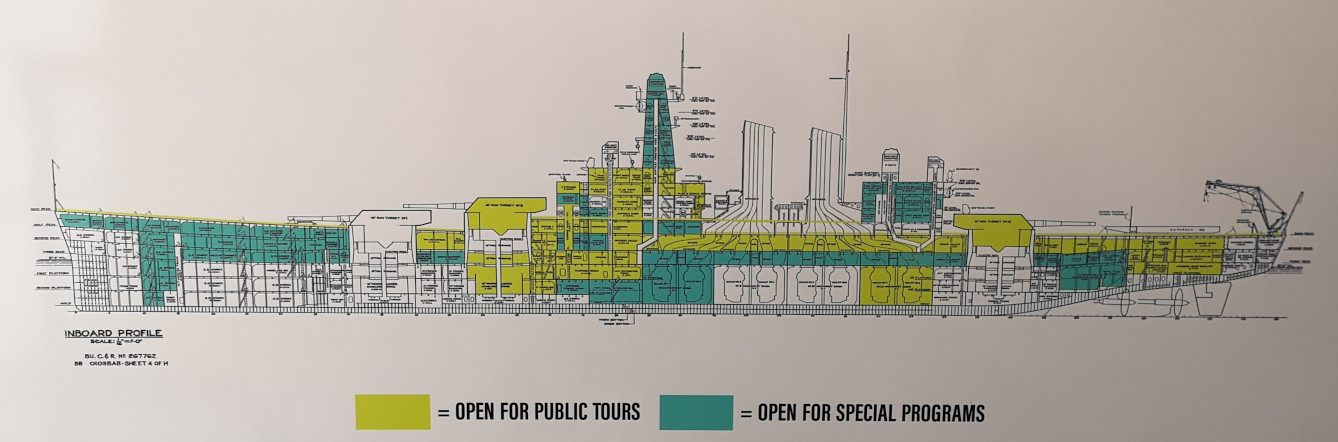
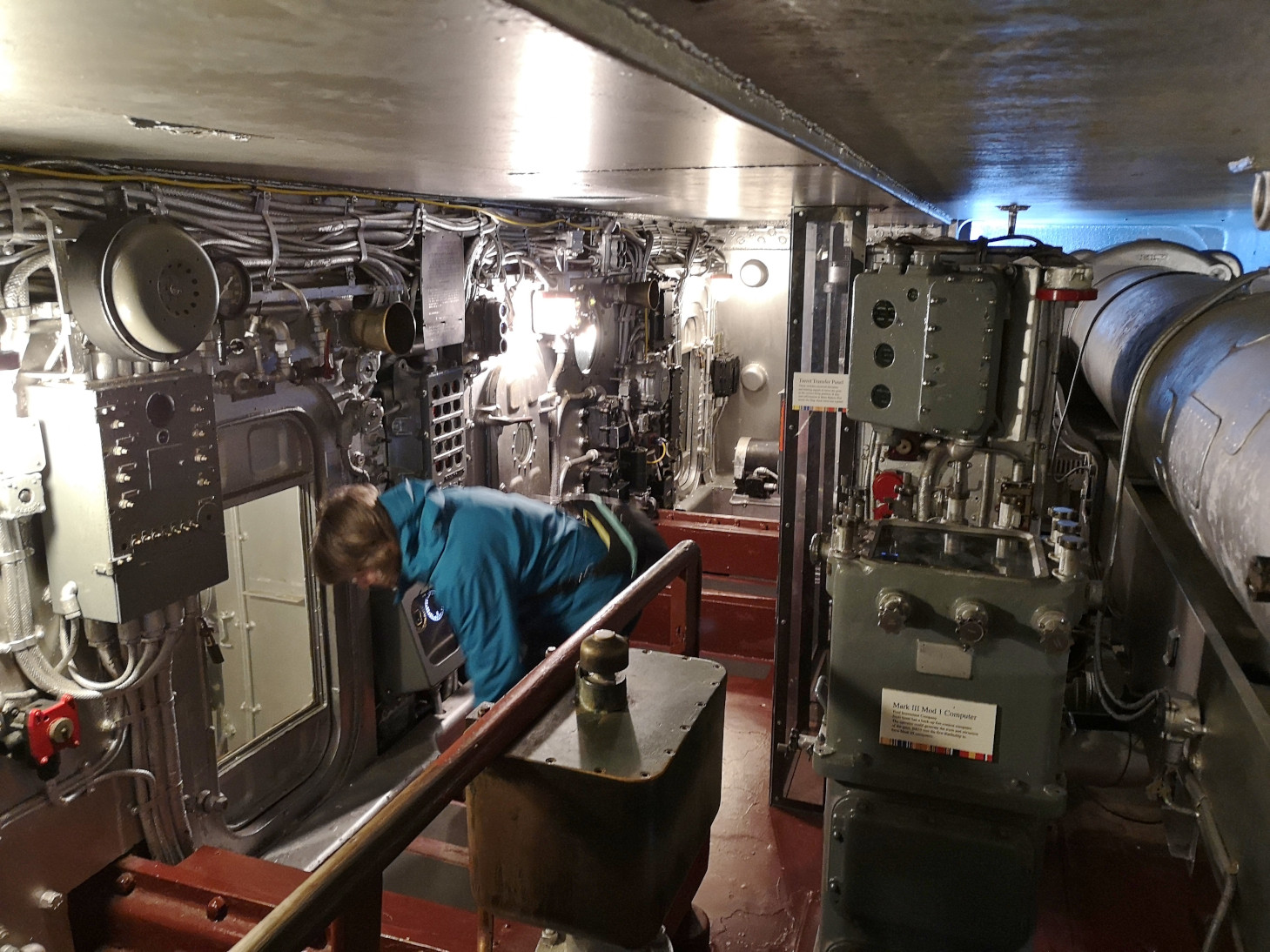
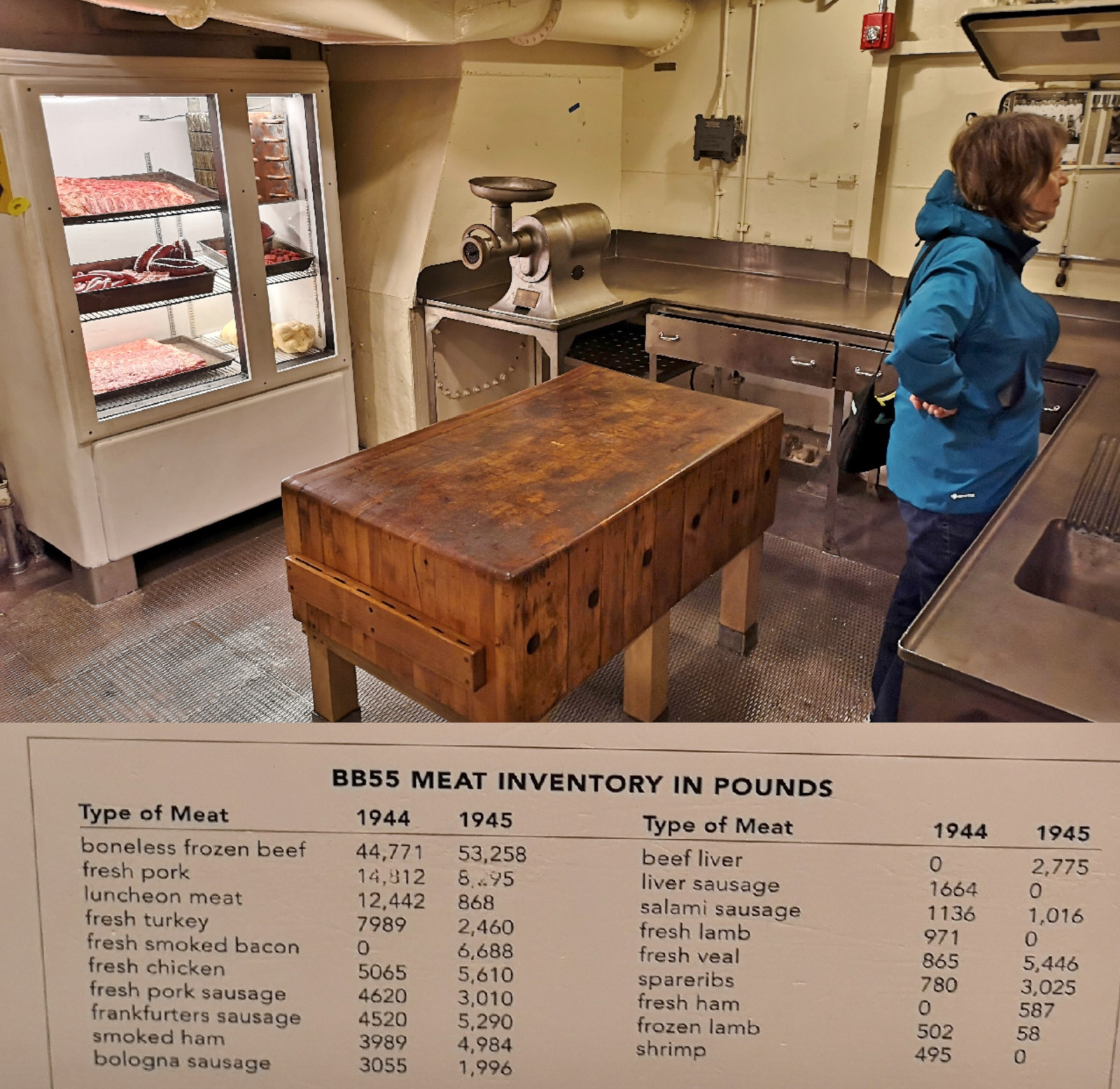
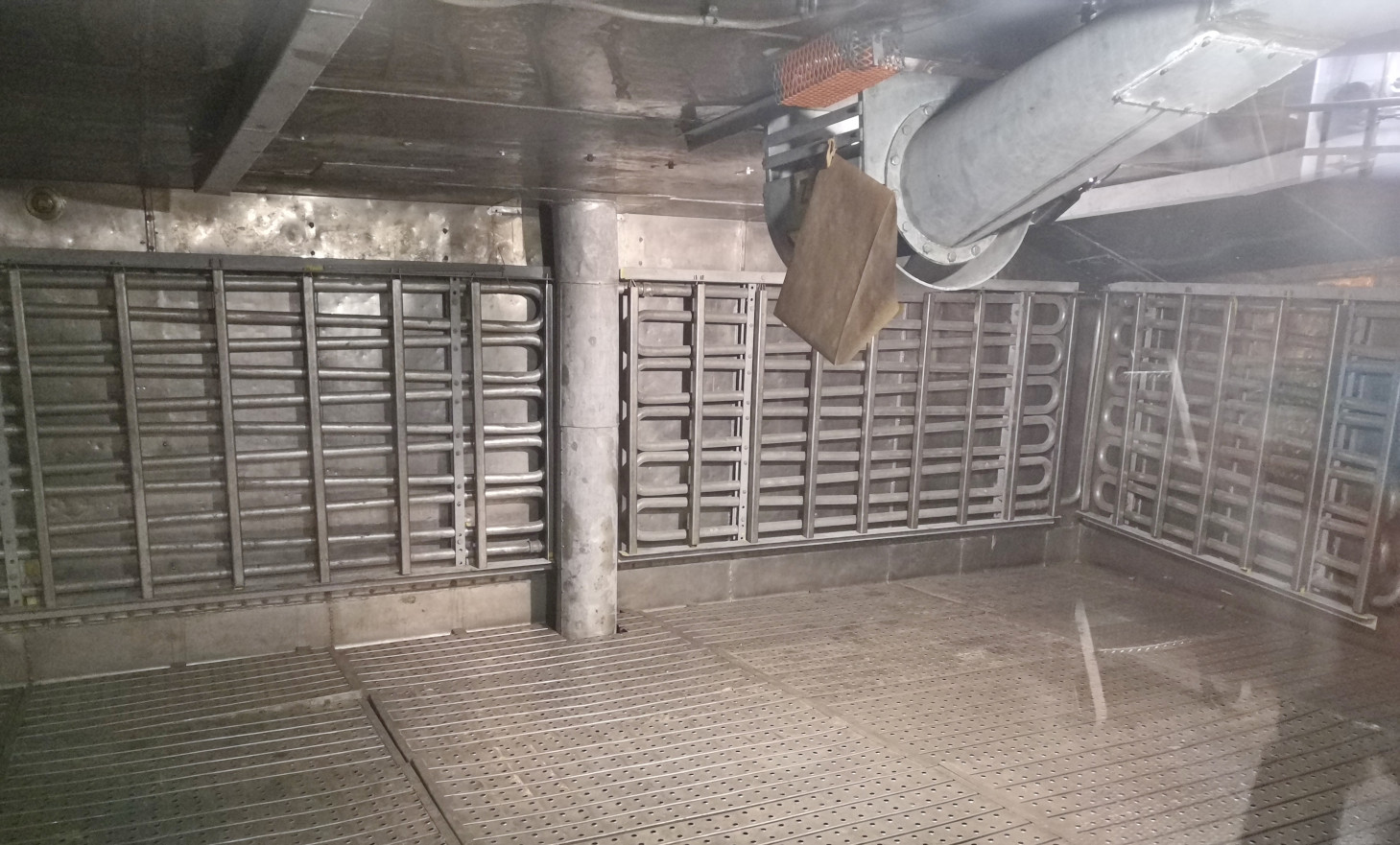
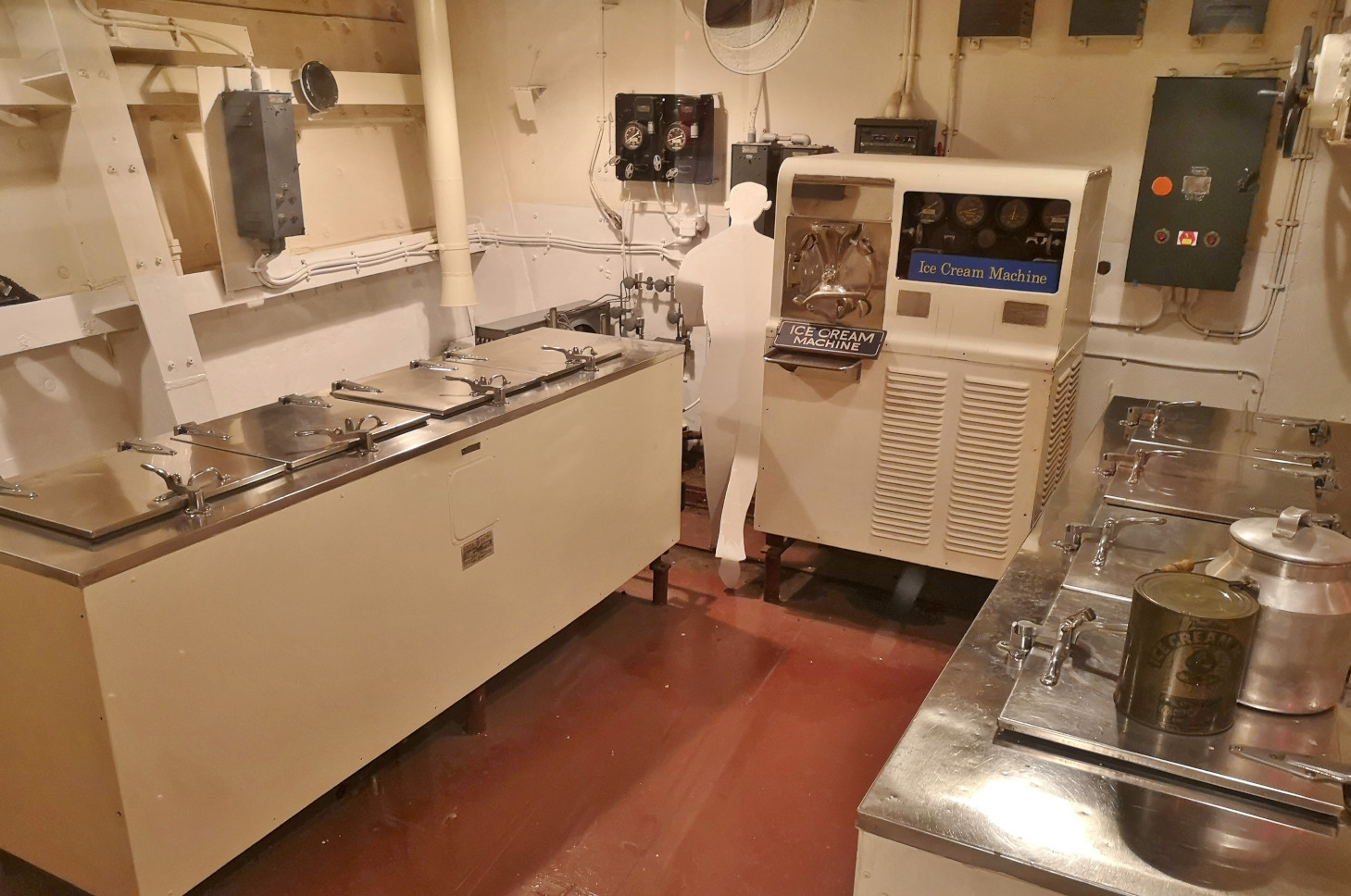
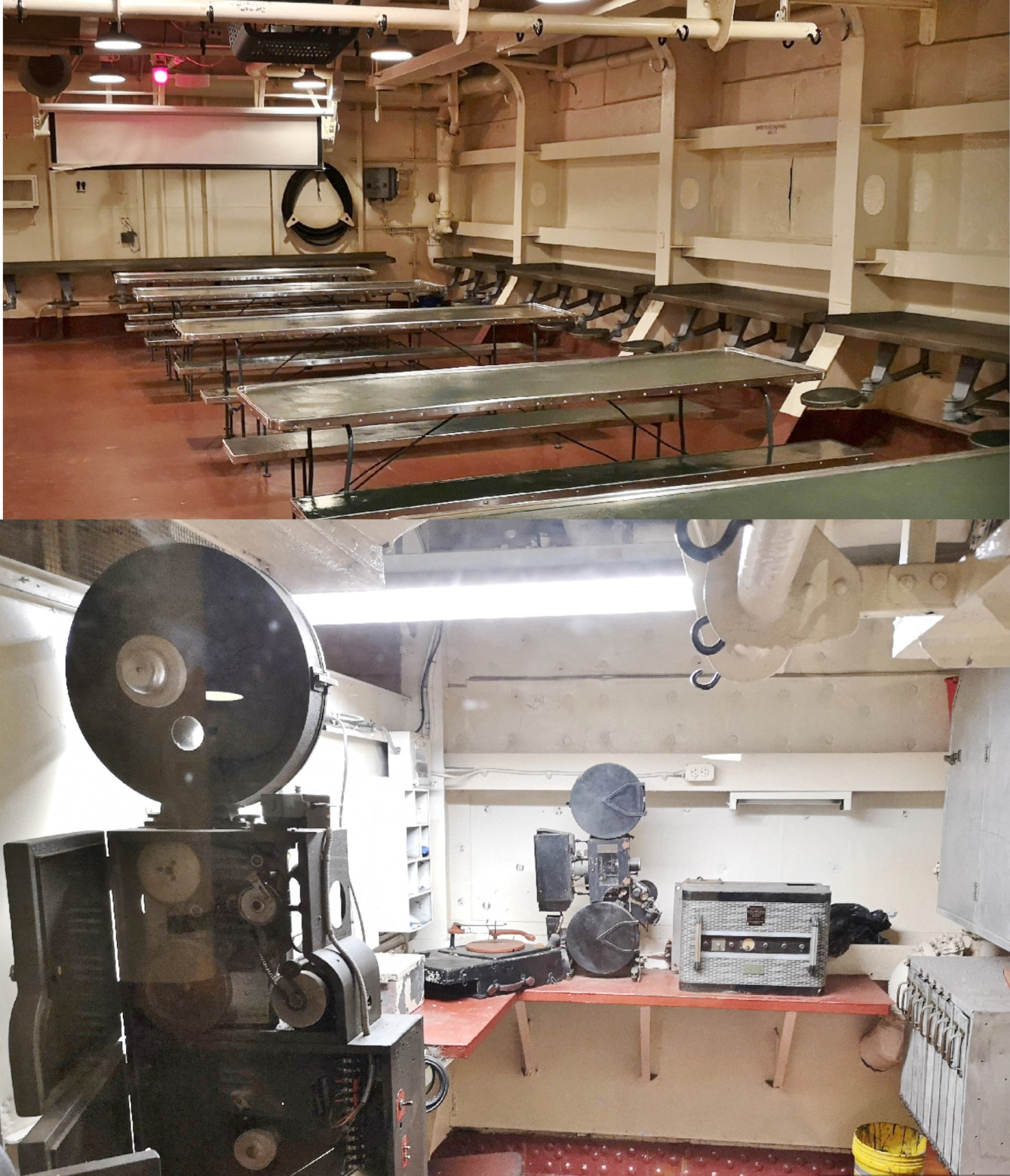
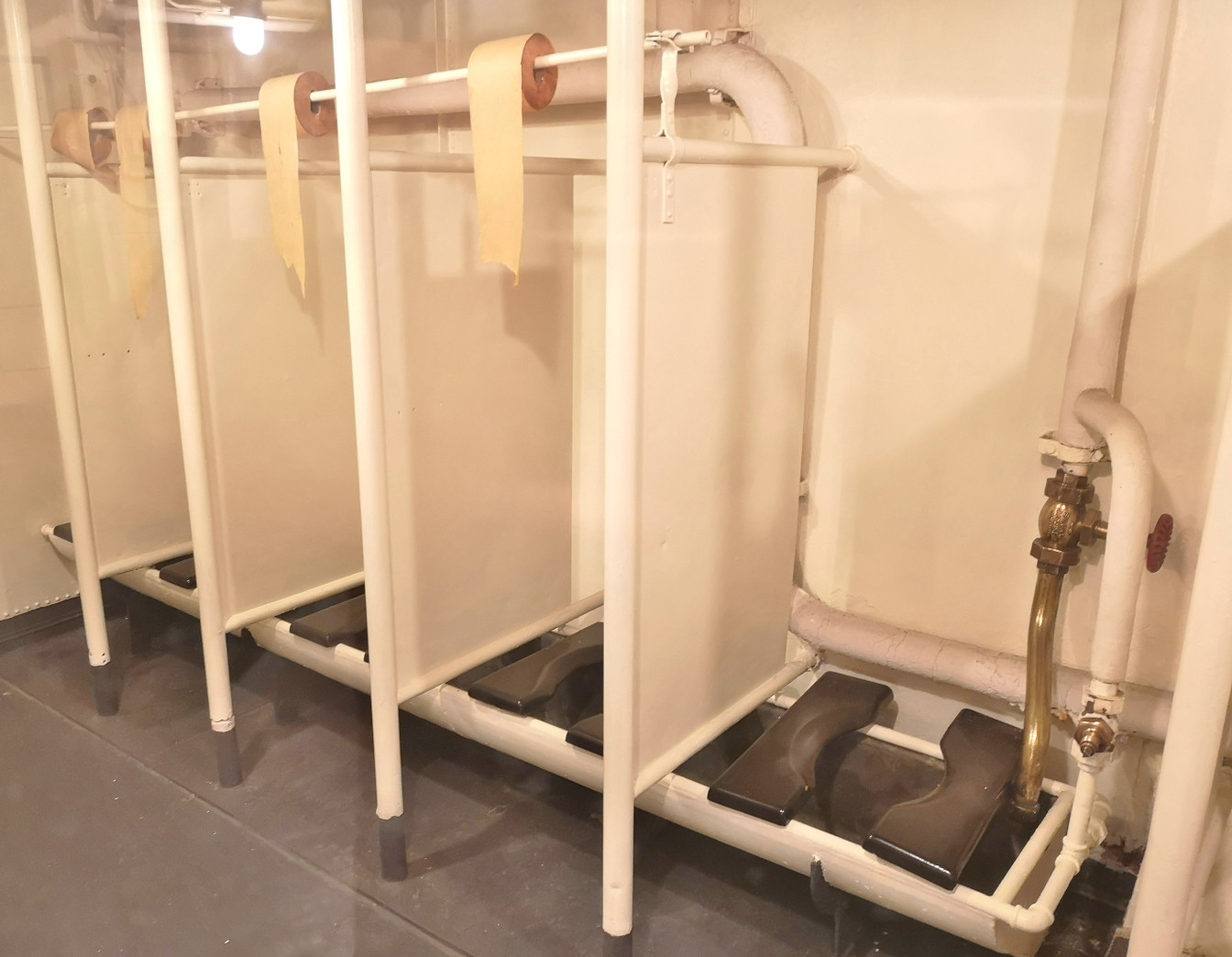
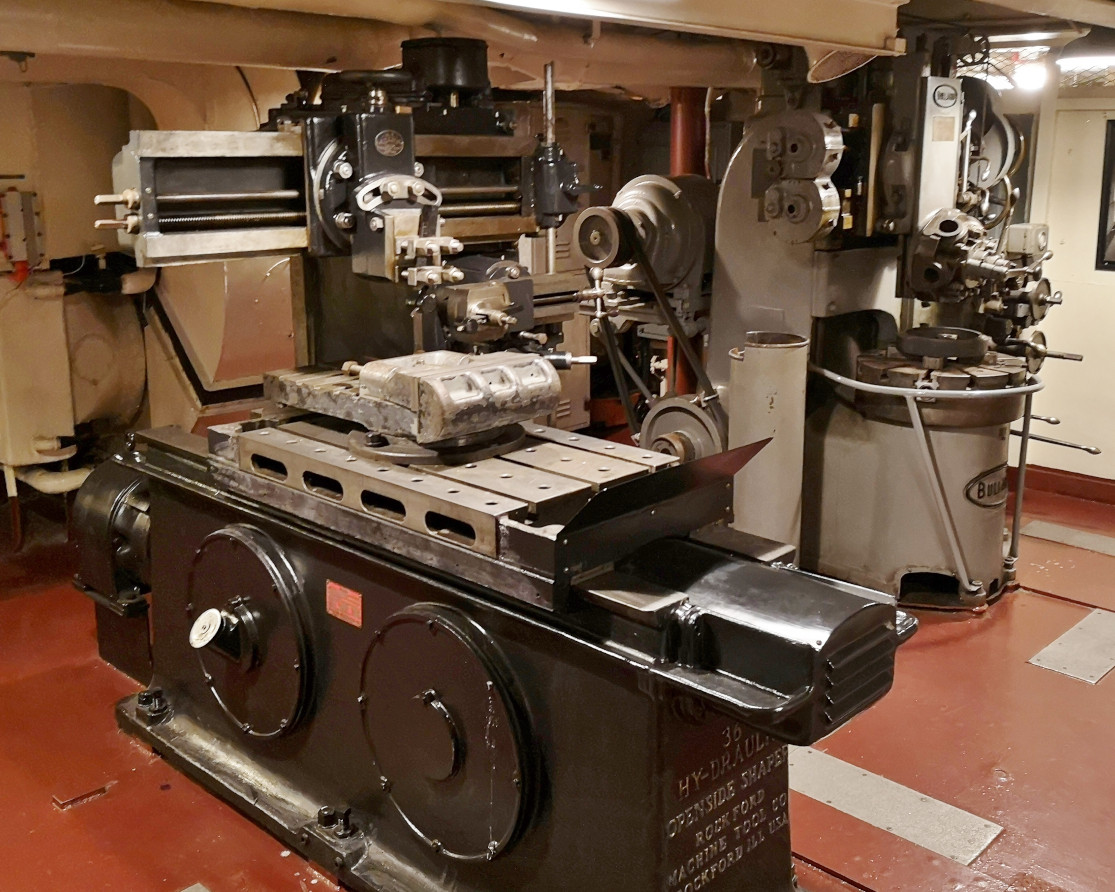
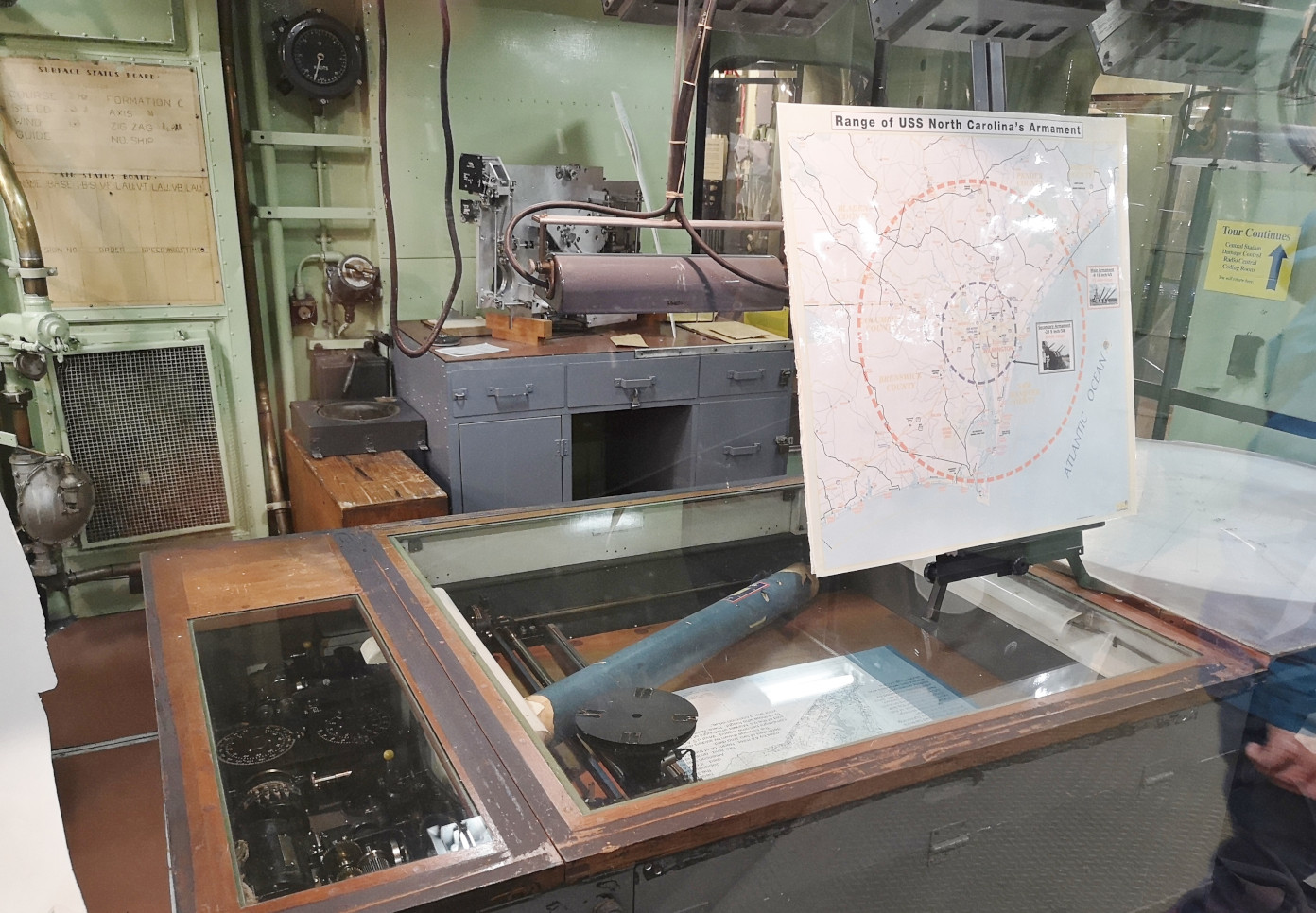
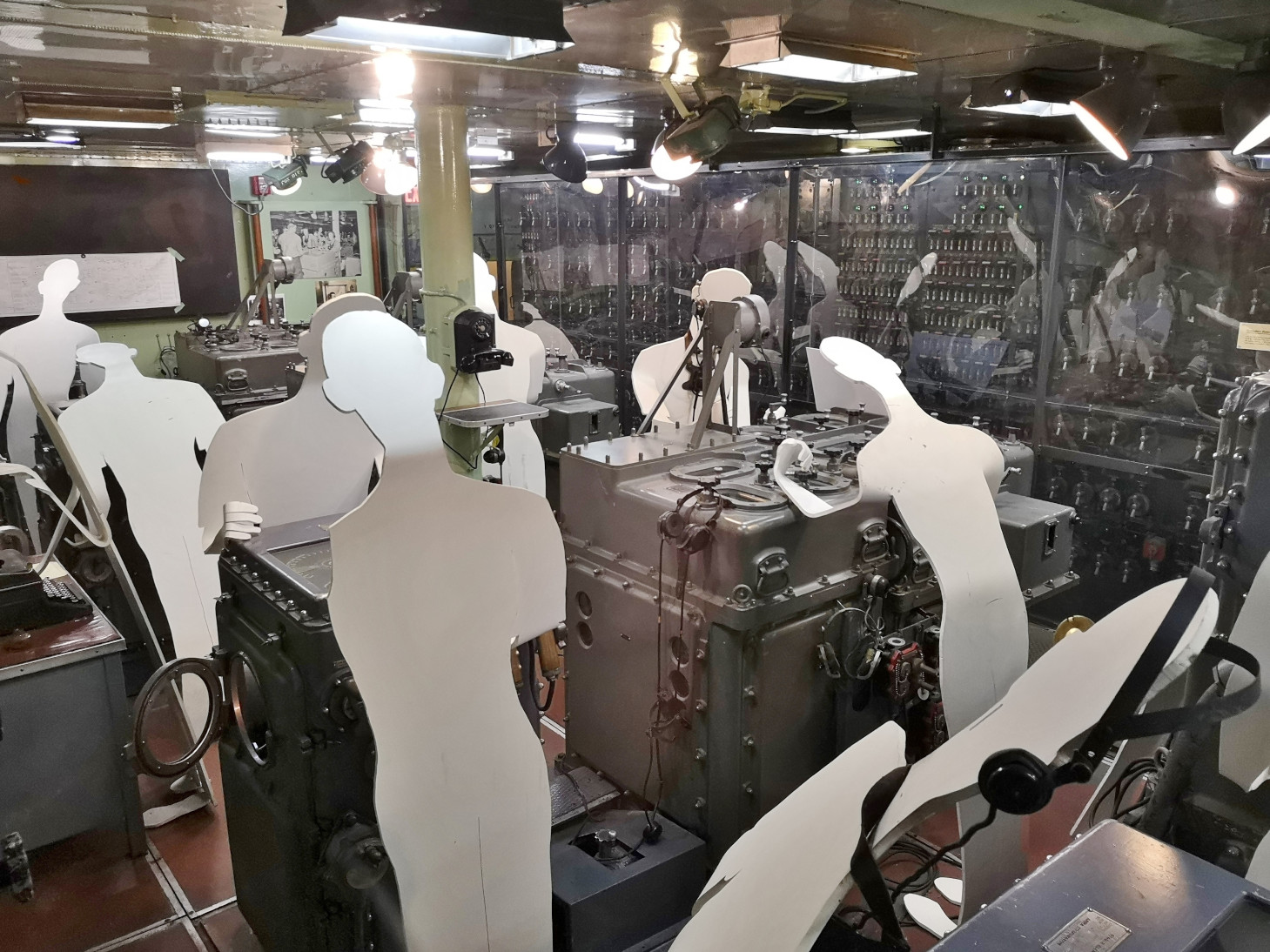
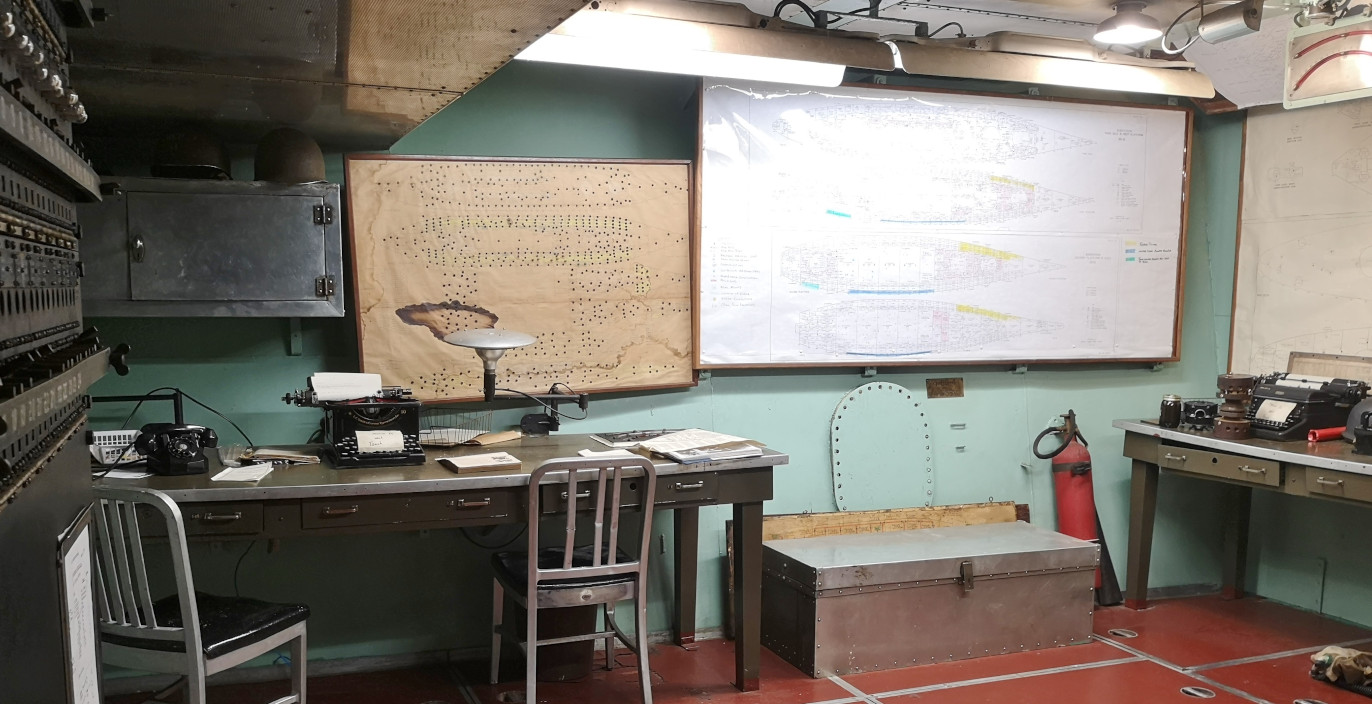
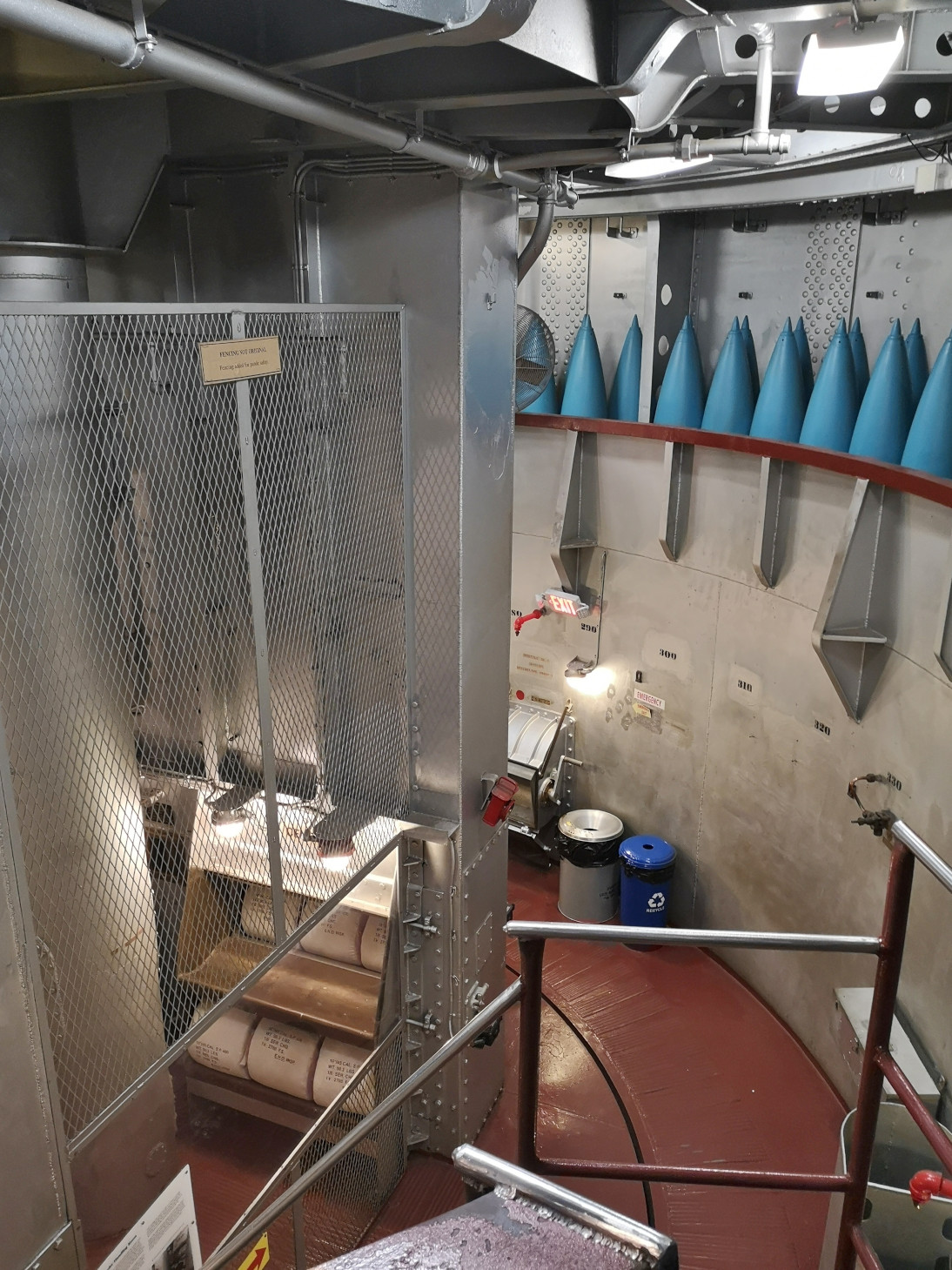
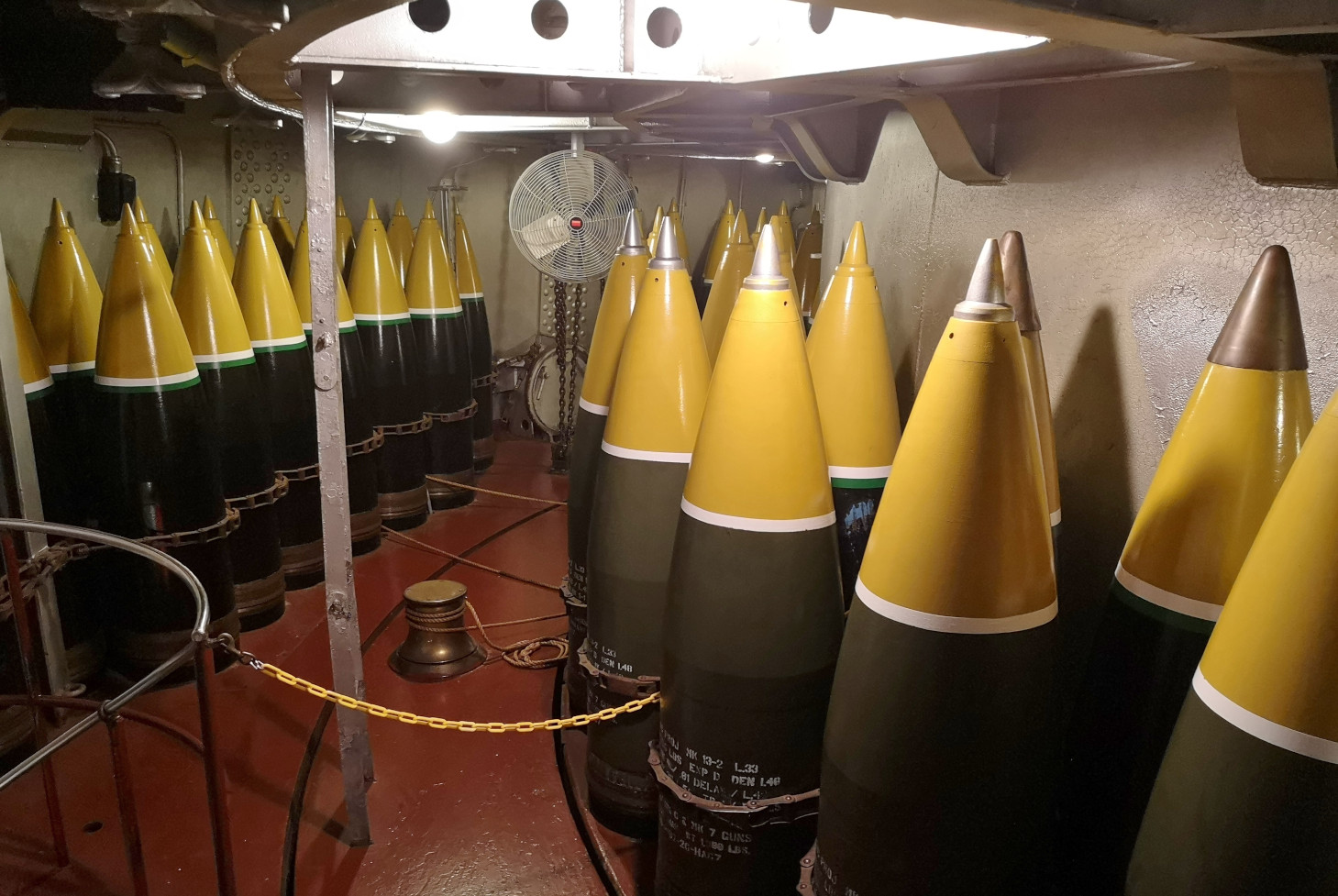
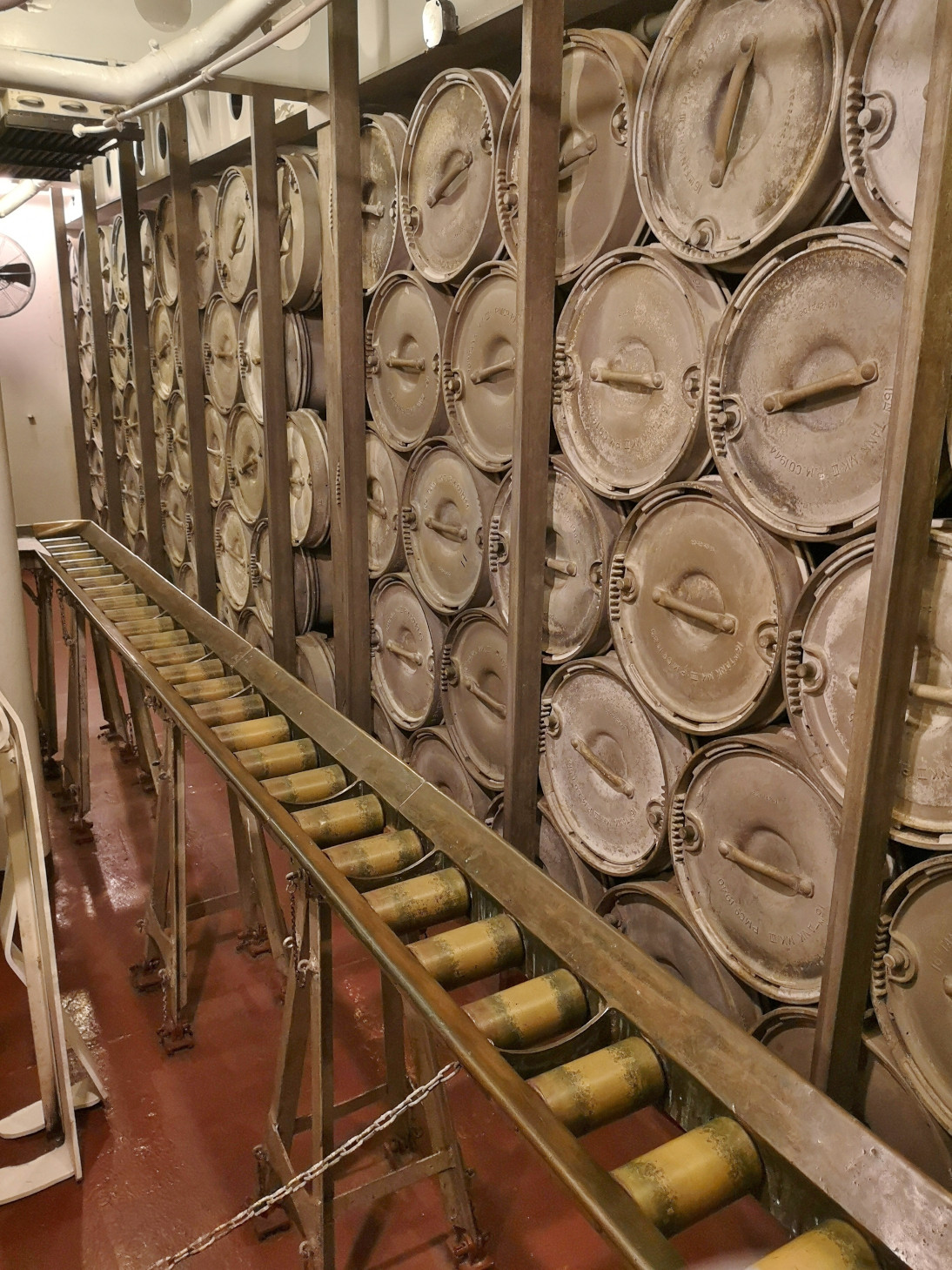
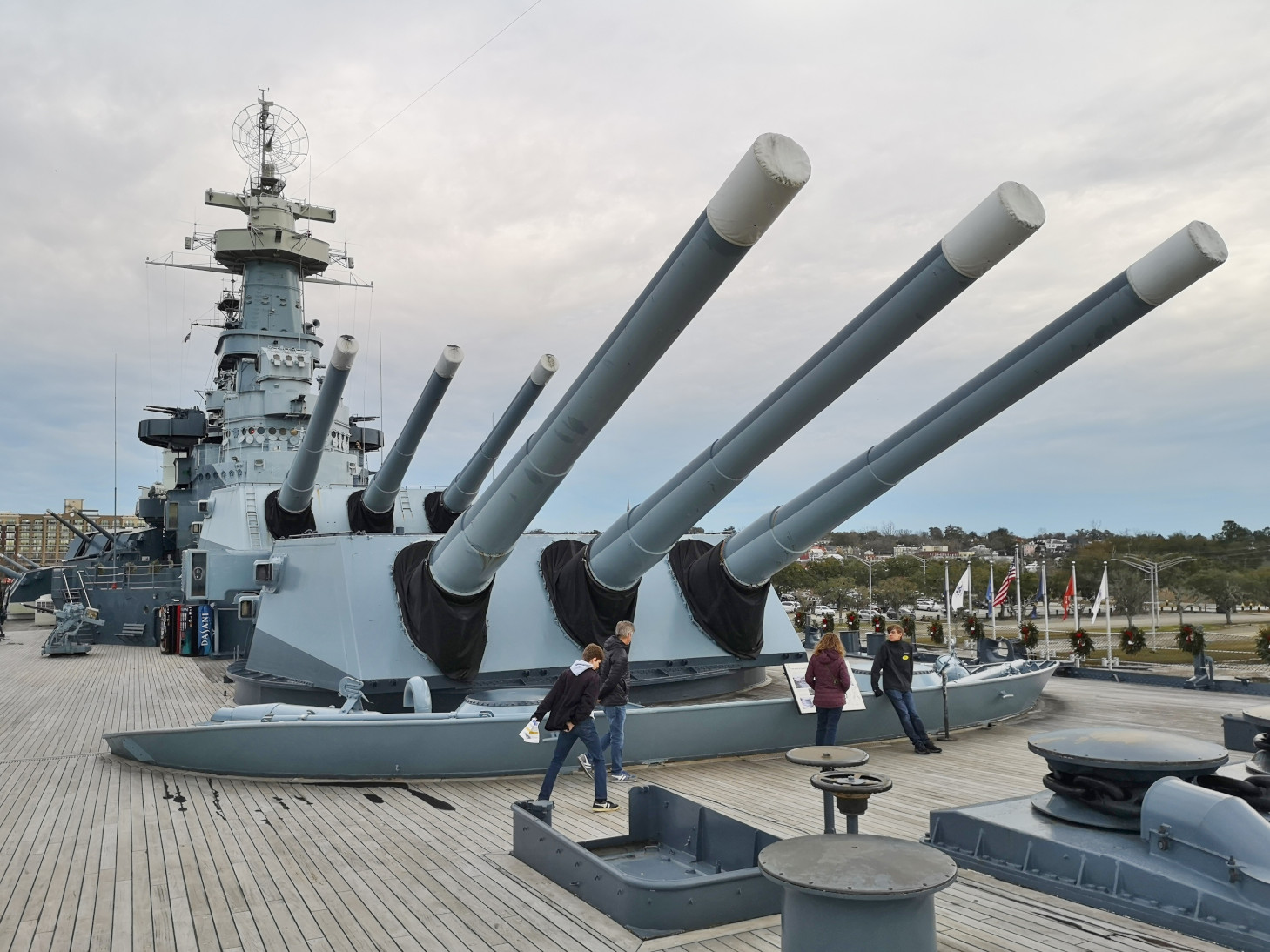
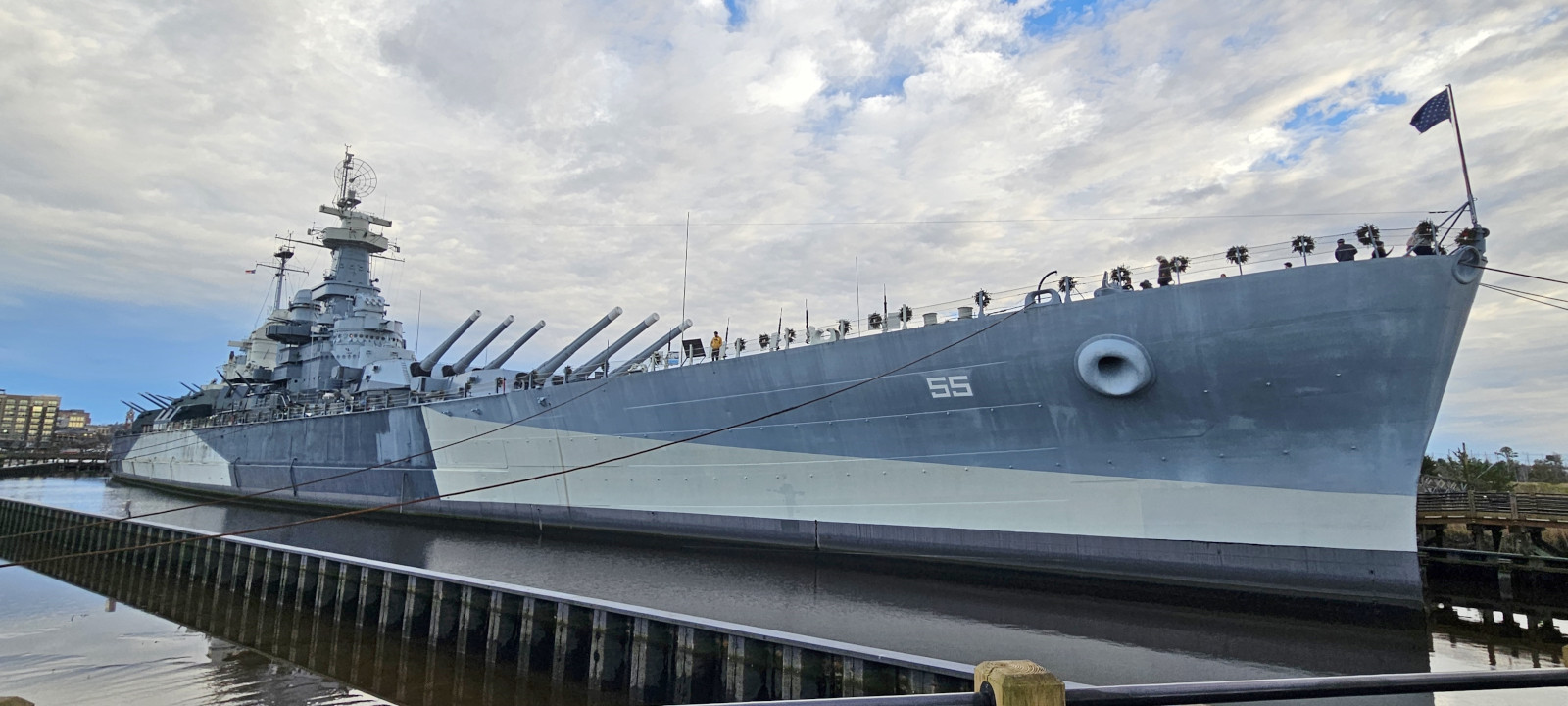
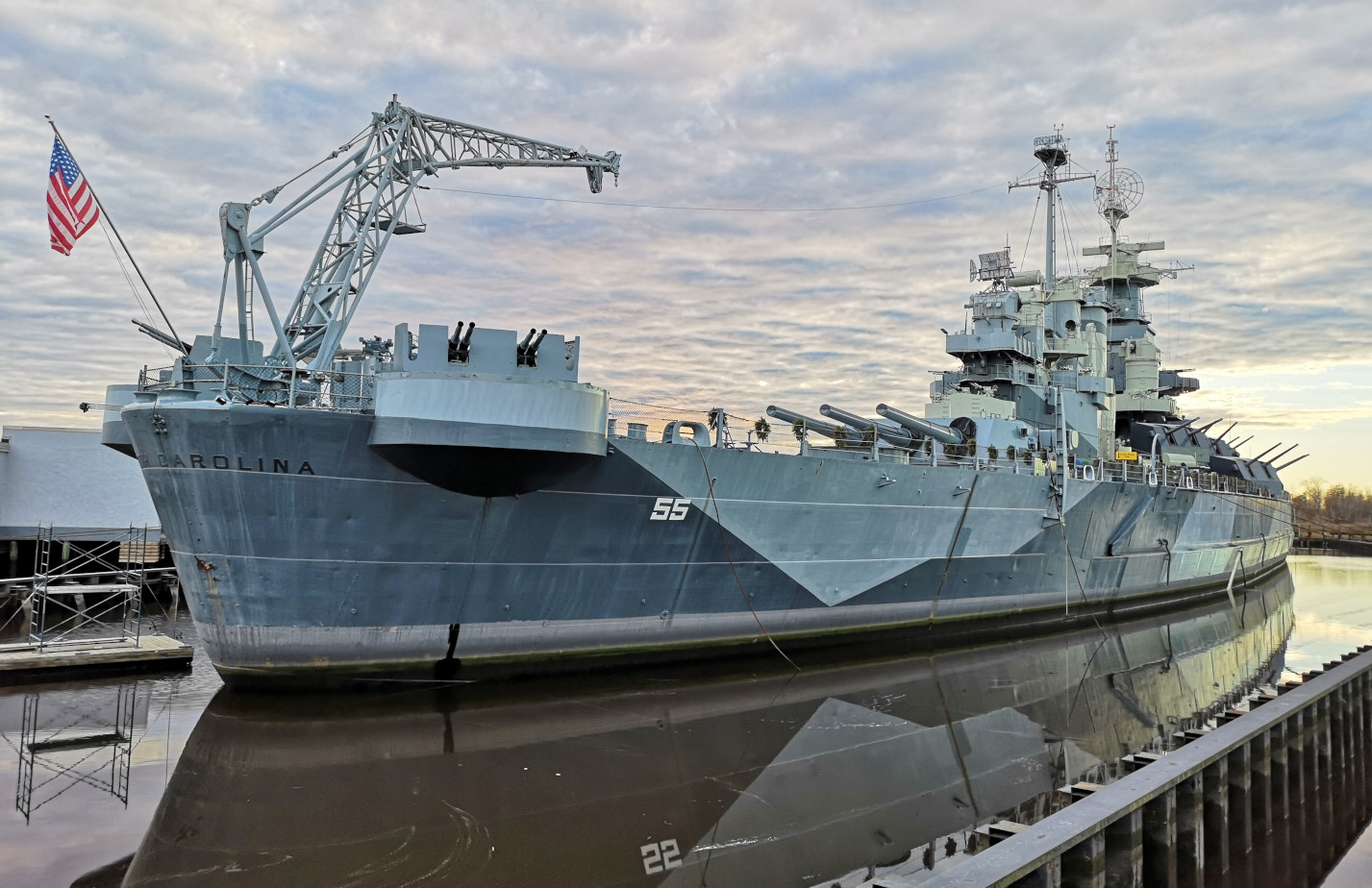
The skies were still grey the next day, but the rain stopped as we headed to the last area of coastal NC we’ll explore on this leg of the trip. First stop in Wilmington was the Navy Battleship USS North Carolina. We did the self guided walking tour of the ship, and it took about 3 hours to see everything. We had been on another battleship in Alabama but this one allowed you access to so many areas it was incredible. Here are some fun facts on the ship and a very small portion of the photos we took:
- The ship was built in Brooklyn NY and launched on June 13, 1940. It was decommissioned on June 27, 1947, and arrived in Wilmington on Oct 2, 1961.
- The ship is 728’ long and 108’ wide. It would have had a complement of 2,339 officers and enlisted men.
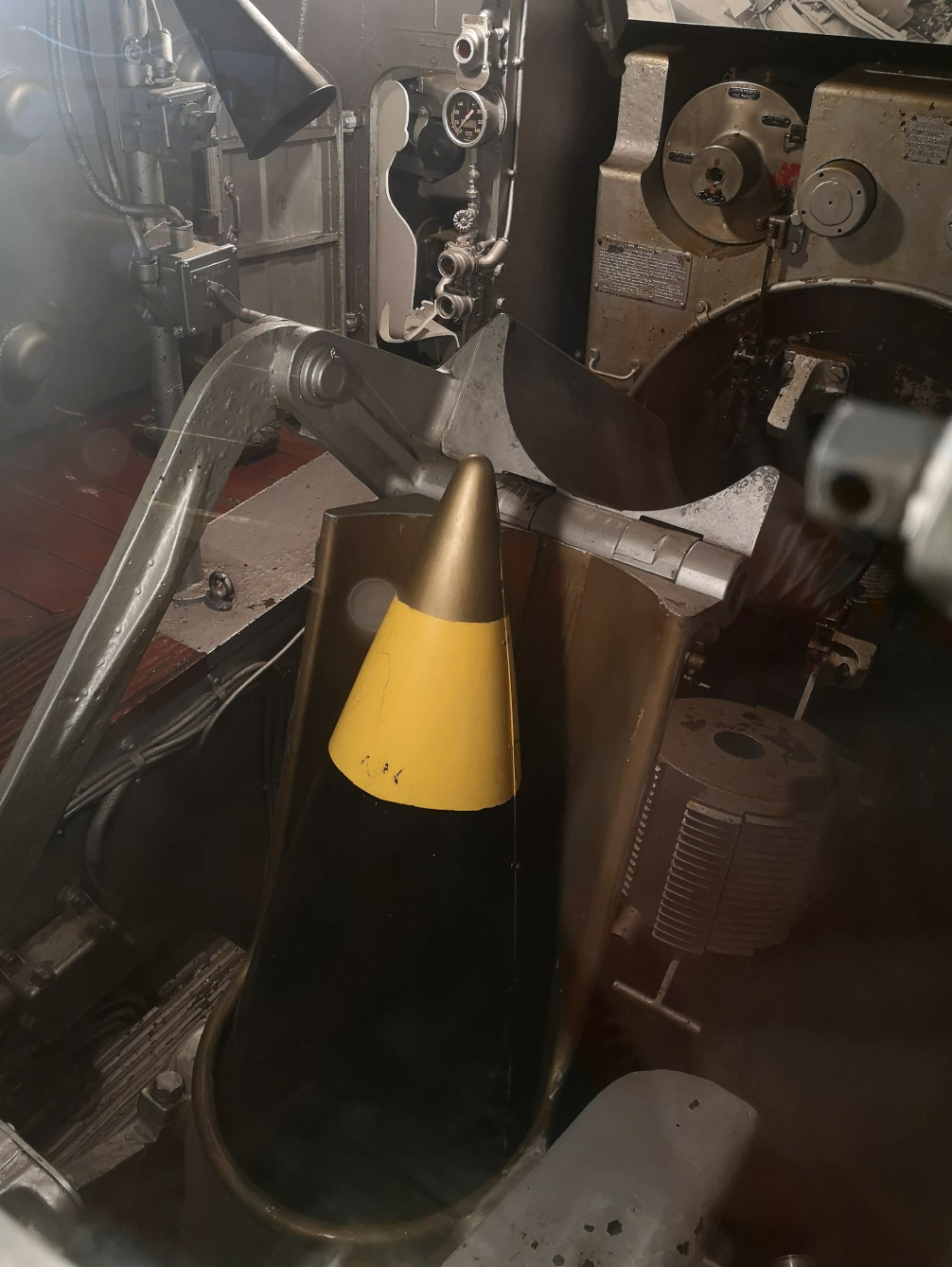
- The armaments included 9 x 16” guns, 20 x 5” guns, 60 x 40mm guns, up to 53 x 20mm guns.
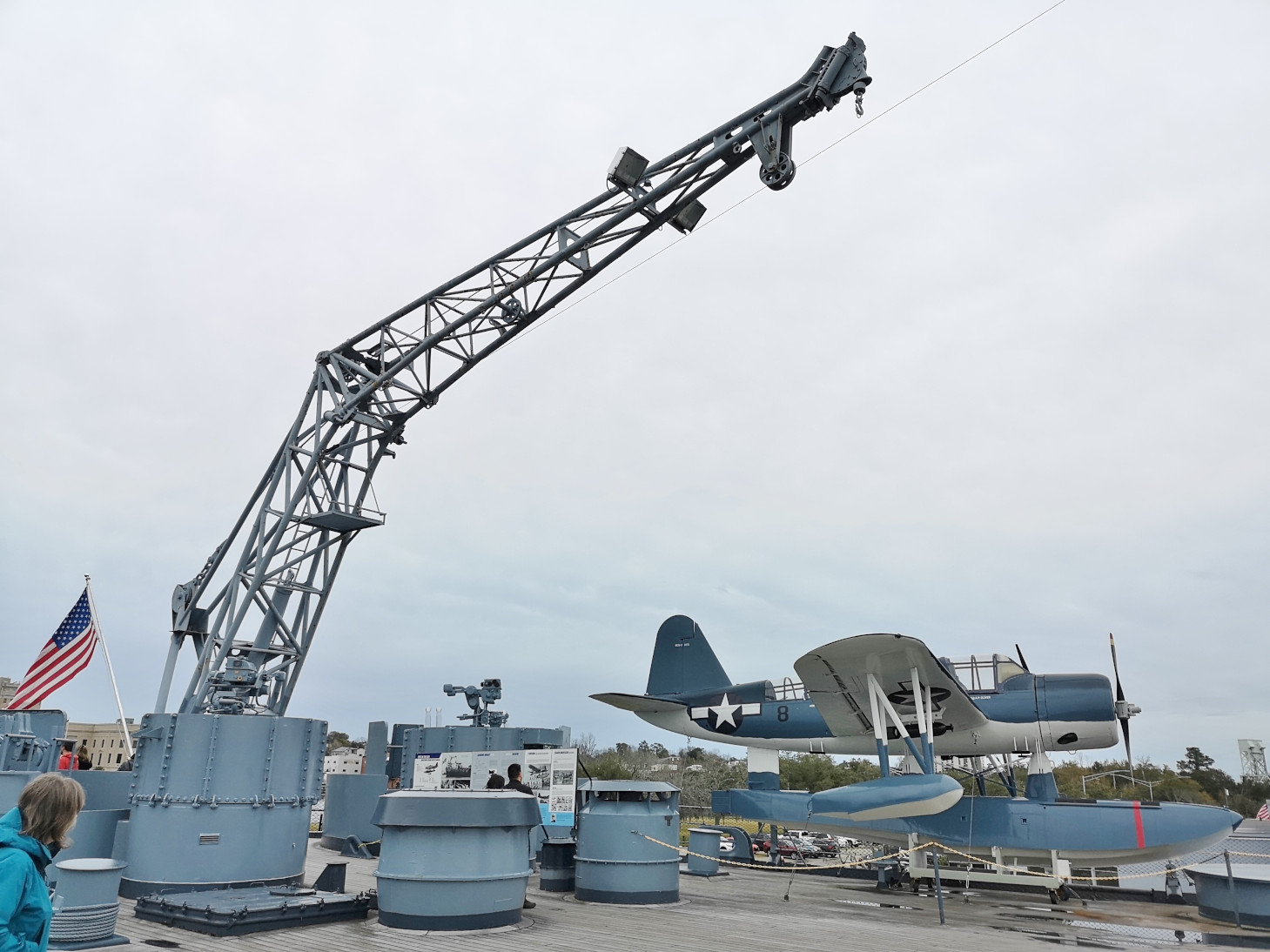
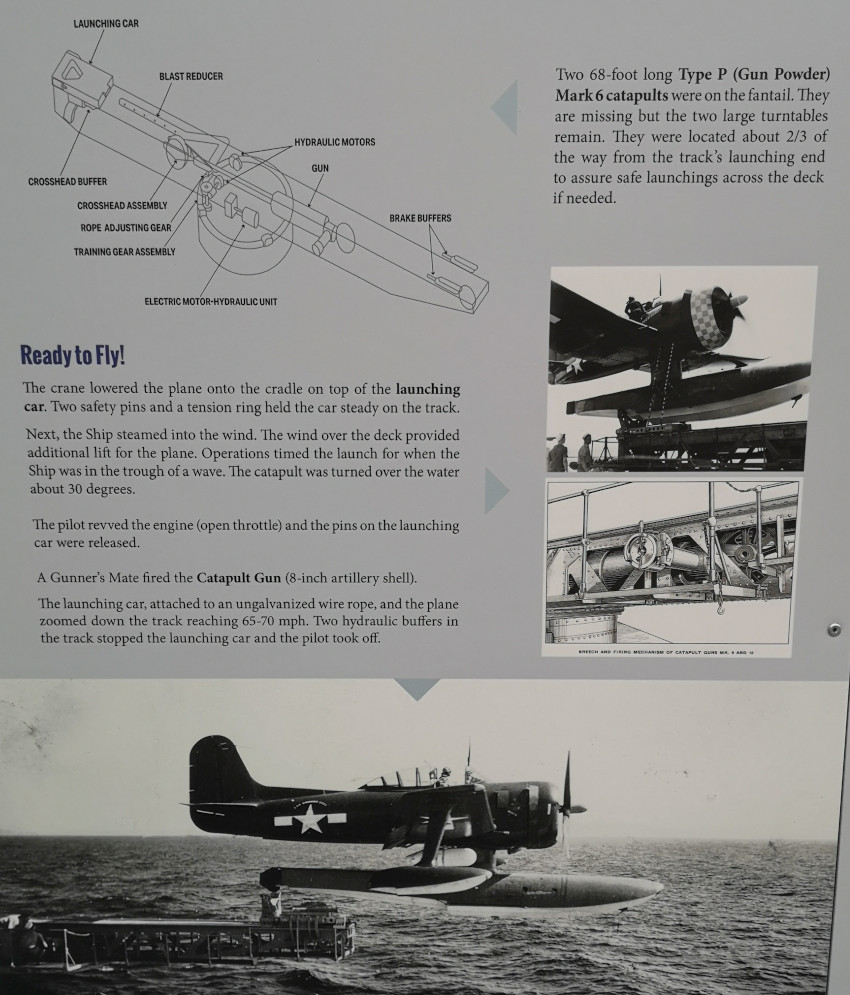
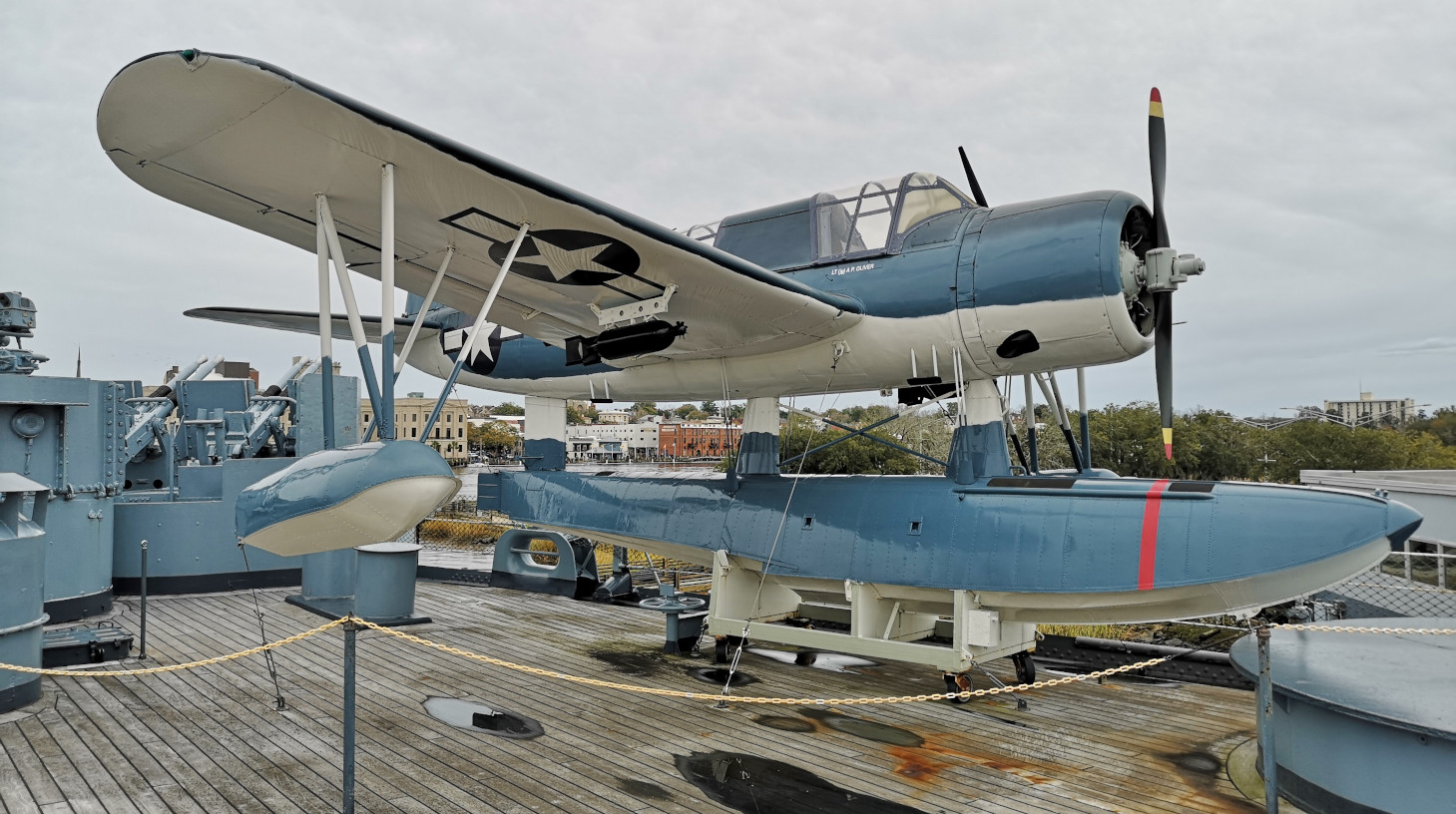
- Our tour started at the stern with the Kingfisher Scout Plane, and it was really fascinating to read how they launched this plane and also how they got it back onboard.
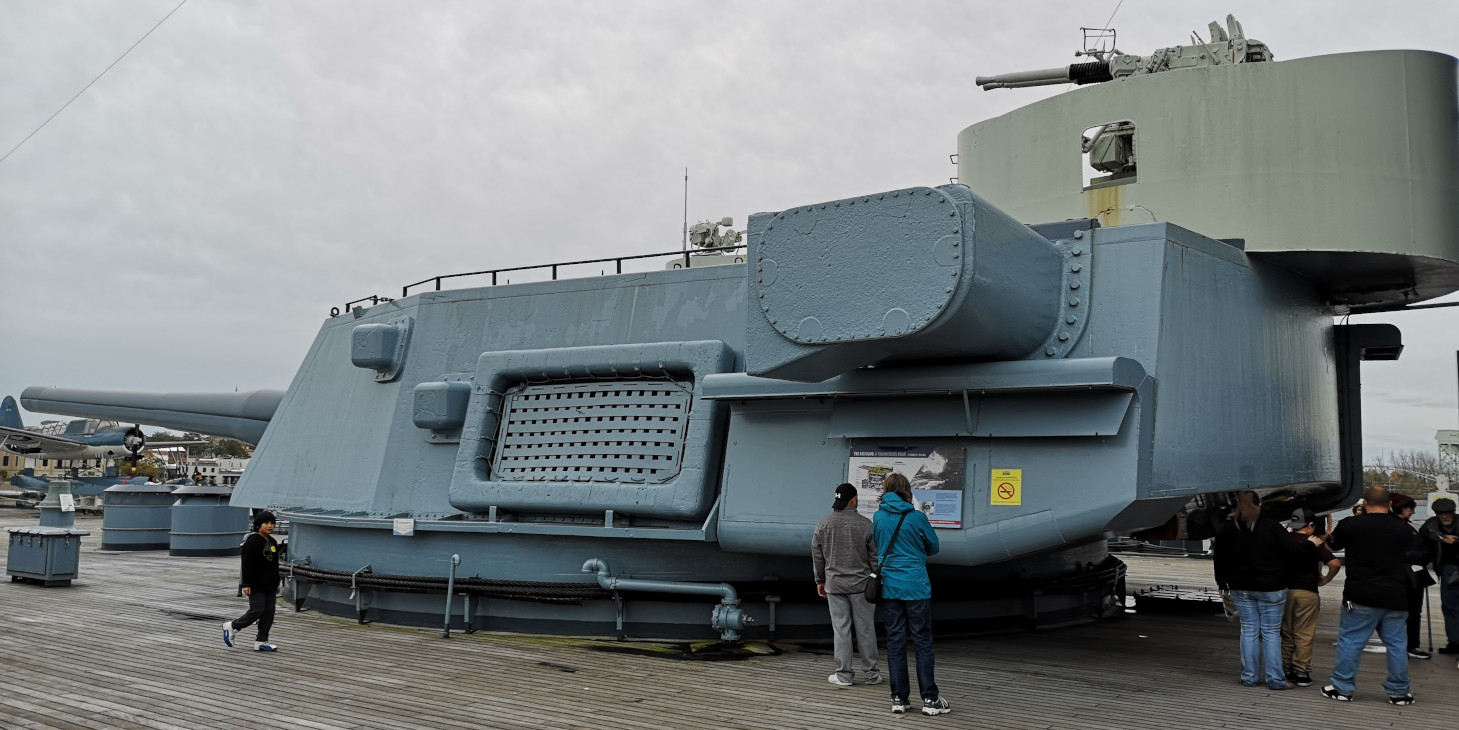
- Next, we went up into Turret 3 gun house, very cramped quarters.
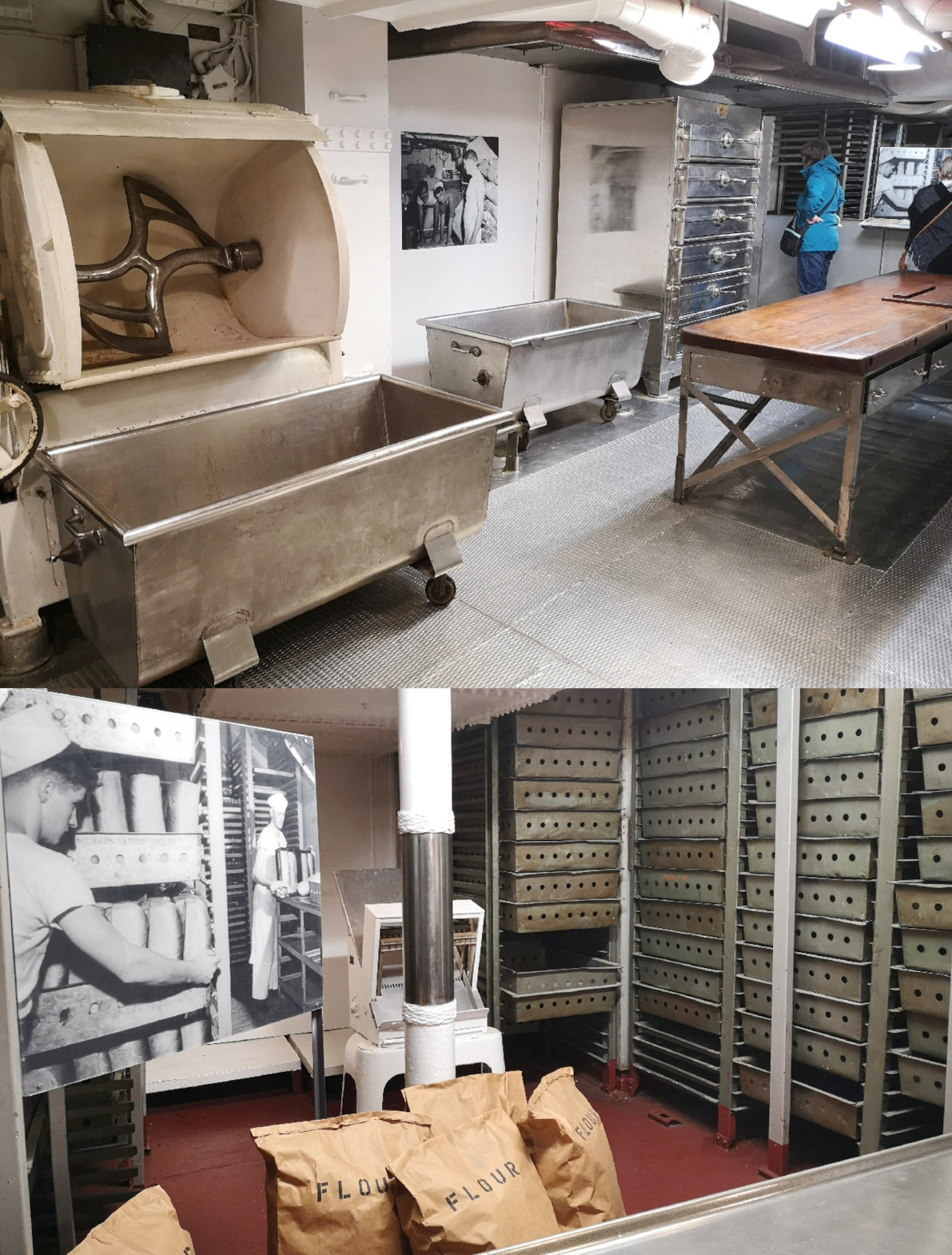
- Then we went into the second deck area with the bake shop where they made 1,600 loaves per day.
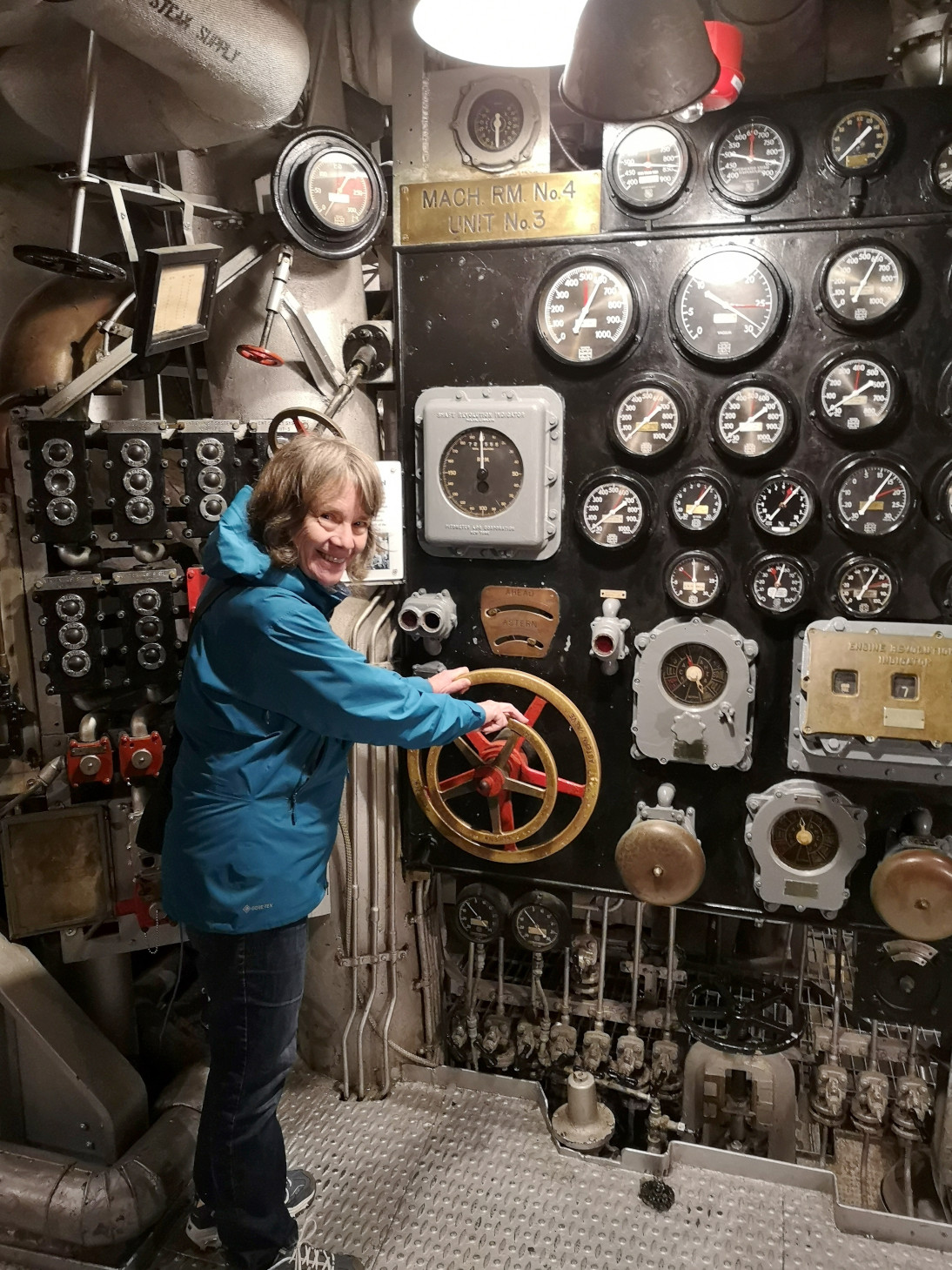
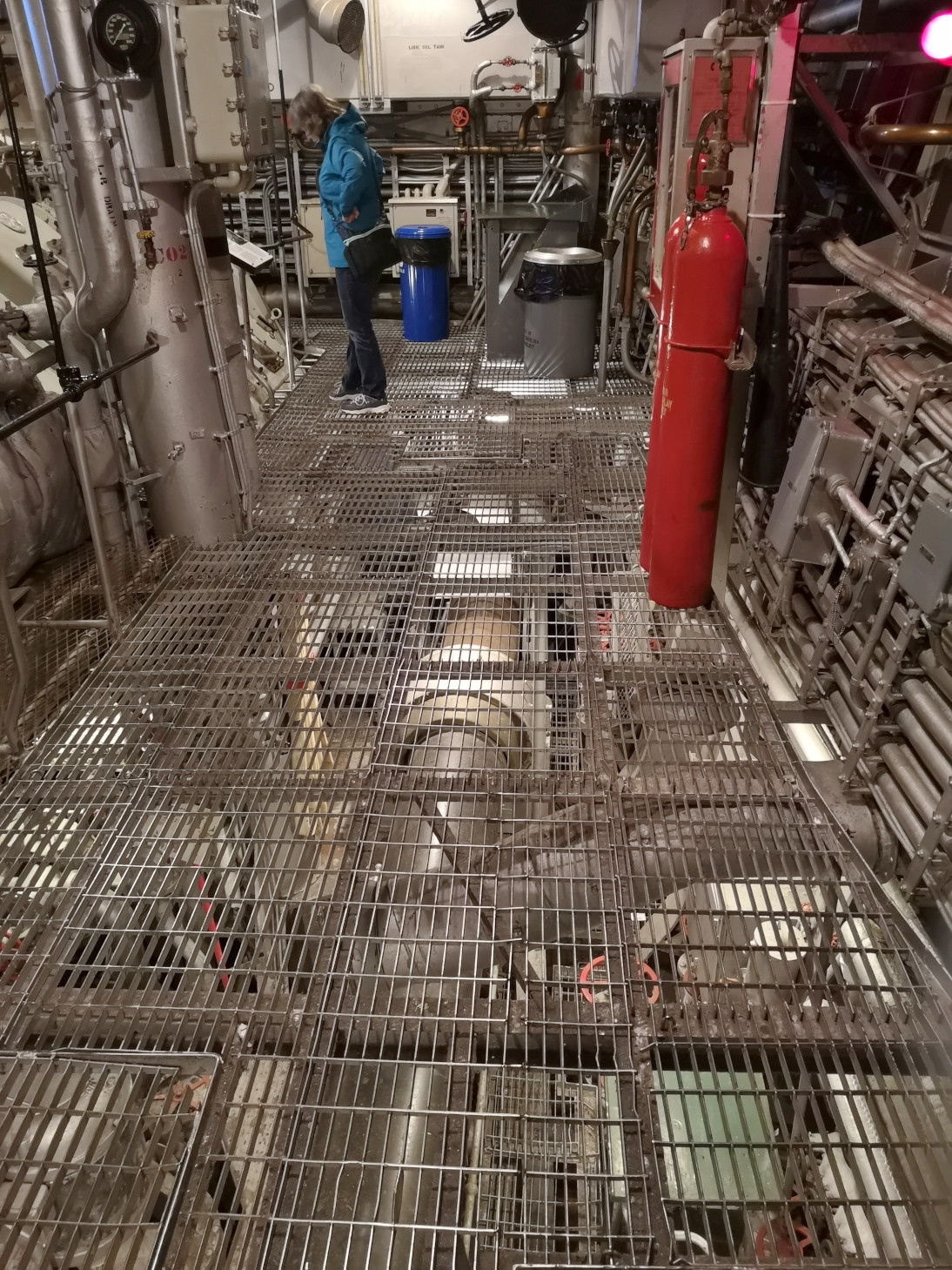
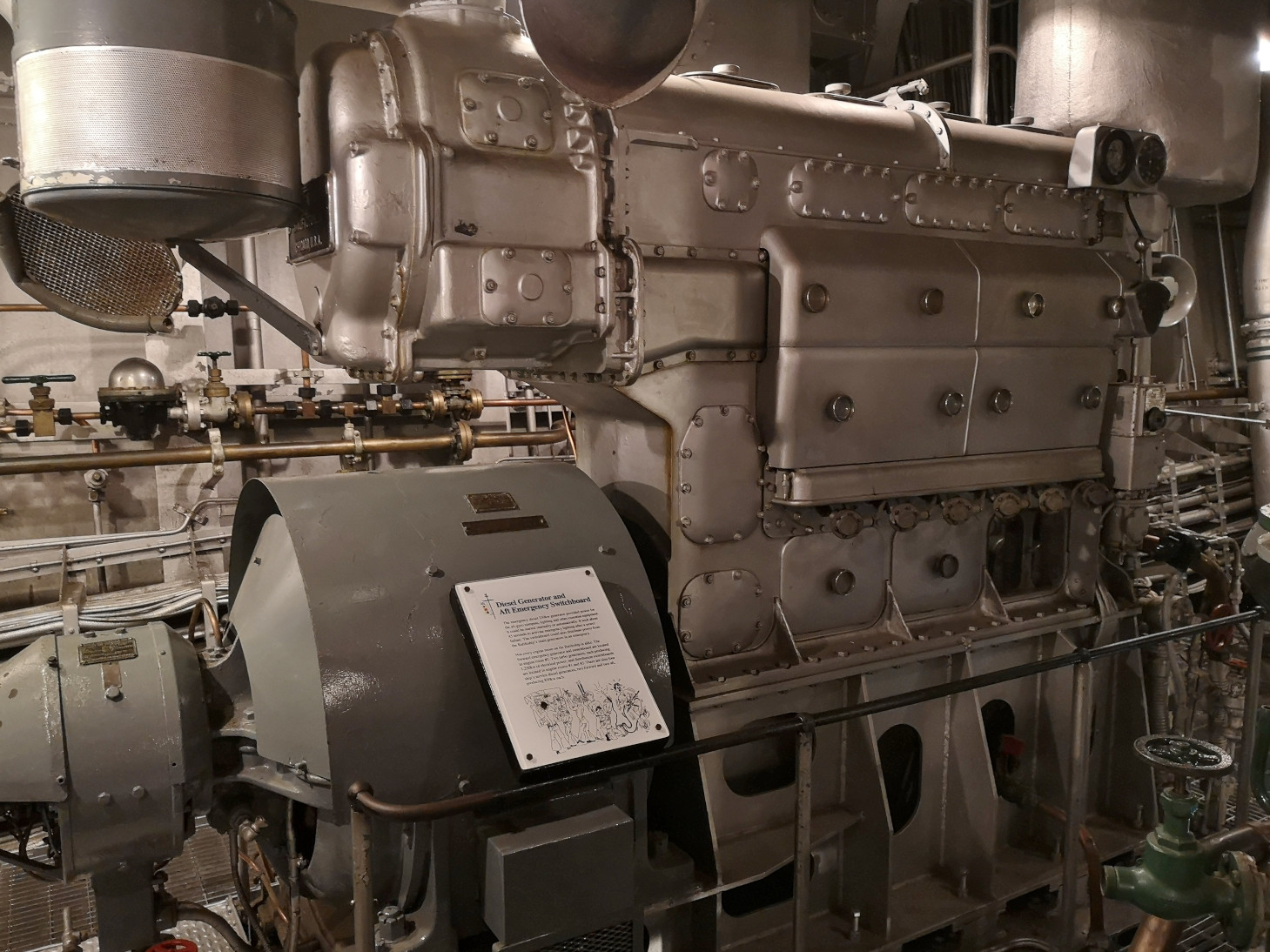
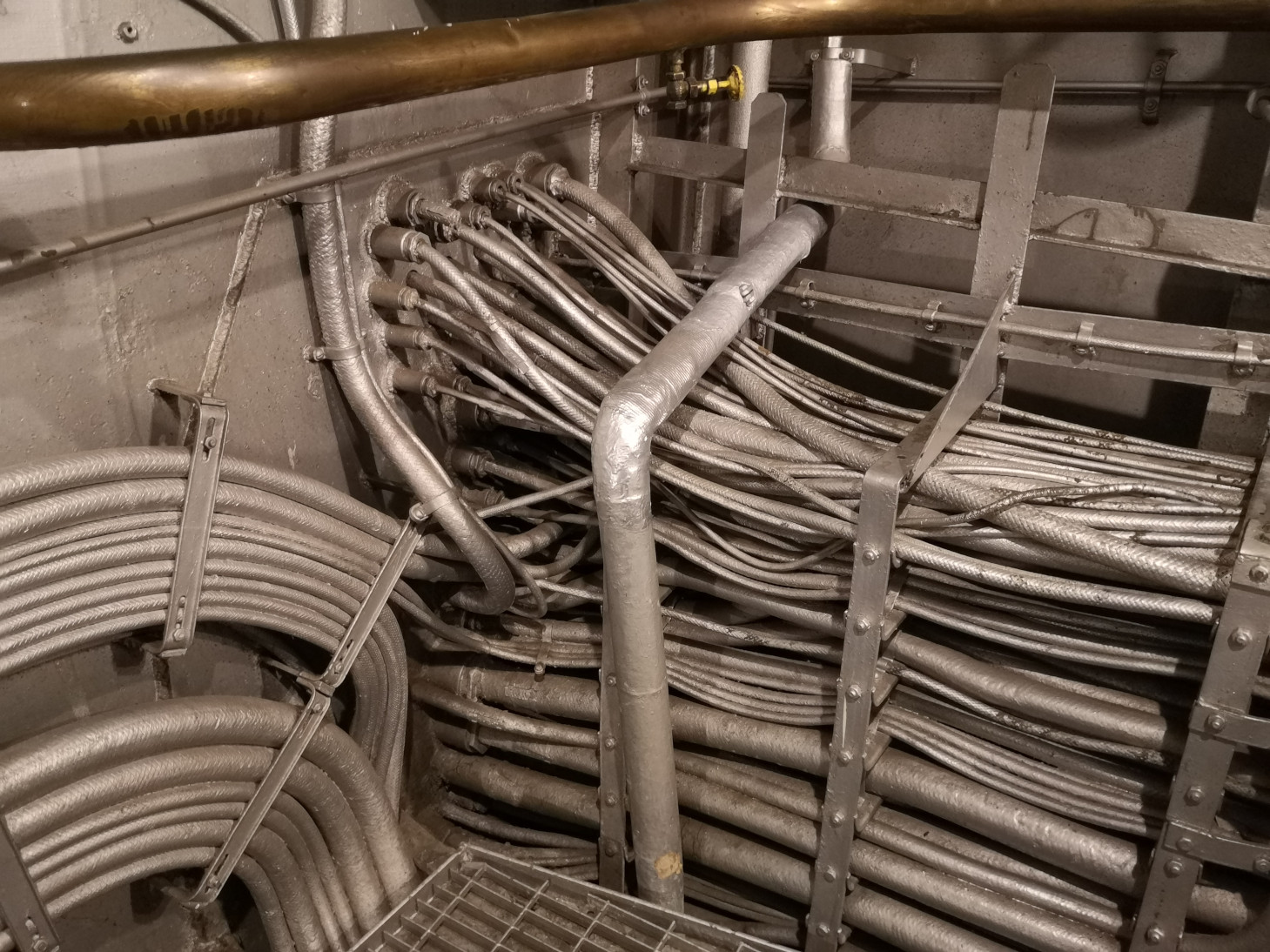
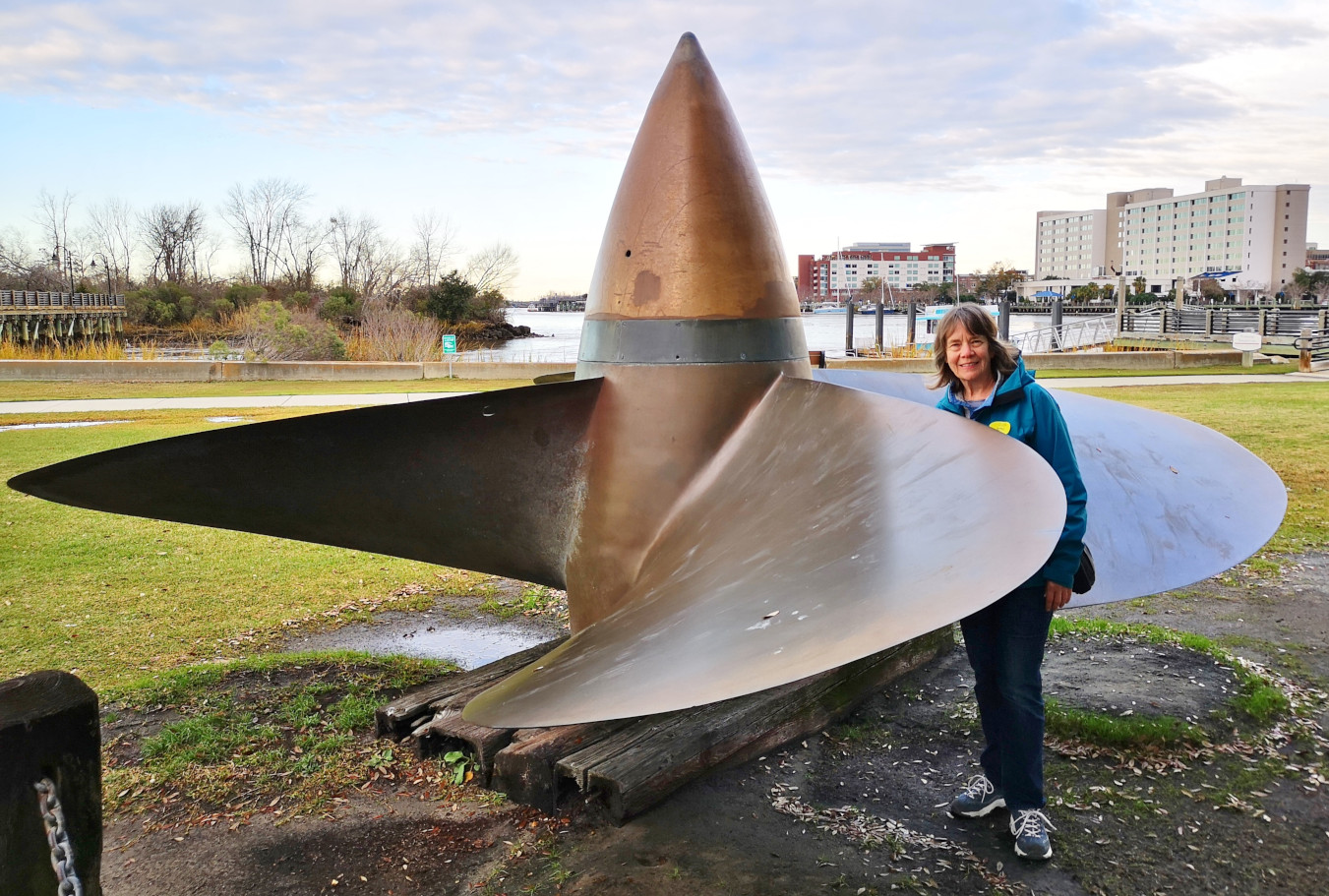
- Dropping down into engine room #4 we saw the boiler that turned a high-pressure turbine and then a reduction gear dropped the RPM down to a low-pressure turbine that then turned the propeller shaft (4 propellers on the ship). Top speed for the ship was 28 knots. They also had massive diesel generators in this area. This wasn’t a great area to work in as it would have been very hot.
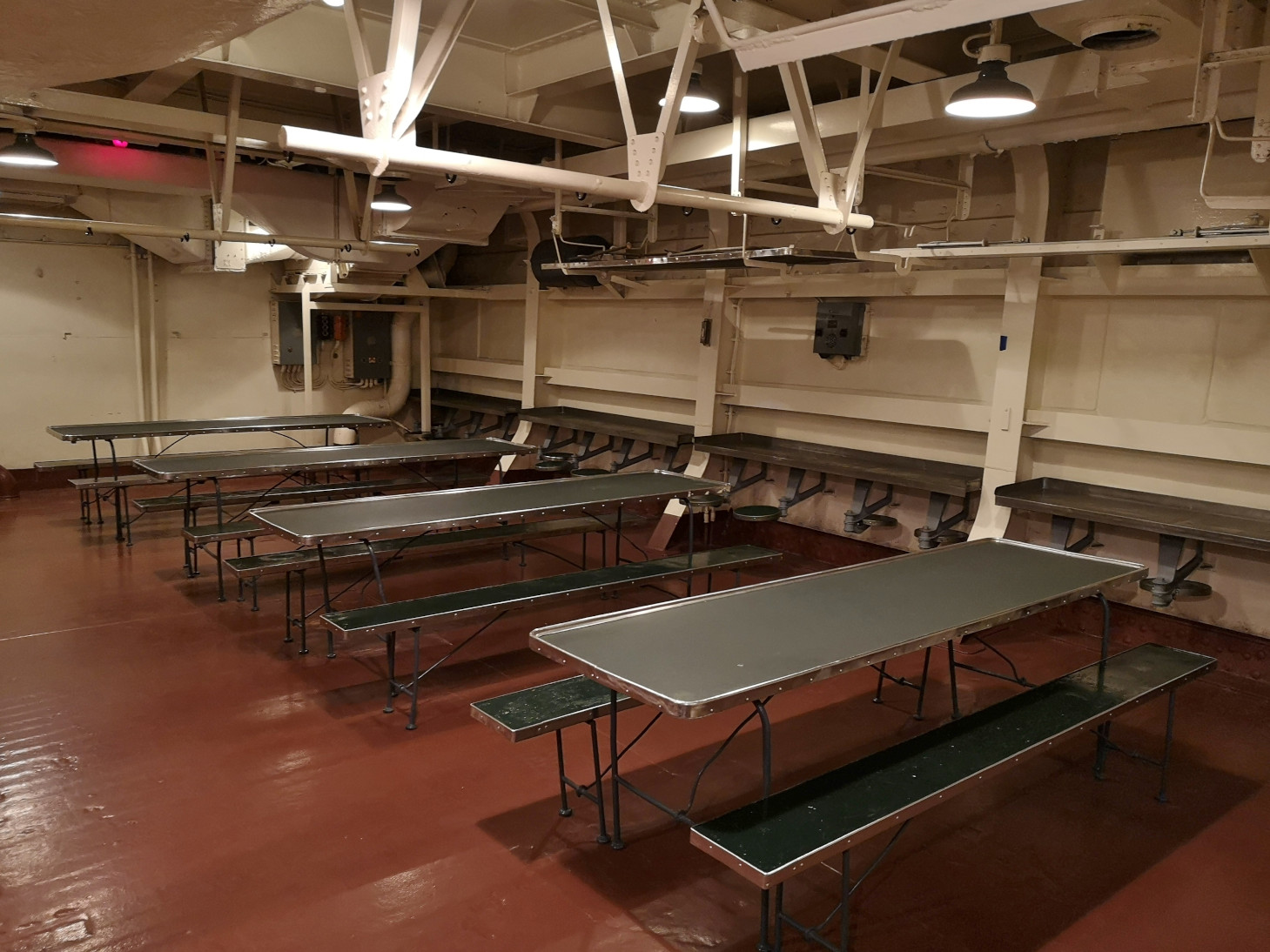
- When we came back up, we saw the butcher shop and the crew galley.
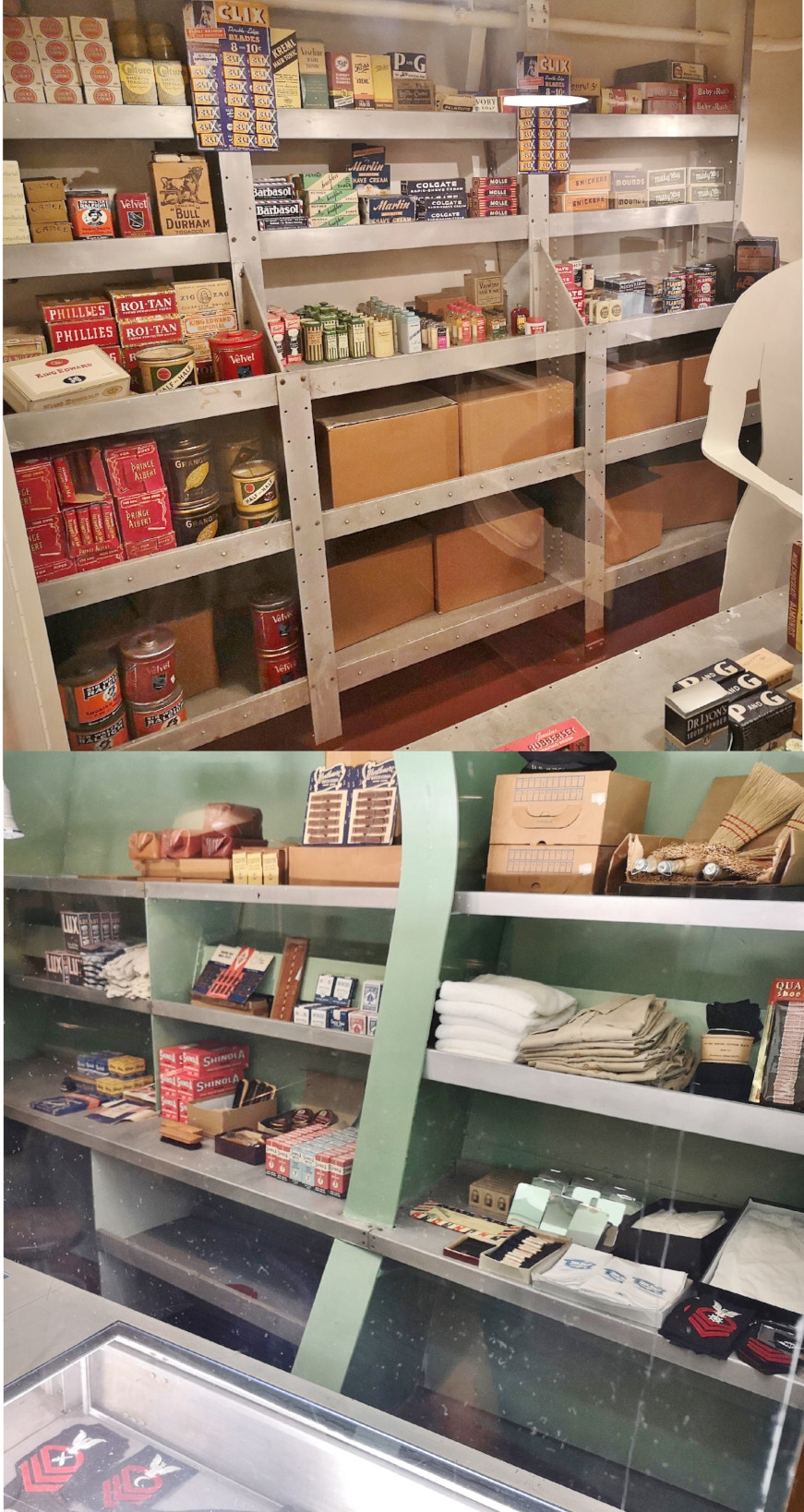
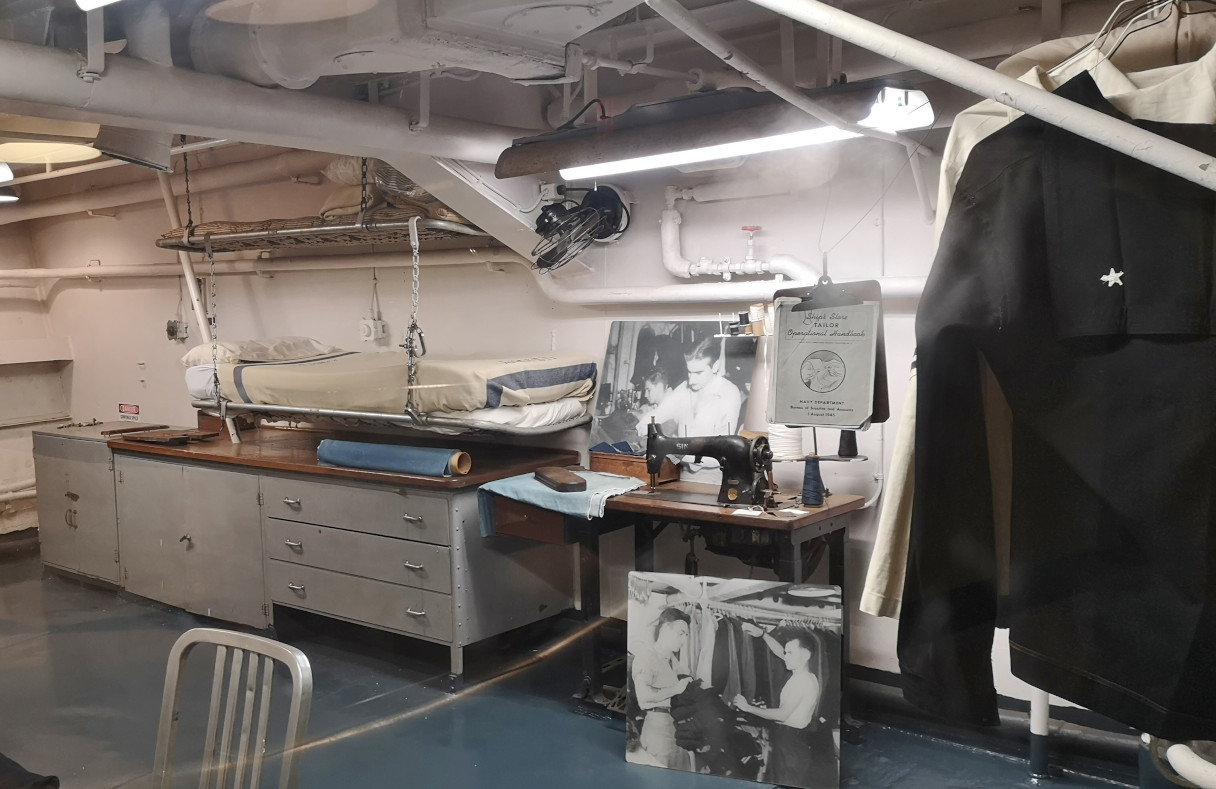
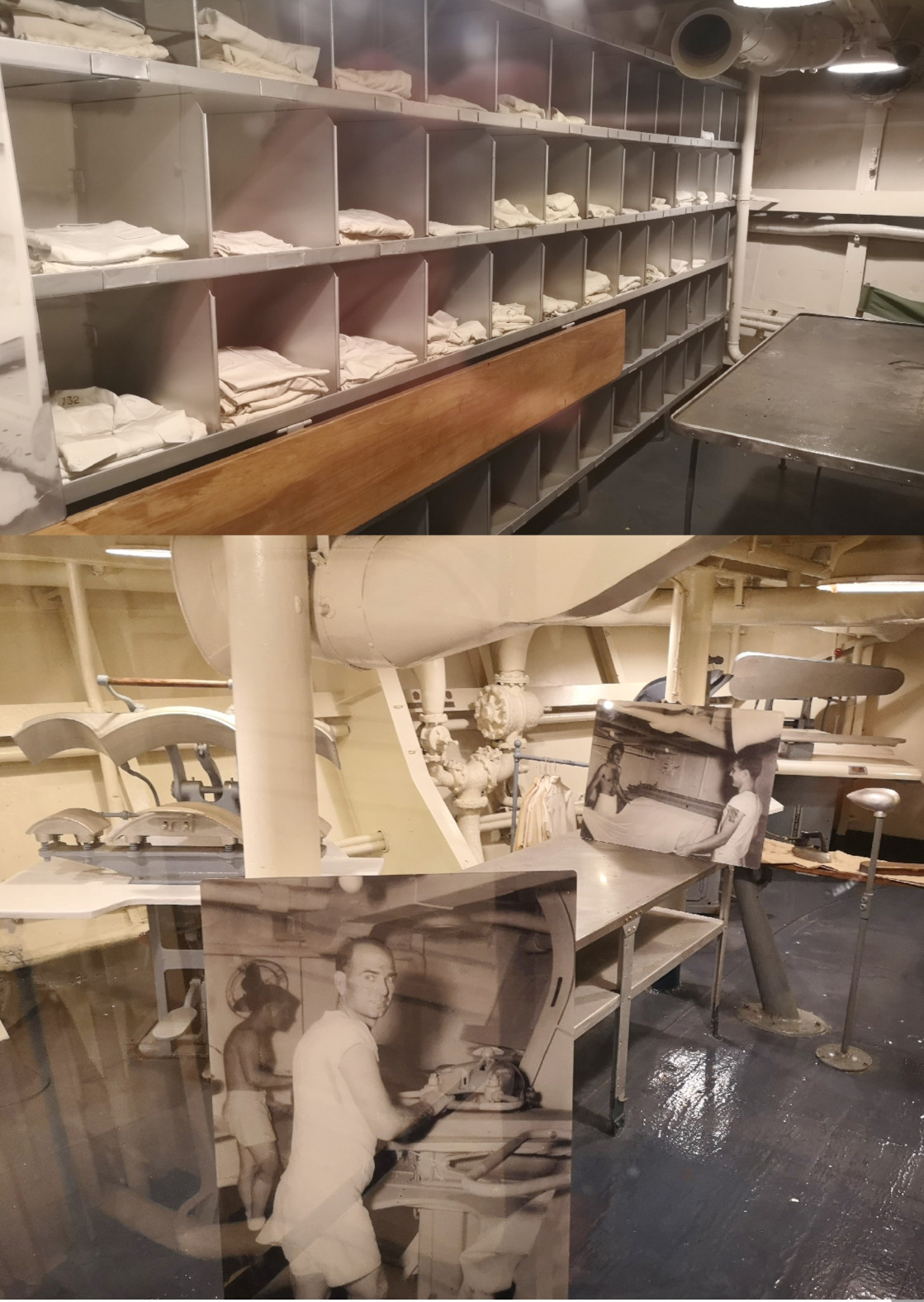
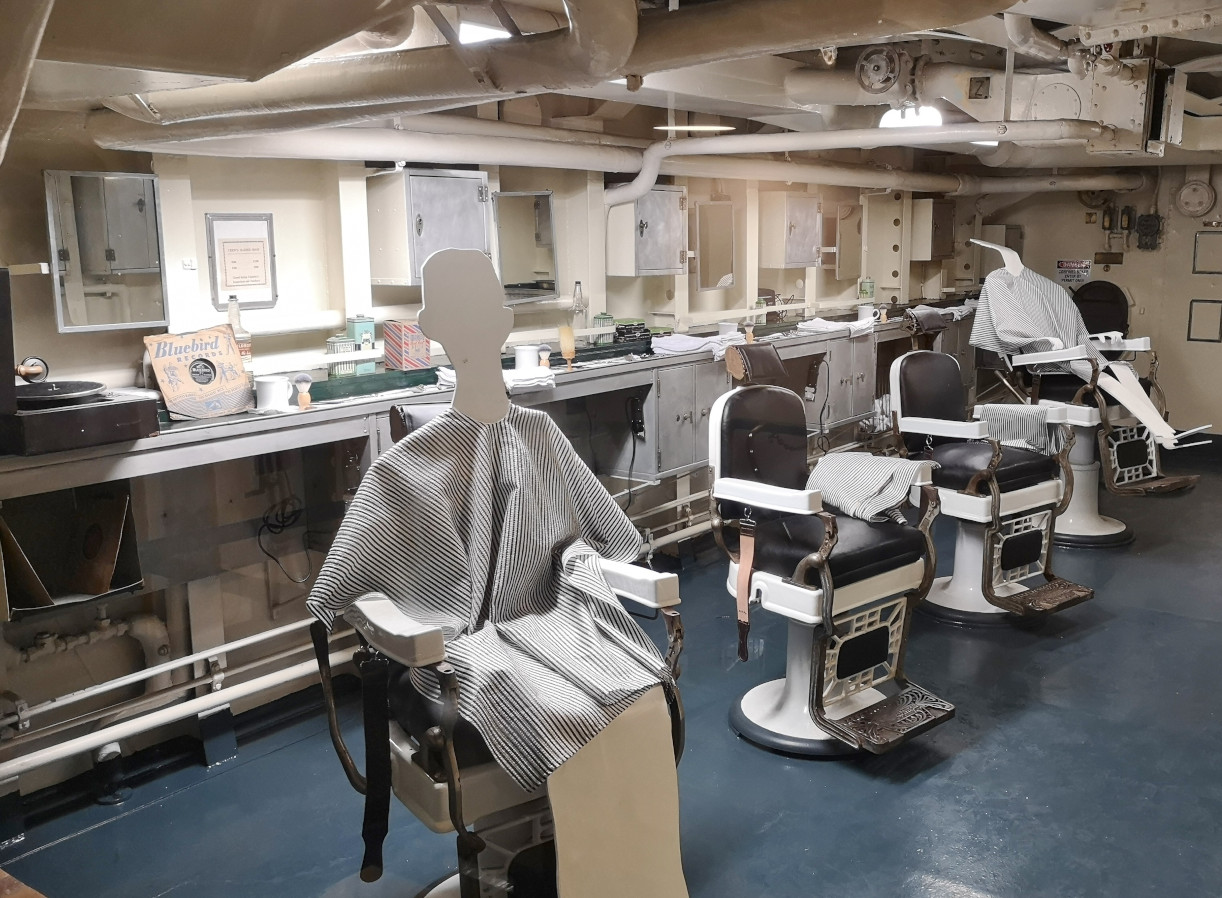
- The ship had 2 different stores to sell things to the enlisted men, a soda fountain station, tailor shop, laundry issue and ironing room, and a barber shop.
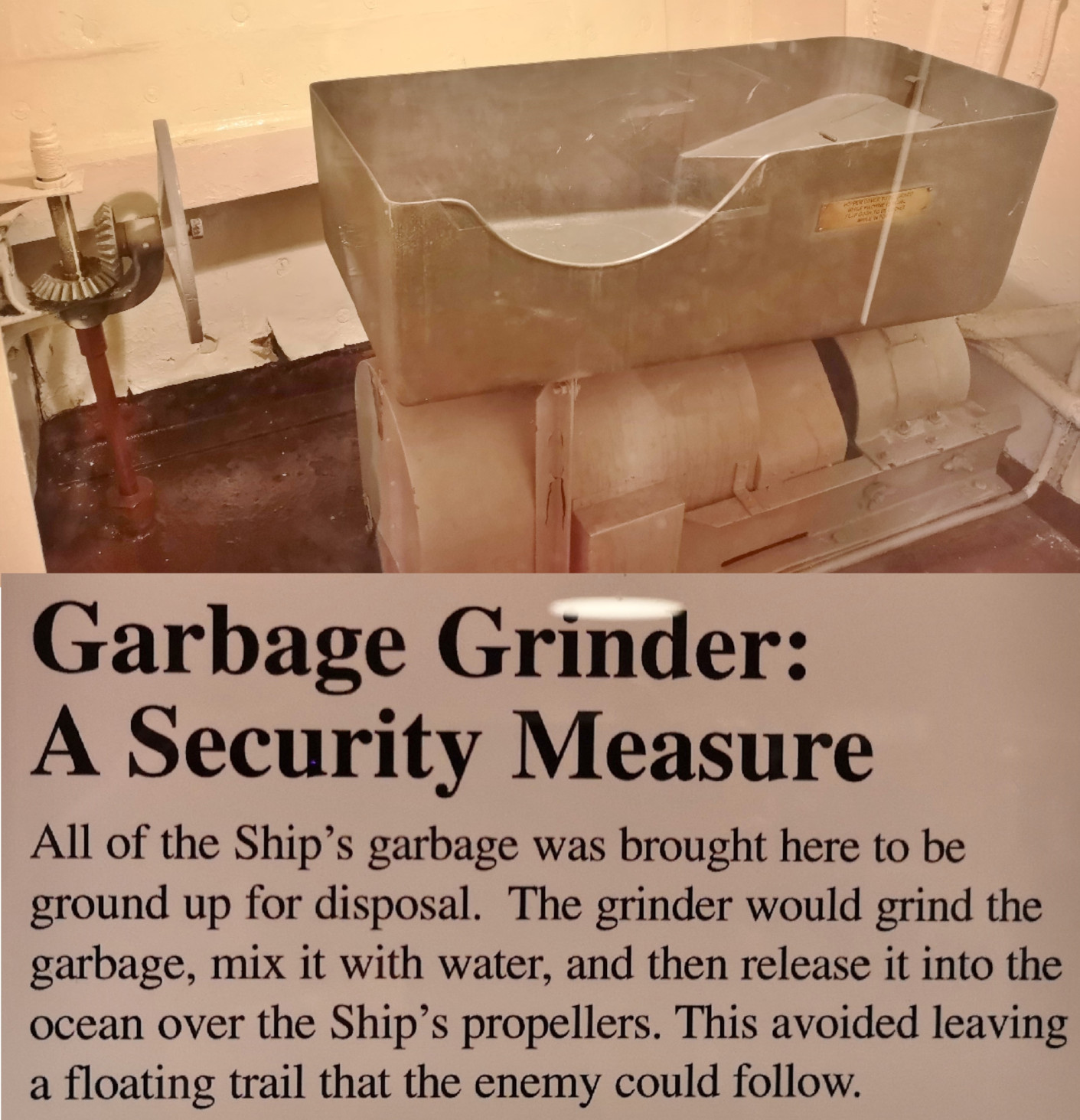
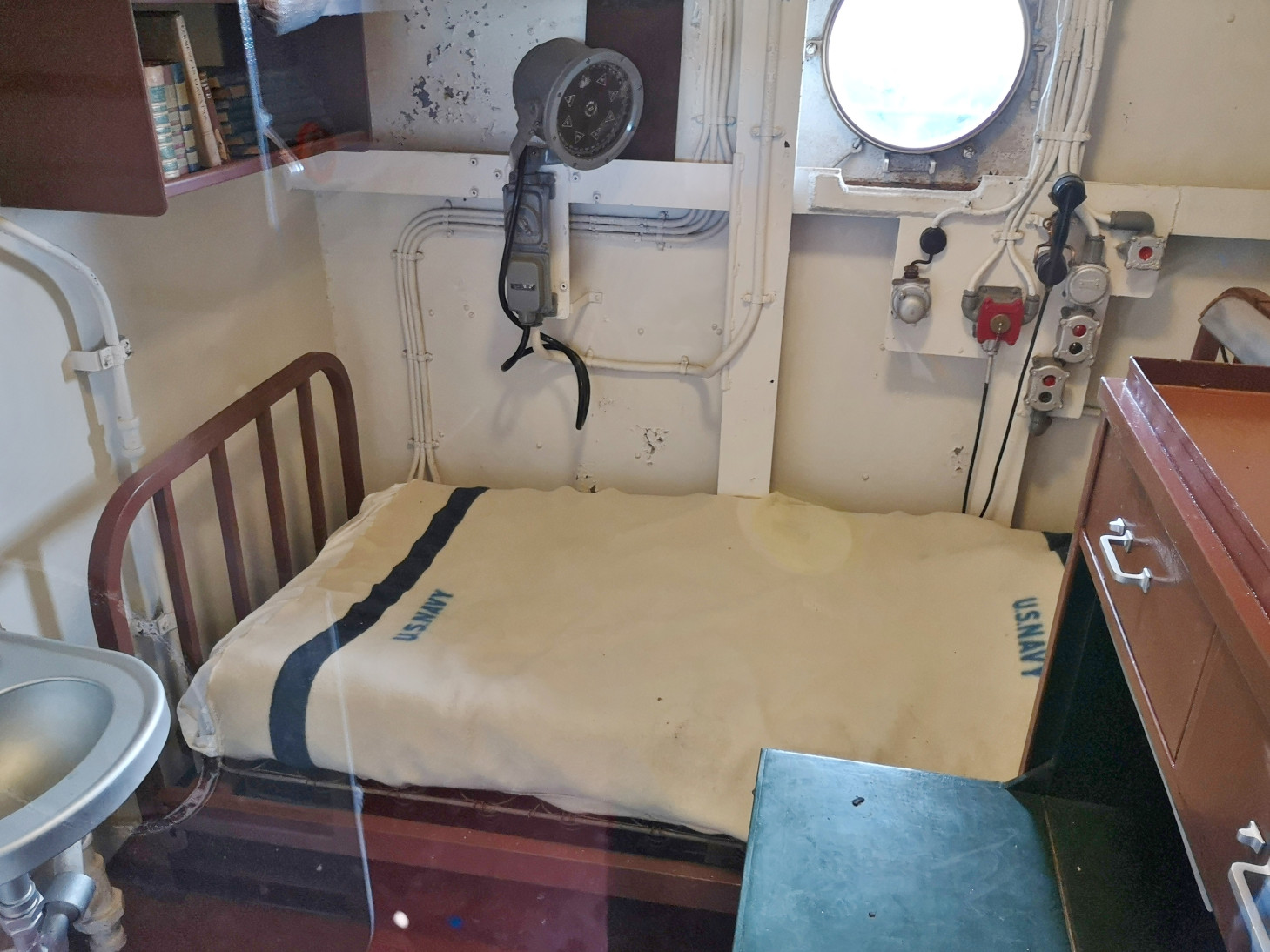
- Another layer down was the garbage grinder, cold storage, printing shop, laundry, and aft steering. Interestingly a lot of the speciality areas had cots as the men working that area would also sleep in the same area. At first, we thought who’d want to sleep where they worked but when we saw the crew quarters we understood why!
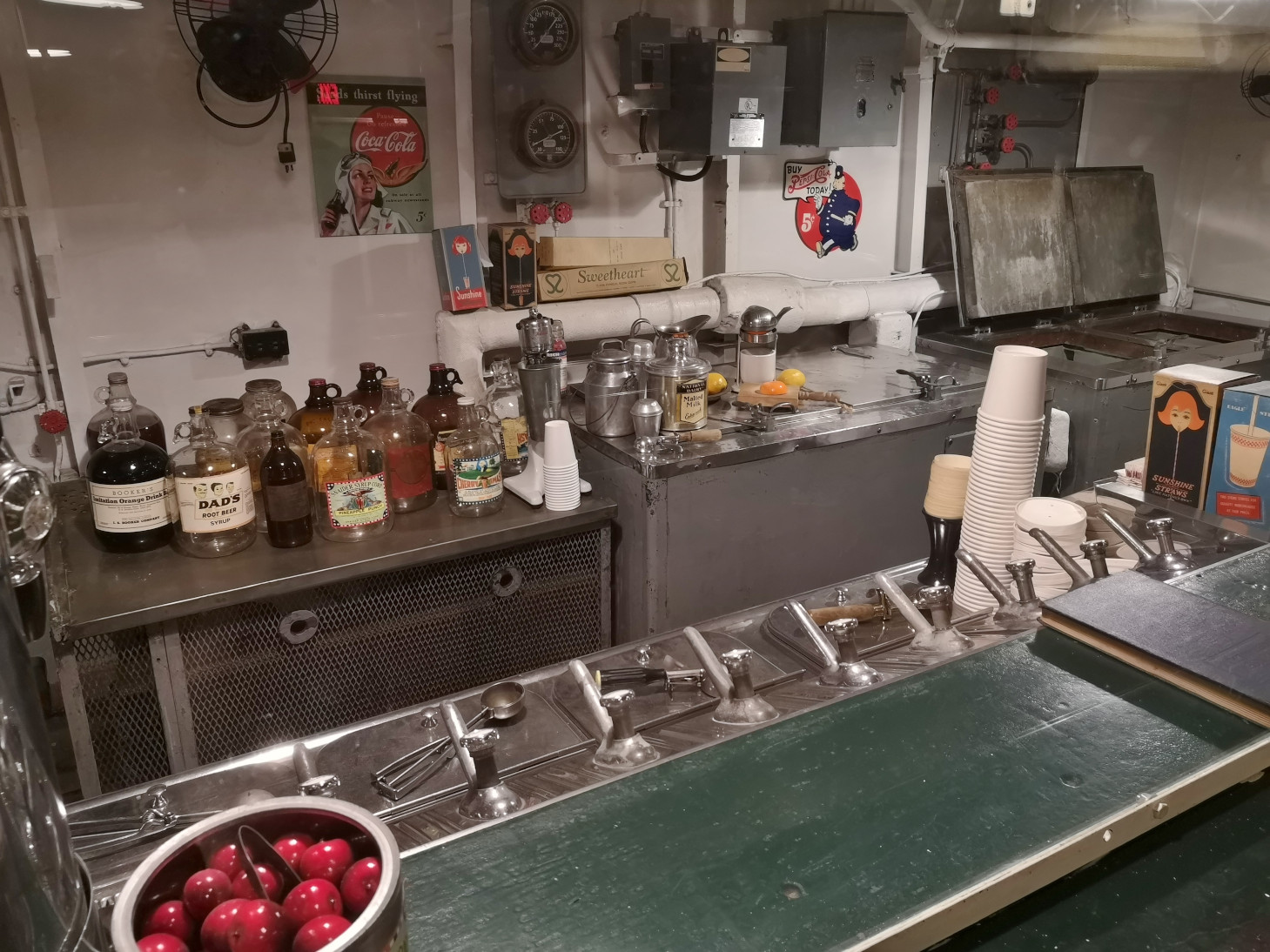
- Next was the ice cream station (ice cream was a popular treat and a reward for the crew), movie theatre, crew quarters (we couldn’t imagine how the men got up to the top bunks as they were 5 high!), and of course the head.
- We proceeded forward to sick bay, and then down to the general workshop, the main battery plotting room, interior communications, damage control room, and radio central.
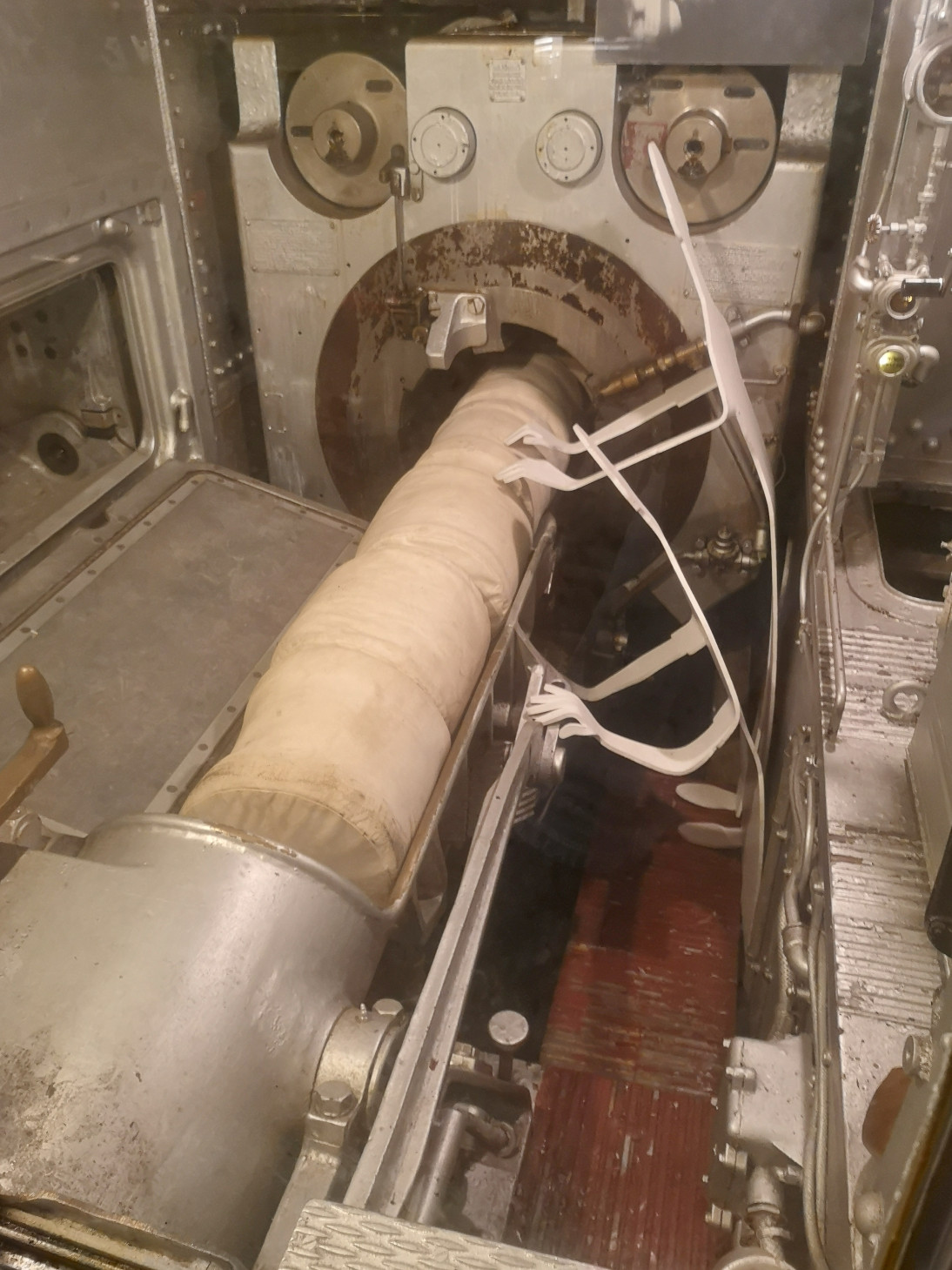
- Next was gun turret #2 where you could see the lower areas how the shells and gun powder bags were moved in place to fire the 16” guns and where they stored the shells and powder magazine.
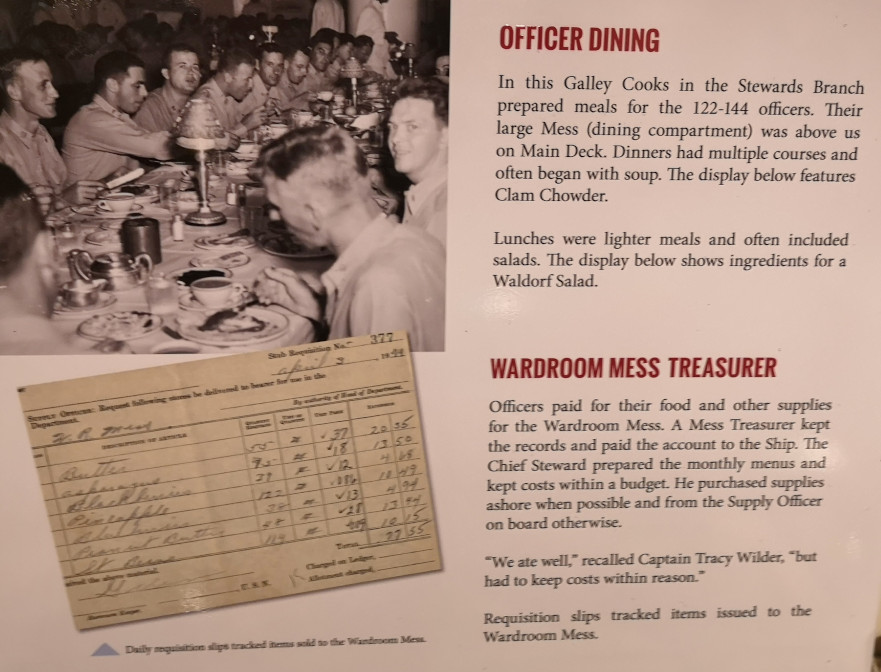
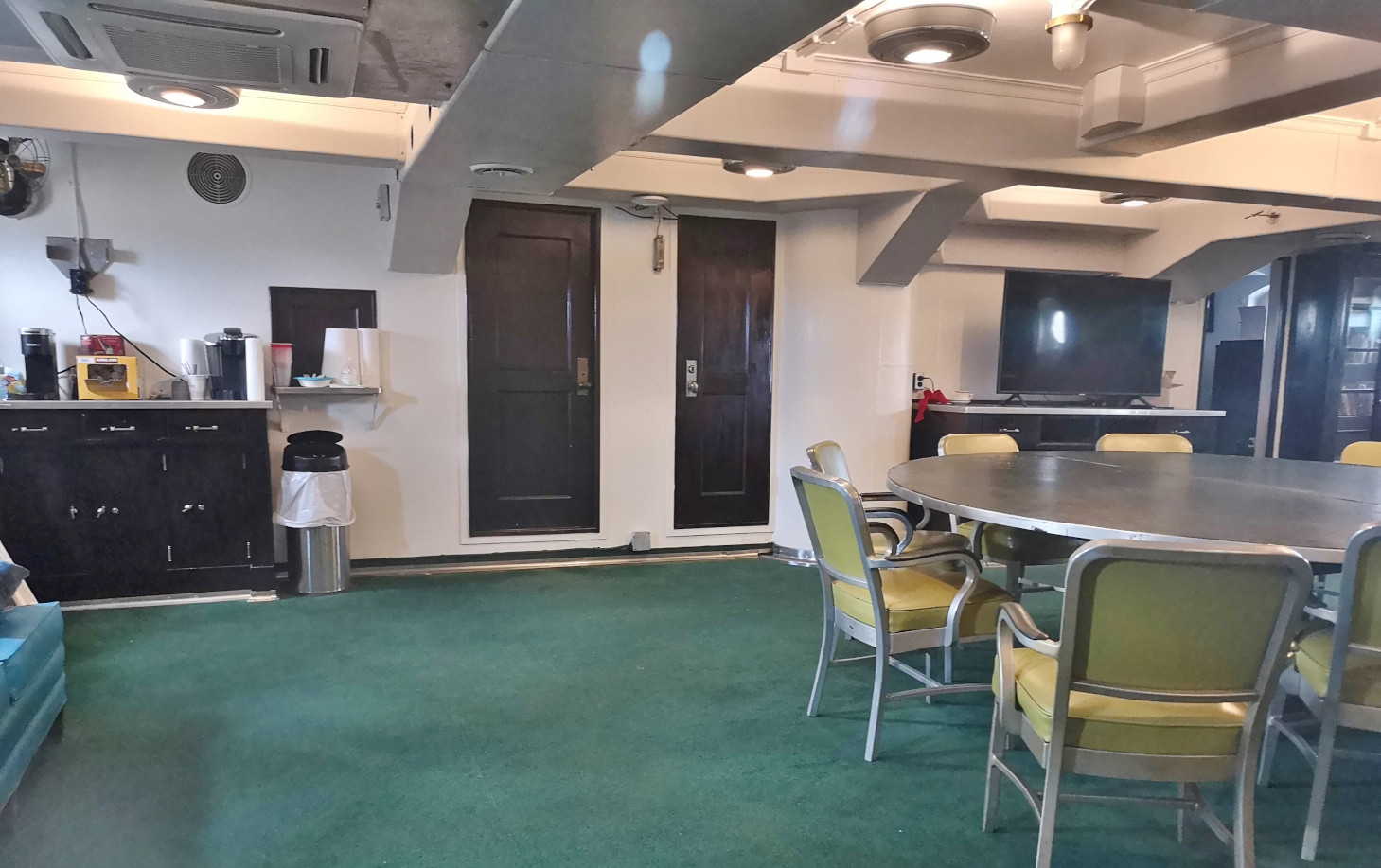
- We saw the Officer’s galley and mess and then the dentist chairs and the surgery room.
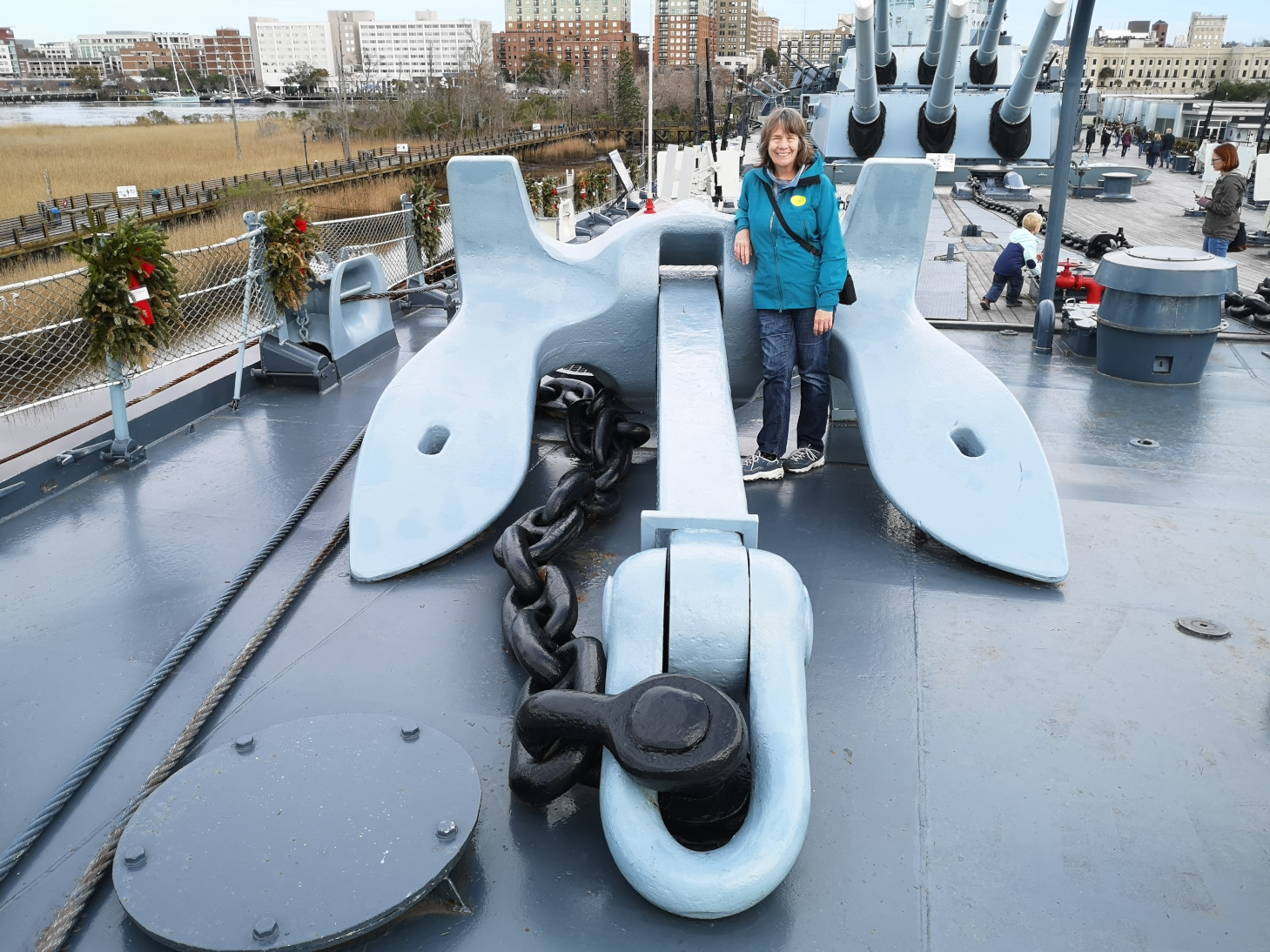
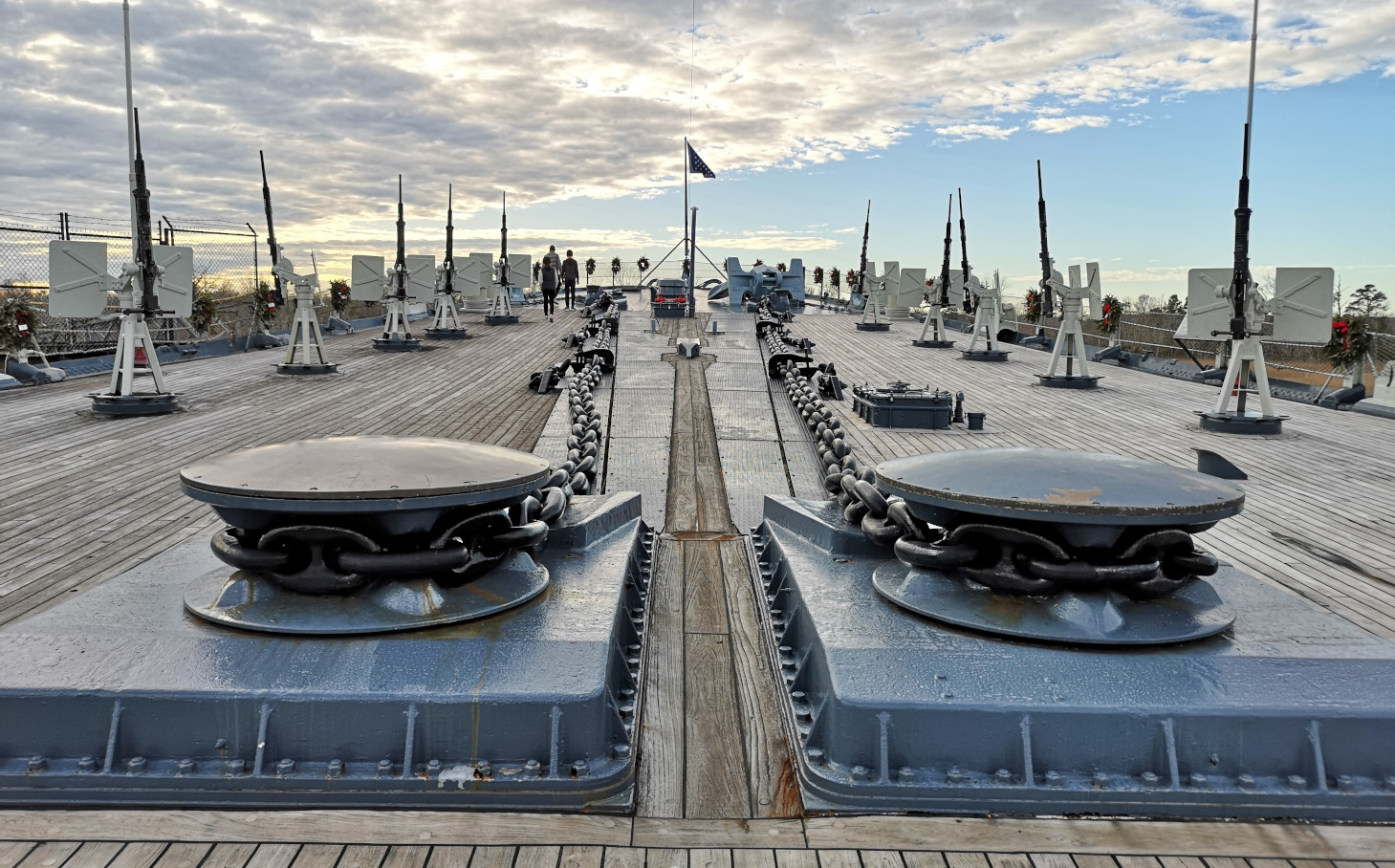
- Next onto the Officer’s stateroom (nothing fancy but they did have their own room with a door), the flag office, and then exited to the bow of the ship to see the 20 mm guns and the massive anchor as well as the tops of the 2 front 16” gun turrets.
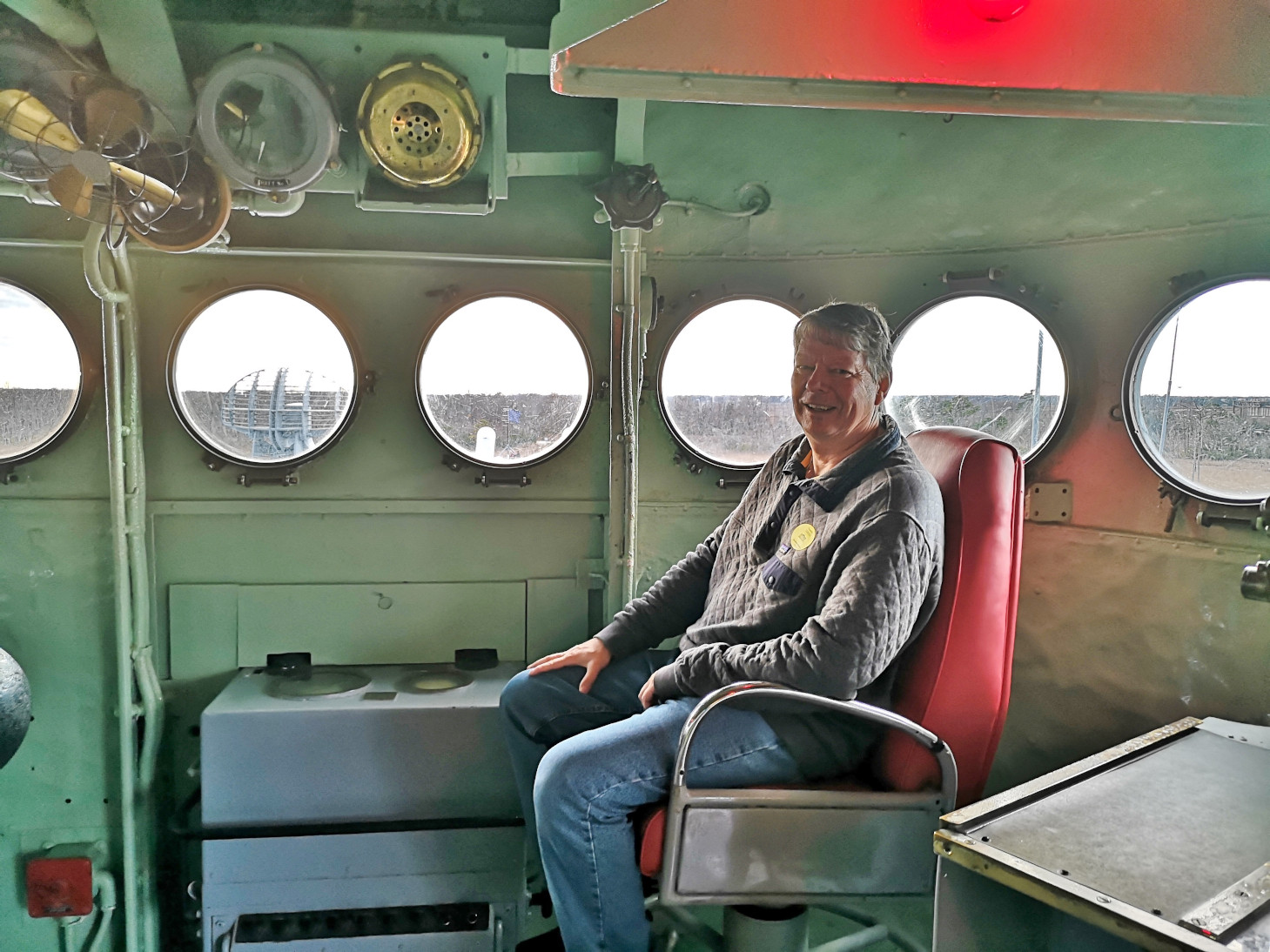
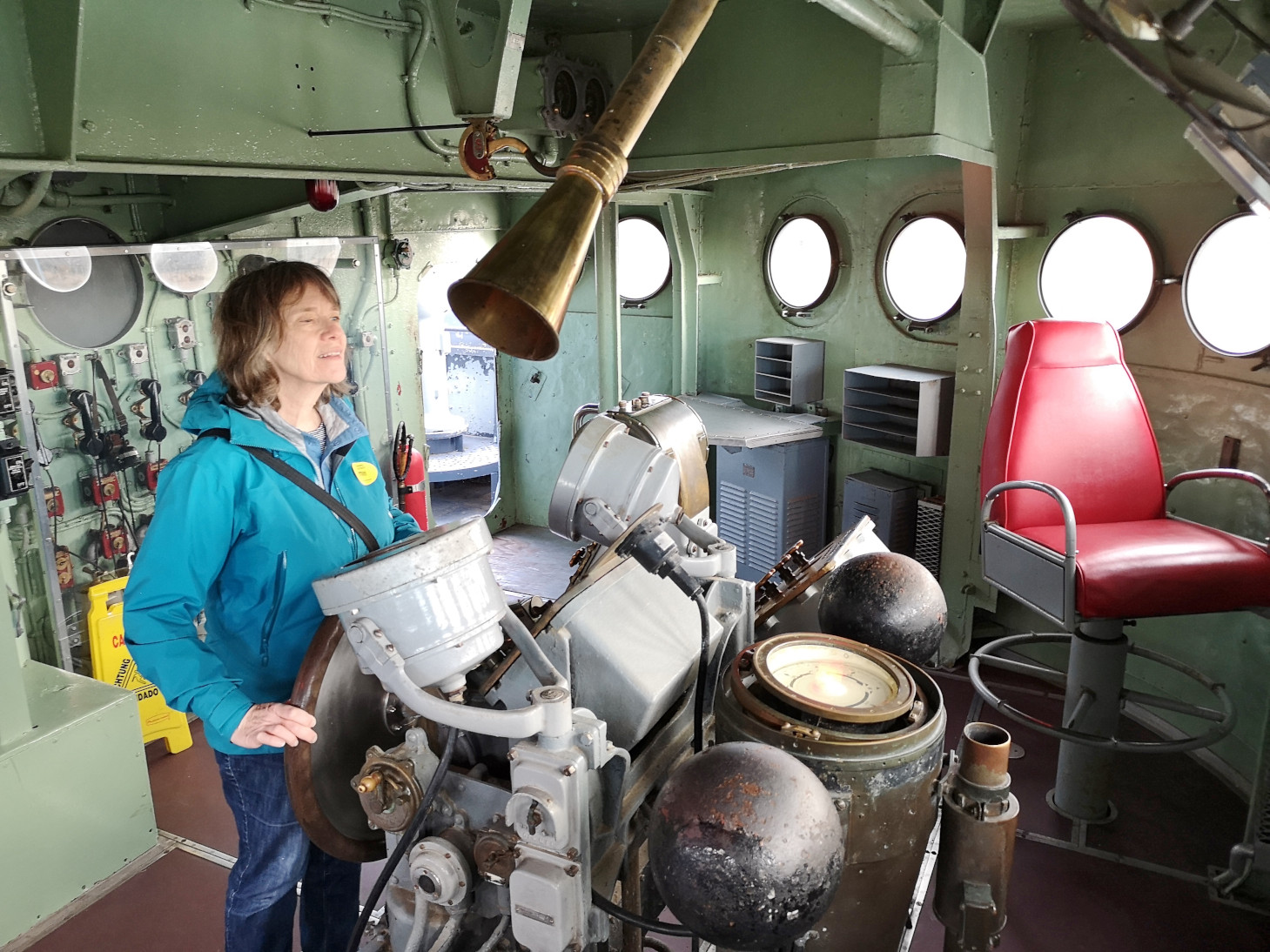
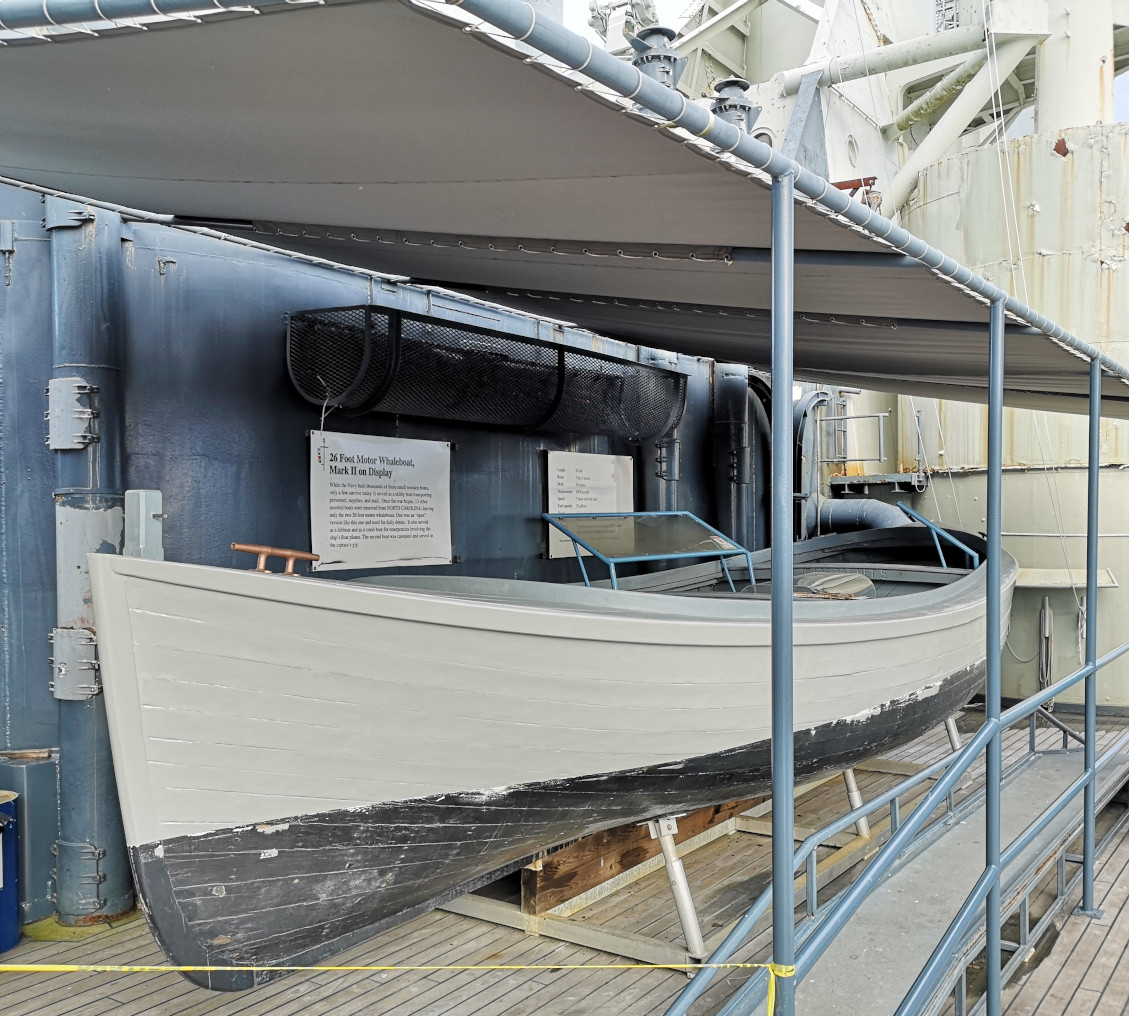
- Lastly, we saw the admiral’s cabin, the signal area, the captain’s sea cabin, the bridge, and the 26’ whaleboat used to bring supplies from merchant ships.
In the lower decks there were no portholes so it must have felt very claustrophobic living on board. After the tour we walked the exterior boardwalk that went all the way around the outside of the ship. If our timing had been different, it would have been great to take the private guided tour as it went into even more areas of the ship that weren’t normally open to the public. The ship was truly like a small village with all the amenities. During WWII this ship had been in the area of Truk where we had been scuba diving several years ago. The ship stayed at sea several months at a time, relying on merchant ships to deliver supplies and fuel.



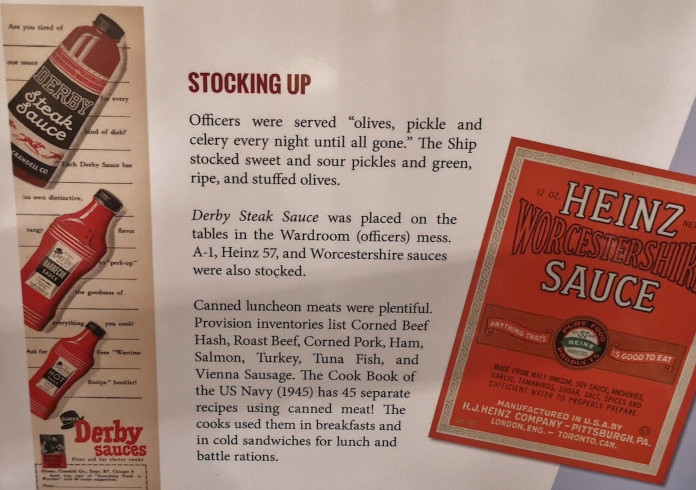
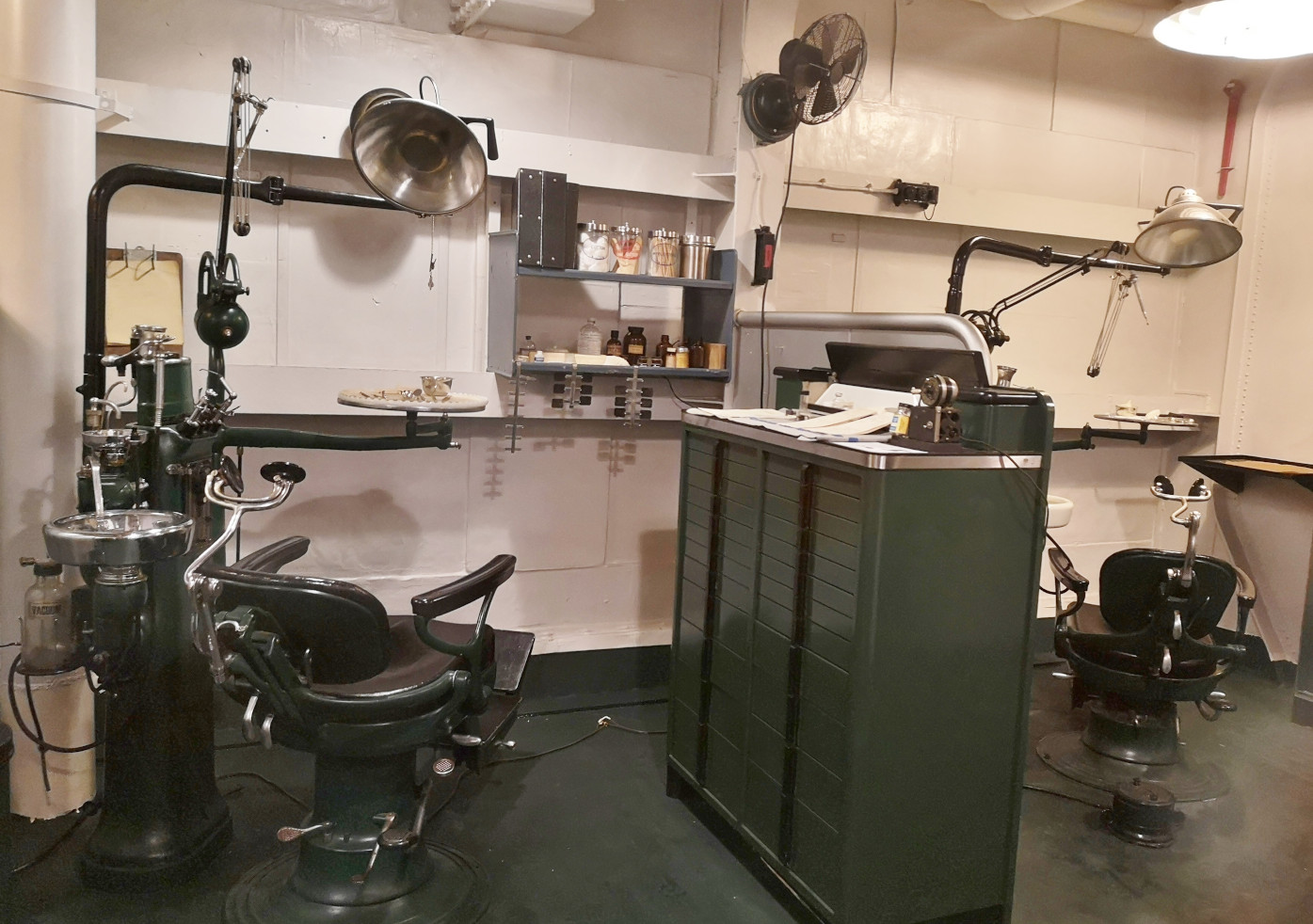
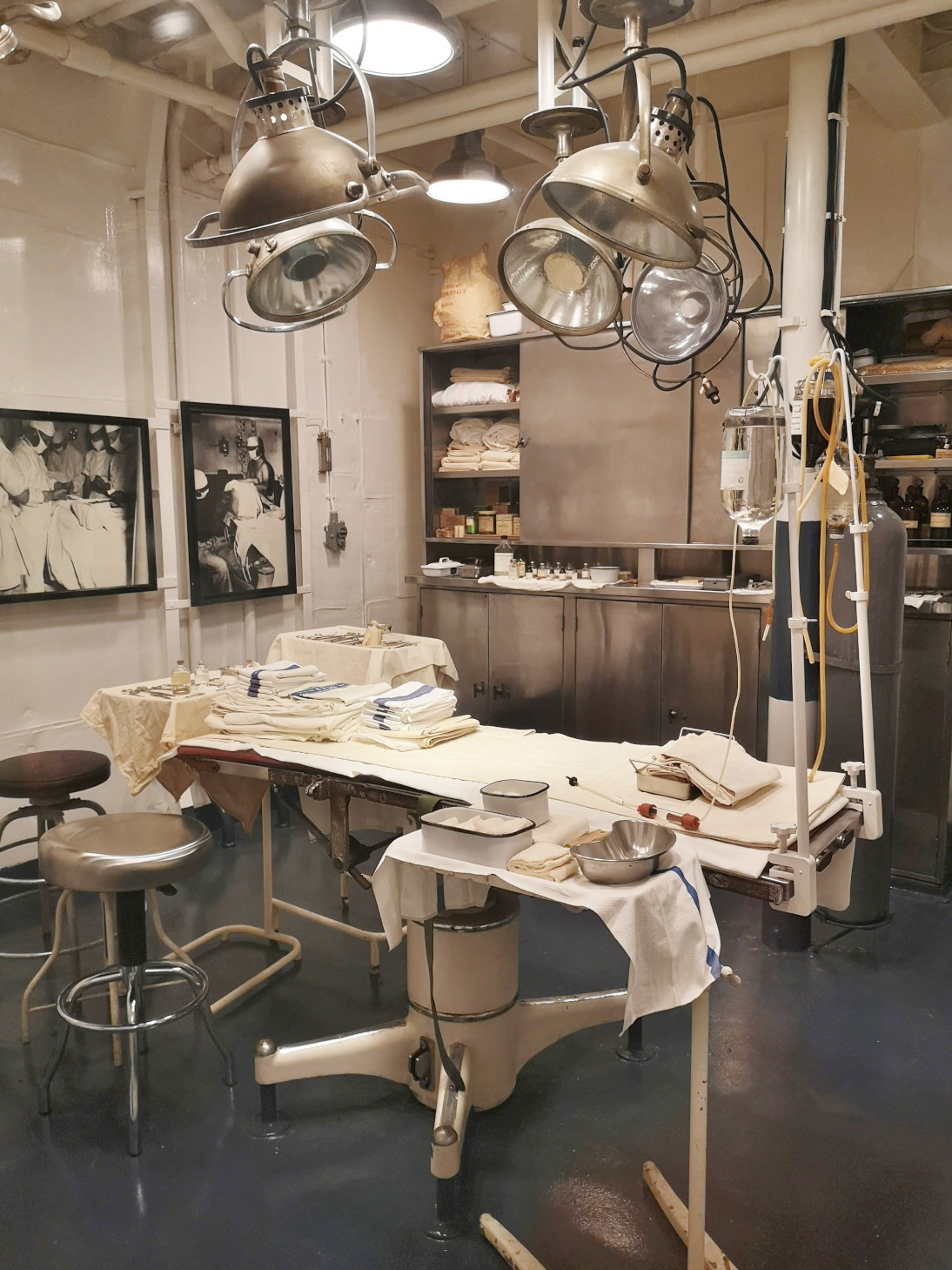
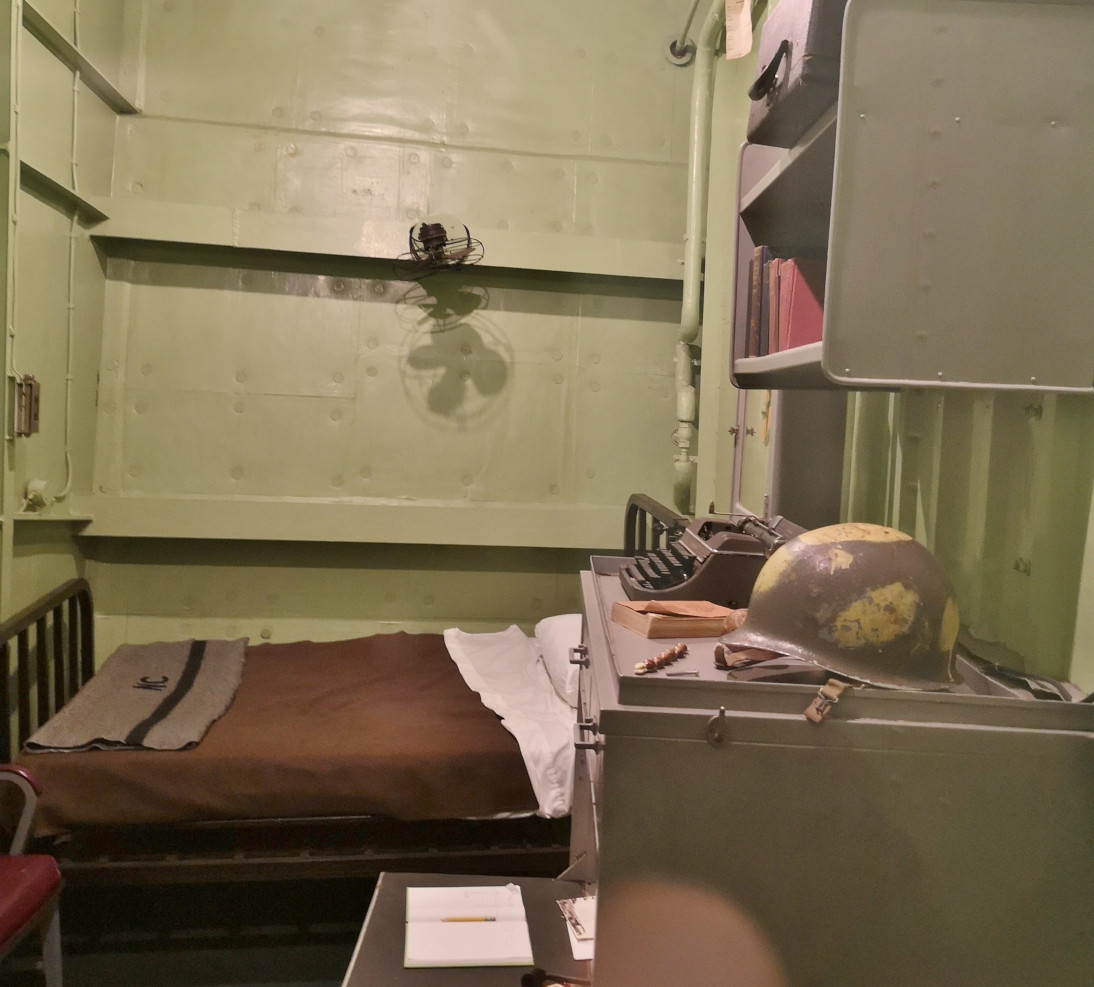

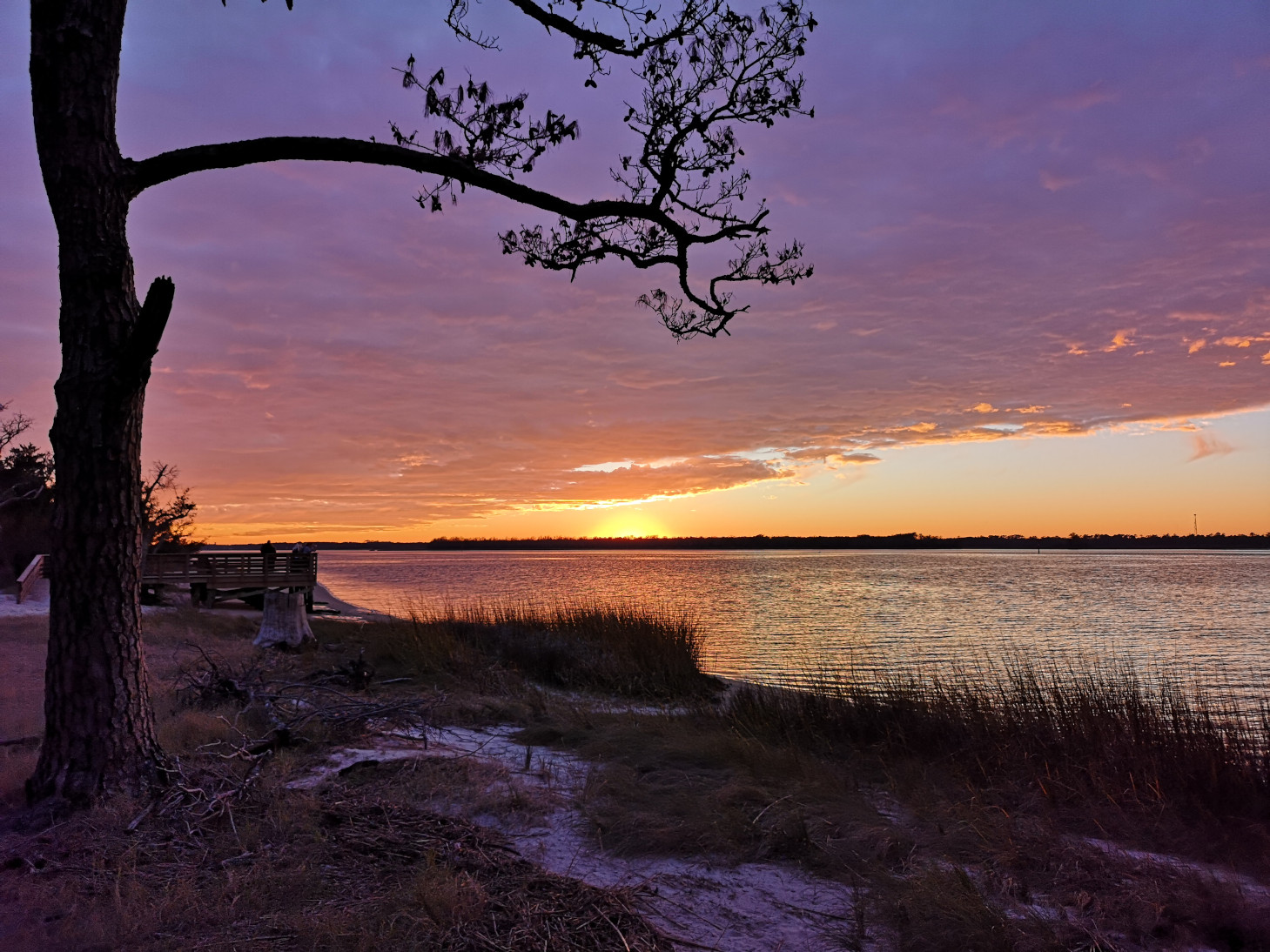
After the ship tour, we drove a bit further south to Carolina Beach SP where we had a great sunset while checking in. This park was relatively small so all we could get was a non-services site for 2 nights.
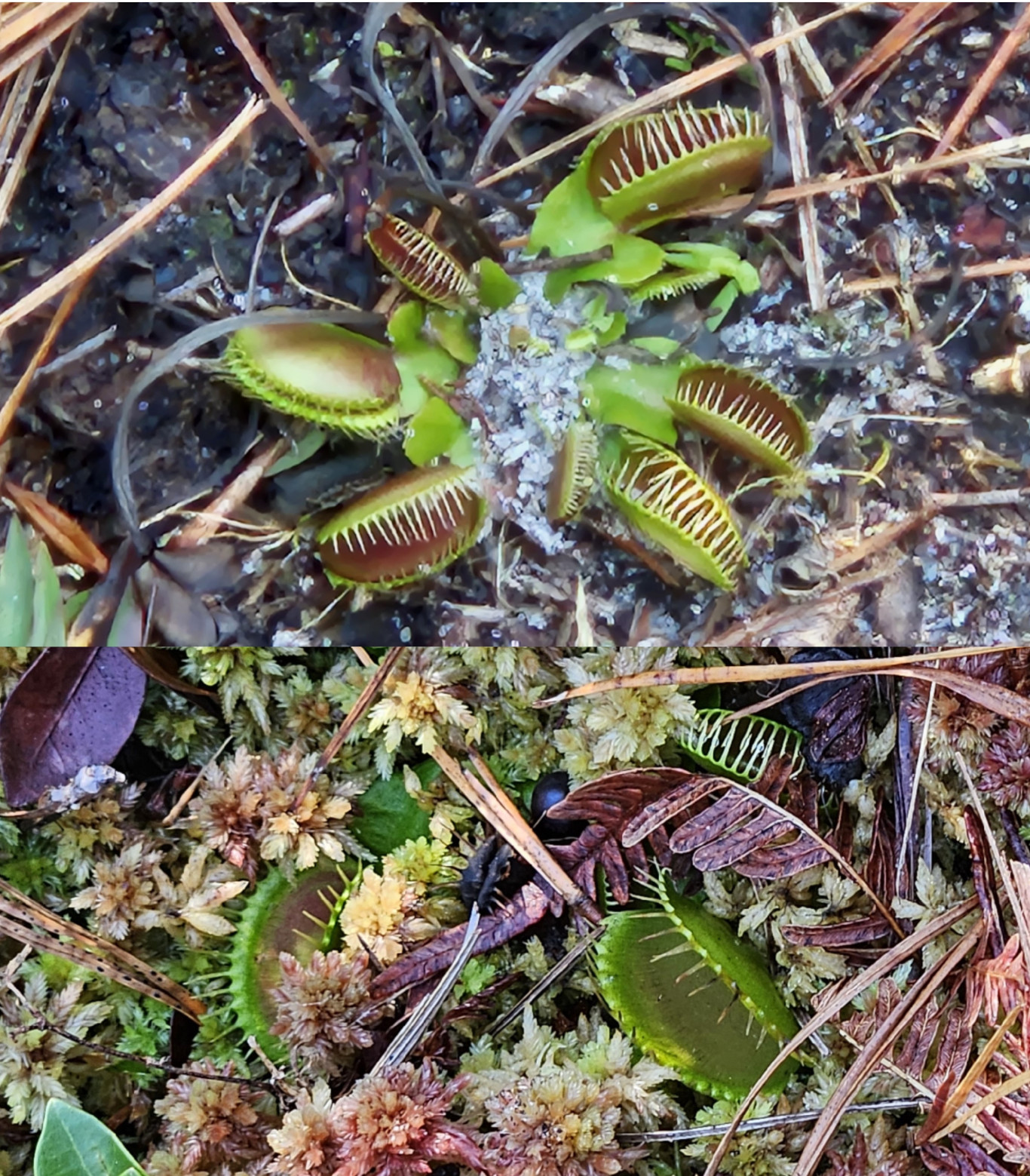
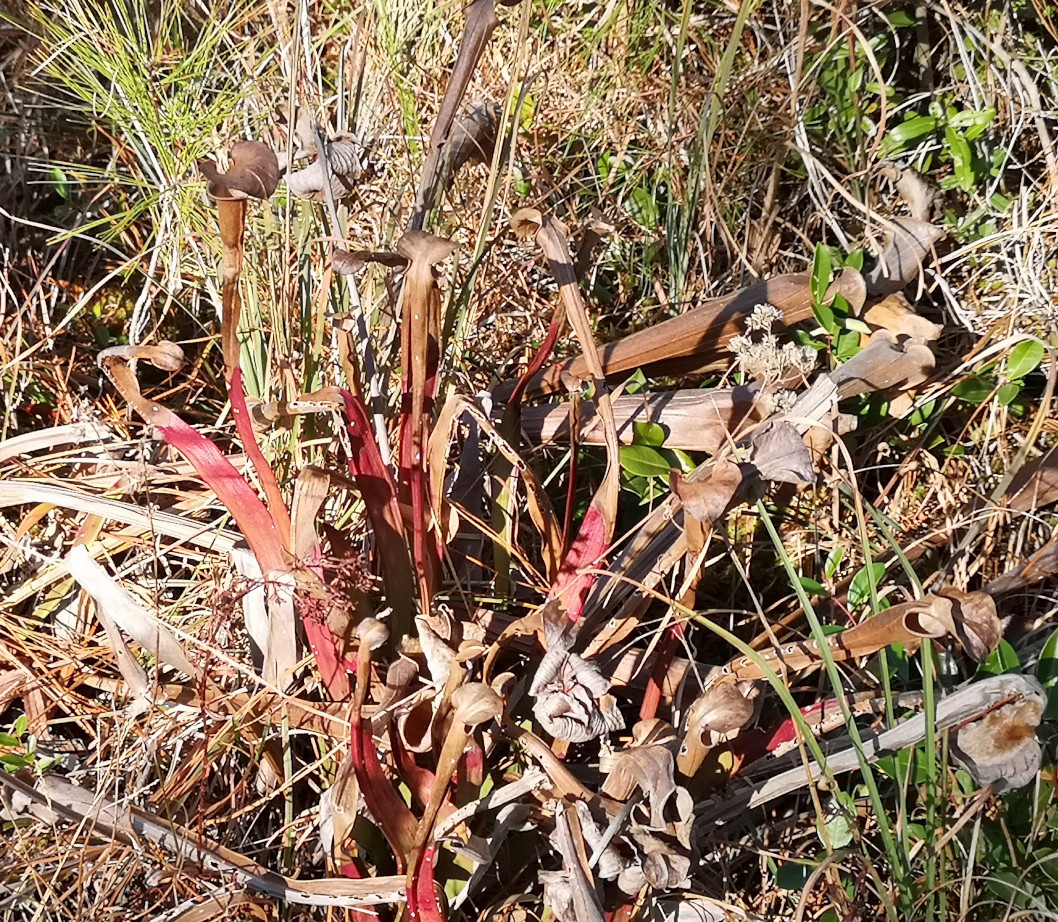
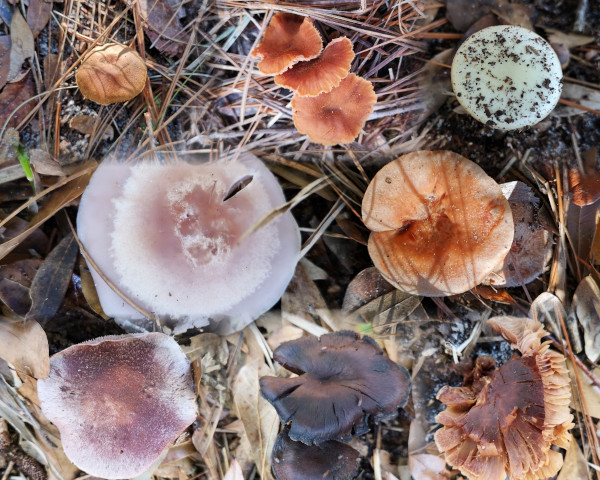
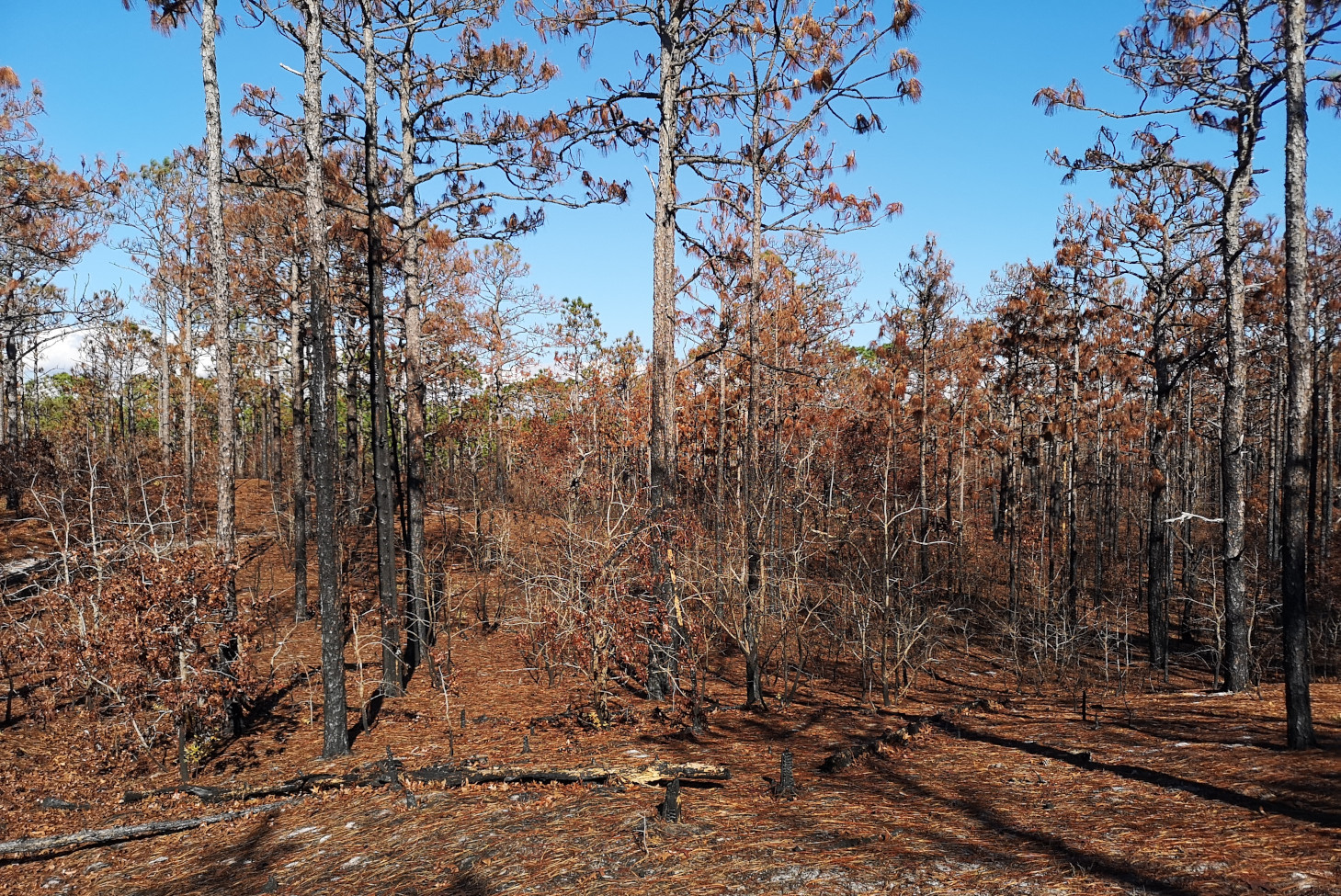
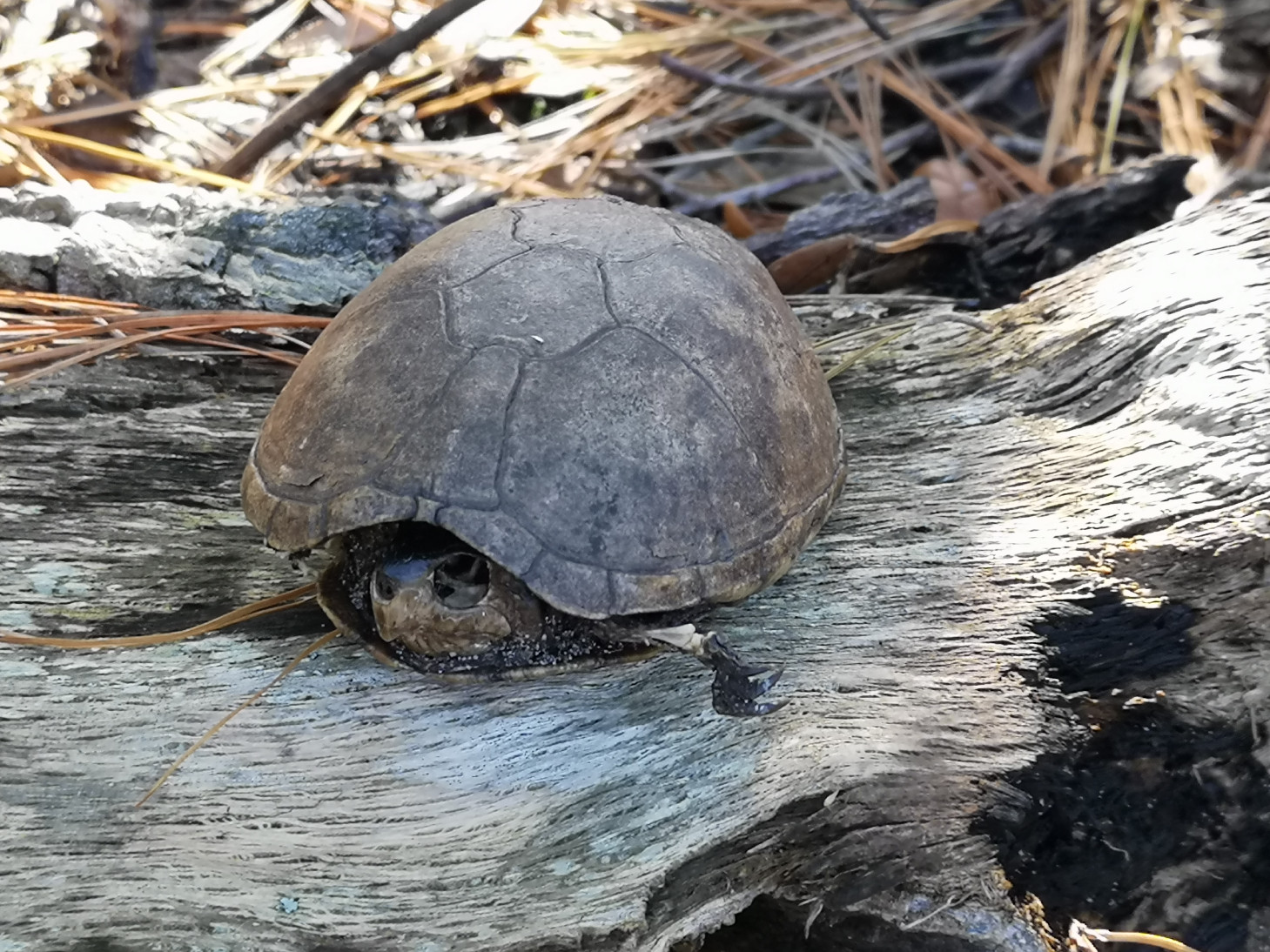
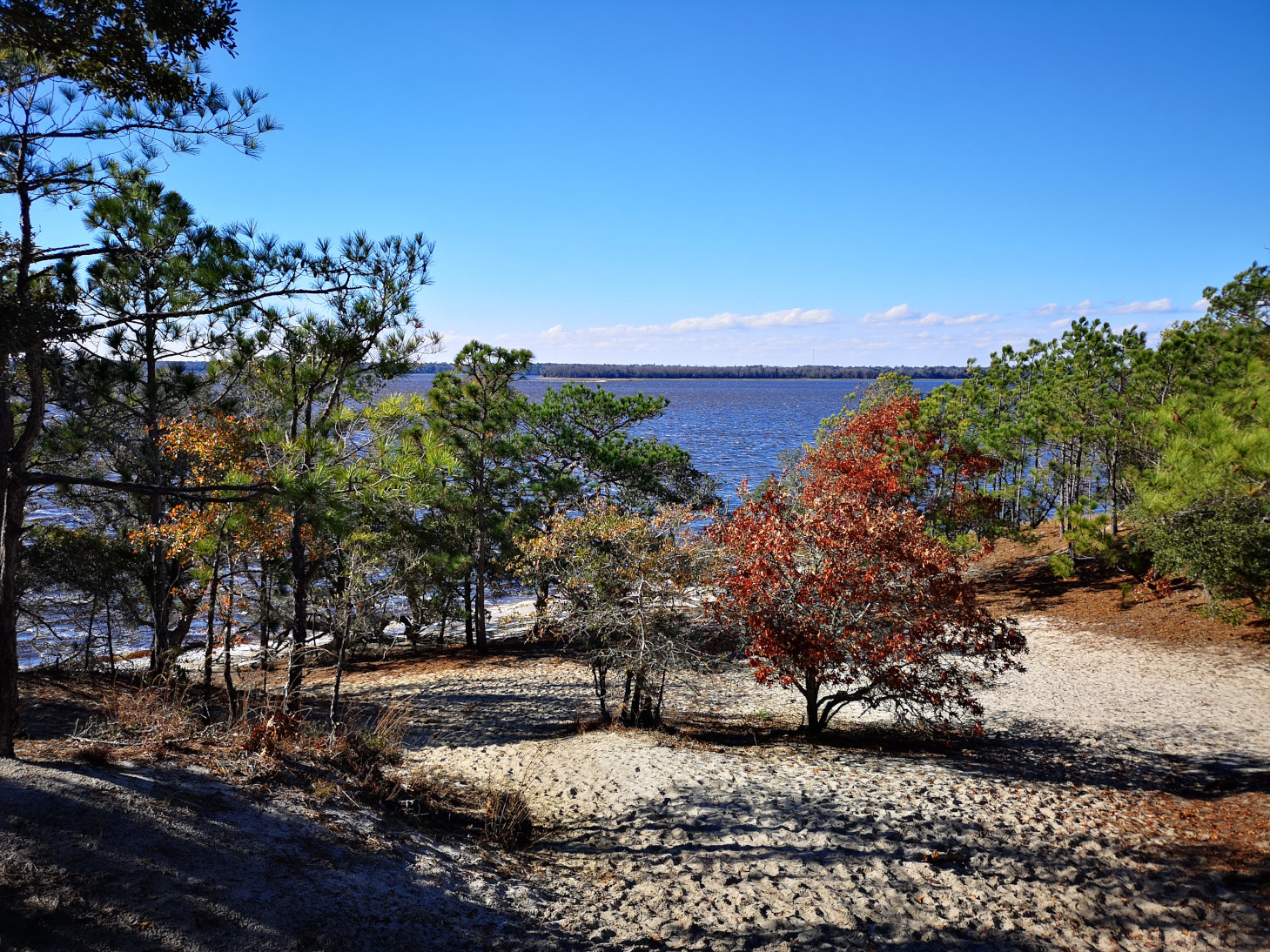
The camper across from us had been playing music the night before and then at 7 am blasted the Star-Spangled Banner and God Bess America!! Later that day, when we returned from our hike, the ranger was hauling away their belongings, so we assumed they had been kicked out and just left everything, tent included! We had a sunny day so decided to pack a lunch and do all the trails in the park (about 12 kms). When we connected to the Flytrap trail, we saw a bunch of people kneeling on a boardwalk looking at something, so we went over. They showed us that there were some Venus Flytrap plants visible but incredibly small so we were glad they showed them to us as we may have missed them. In the wild, Venus Flytrap plants only grow with a 75-mile radius of Wilmington NC. The plants are carnivorous and live in very acidic and nitrogen deficient soil, so to get their nutrients they attract insects and when they get caught in their opening, they eat them. In this area 4 other carnivorous plants also grow, pitcher plants, sundew, bladderwort, and butterwort. As we carried on through some of the dune/maritime forest trails we could see the controlled burn that they had recently done. We also saw lots of mushrooms and fungi throughout the forest. There were mile marker signs as a marathon was being held the following day. We had our lunch by the Cape Fear River and as we resumed the trail, we saw a box turtle but unfortunately it looked like he was a victim of the controlled burn😢 Next stop was the view from Sugarloaf dune which was a natural landmark along the Cape Fear River due to the crystal white sand. We eventually connected with the swamp trail and that returned us to the camp office where the marina was, quite an interesting hike day.



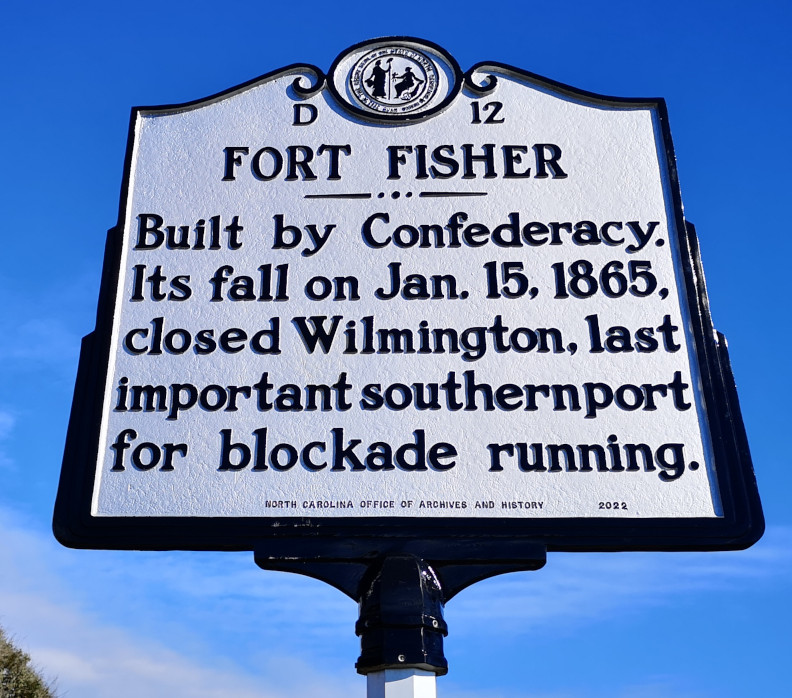
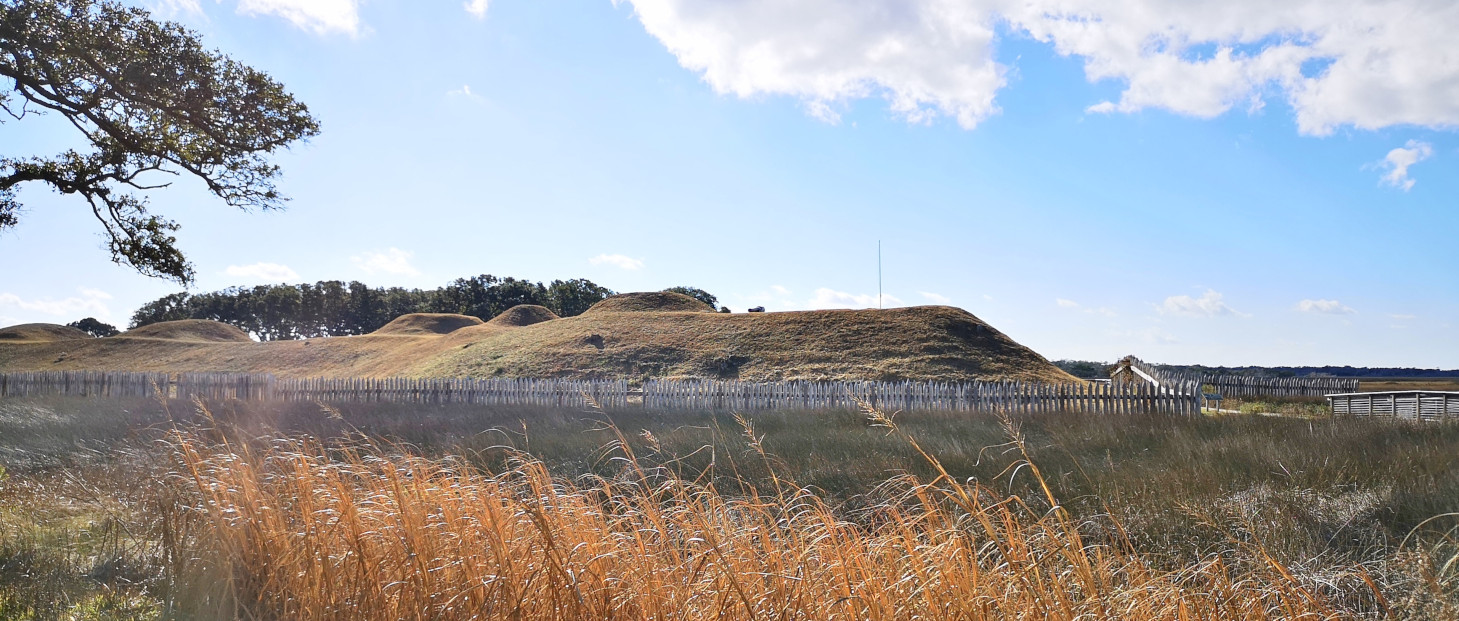
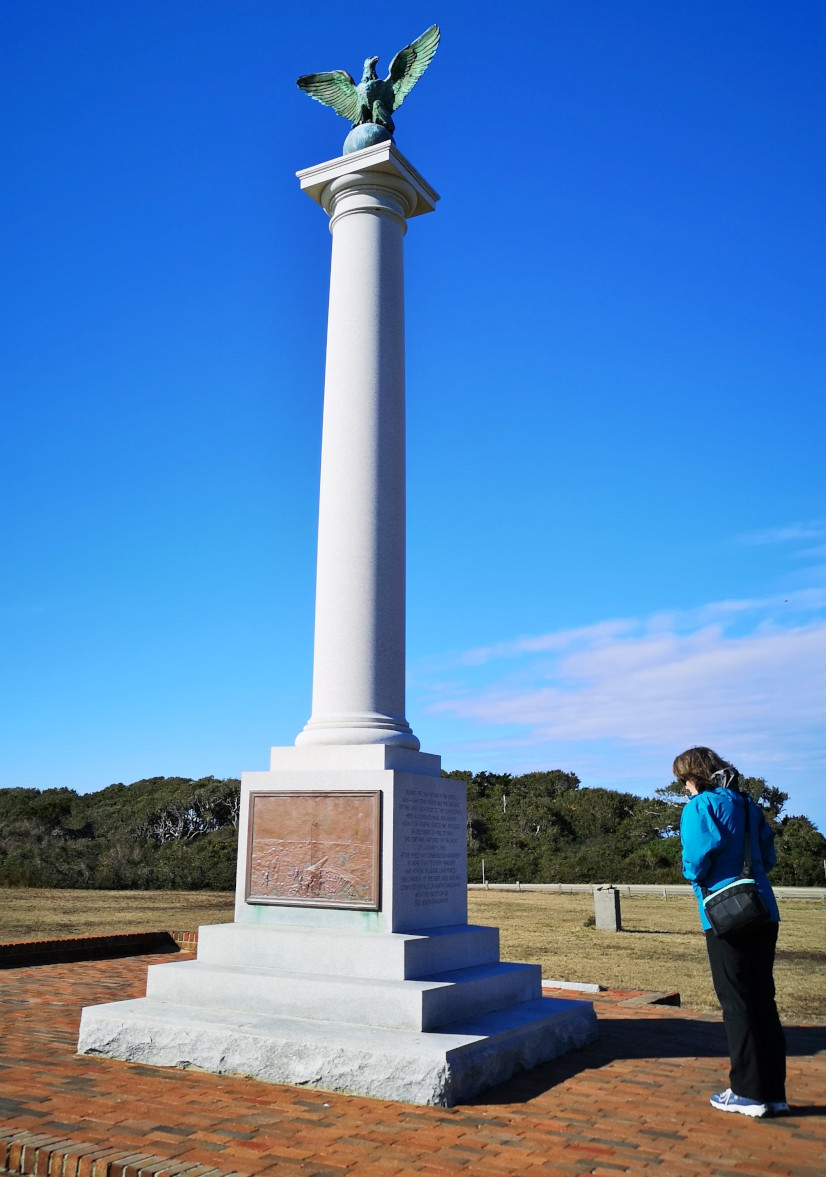
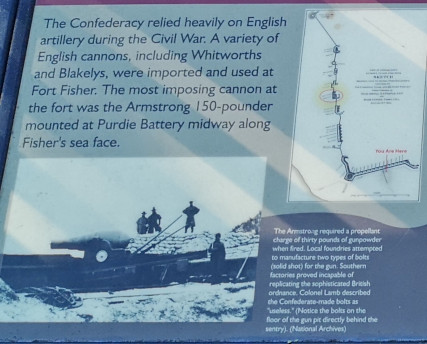
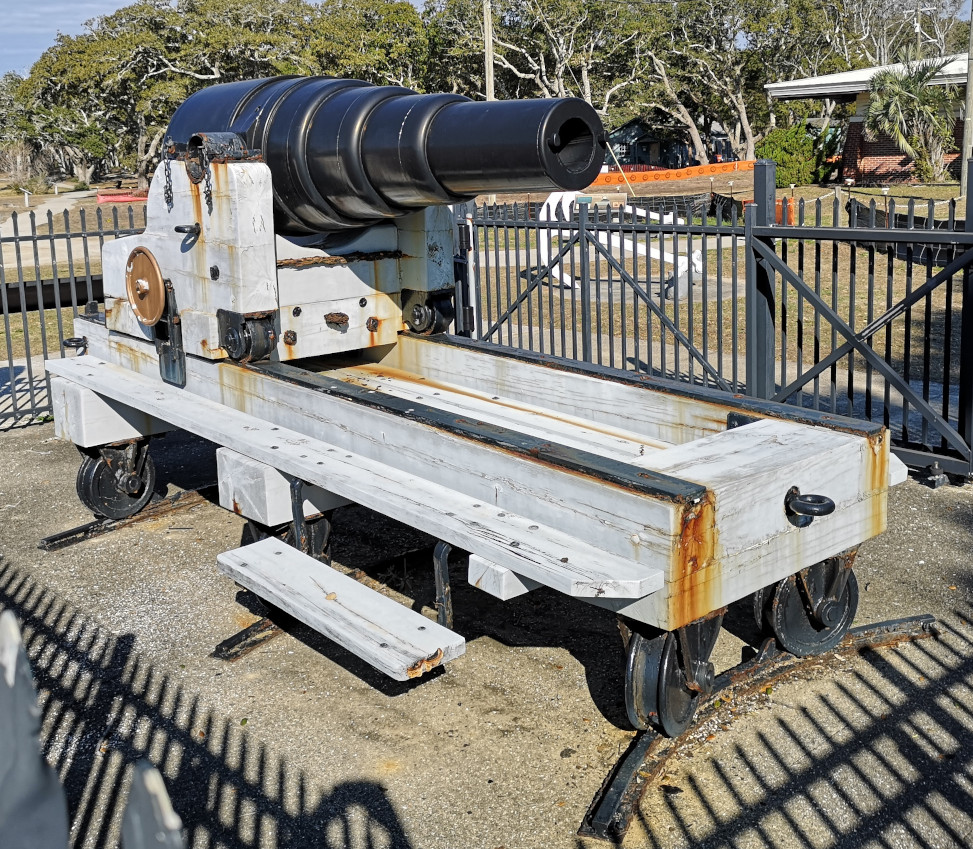
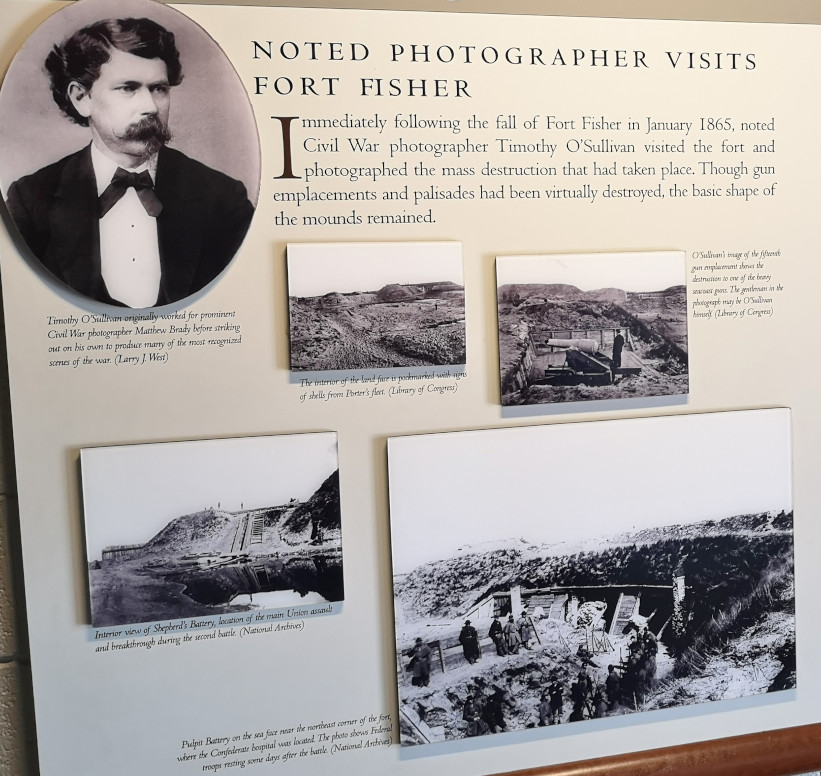
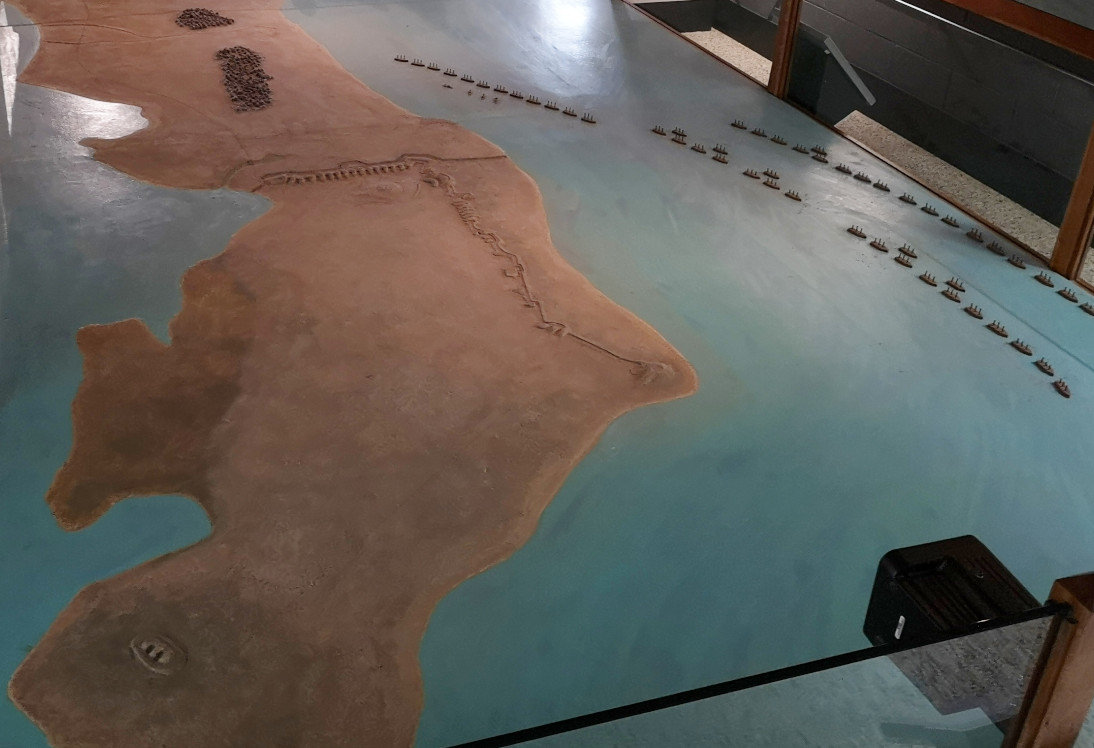
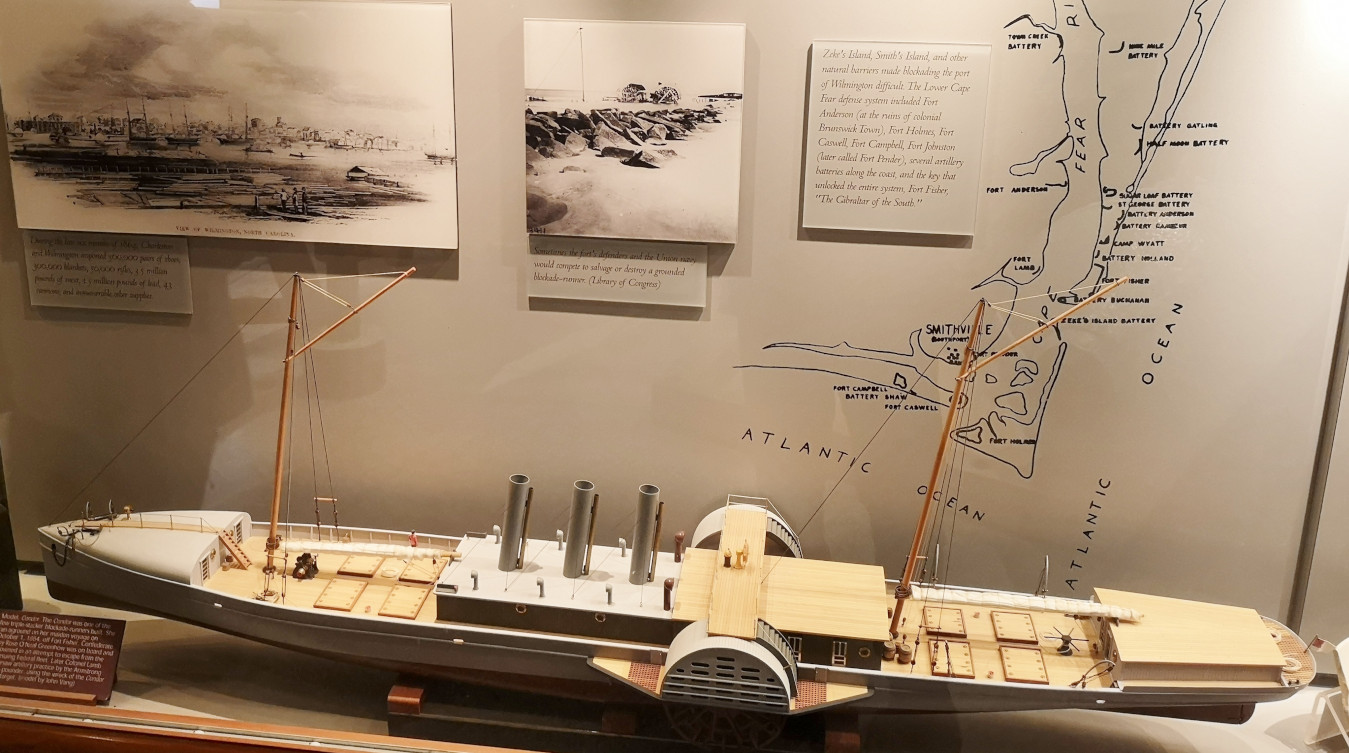
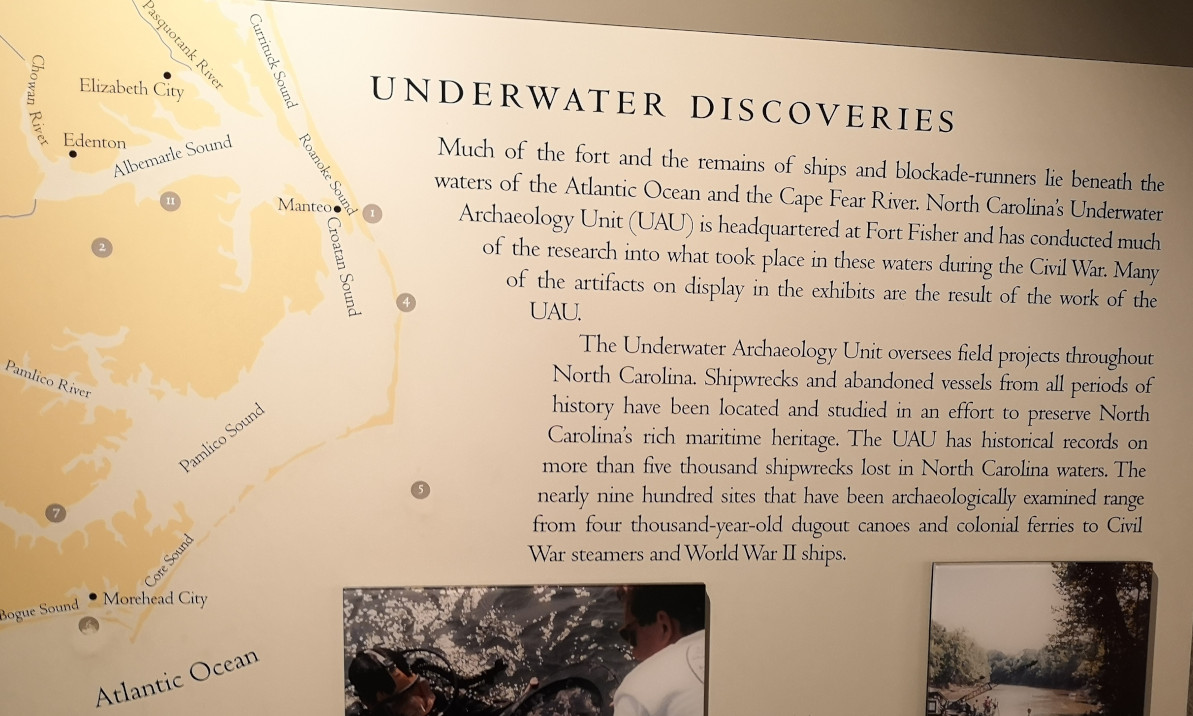
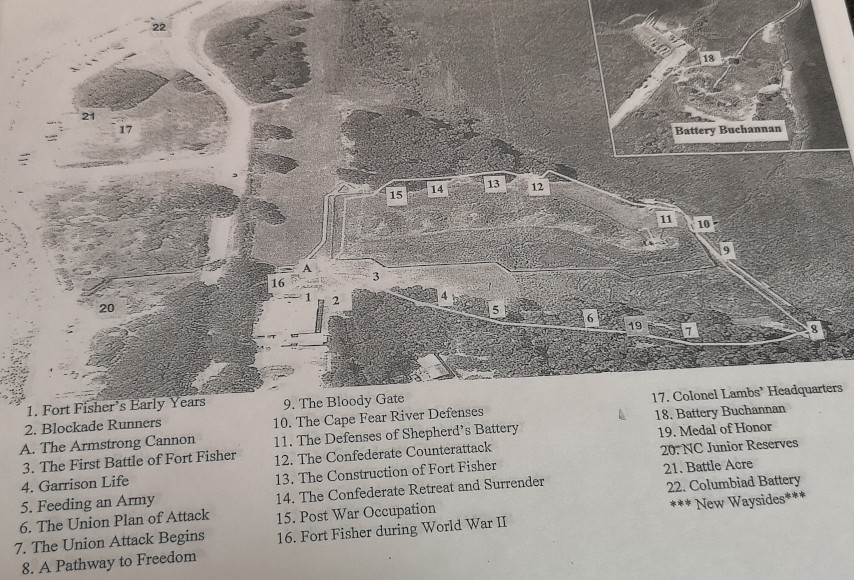
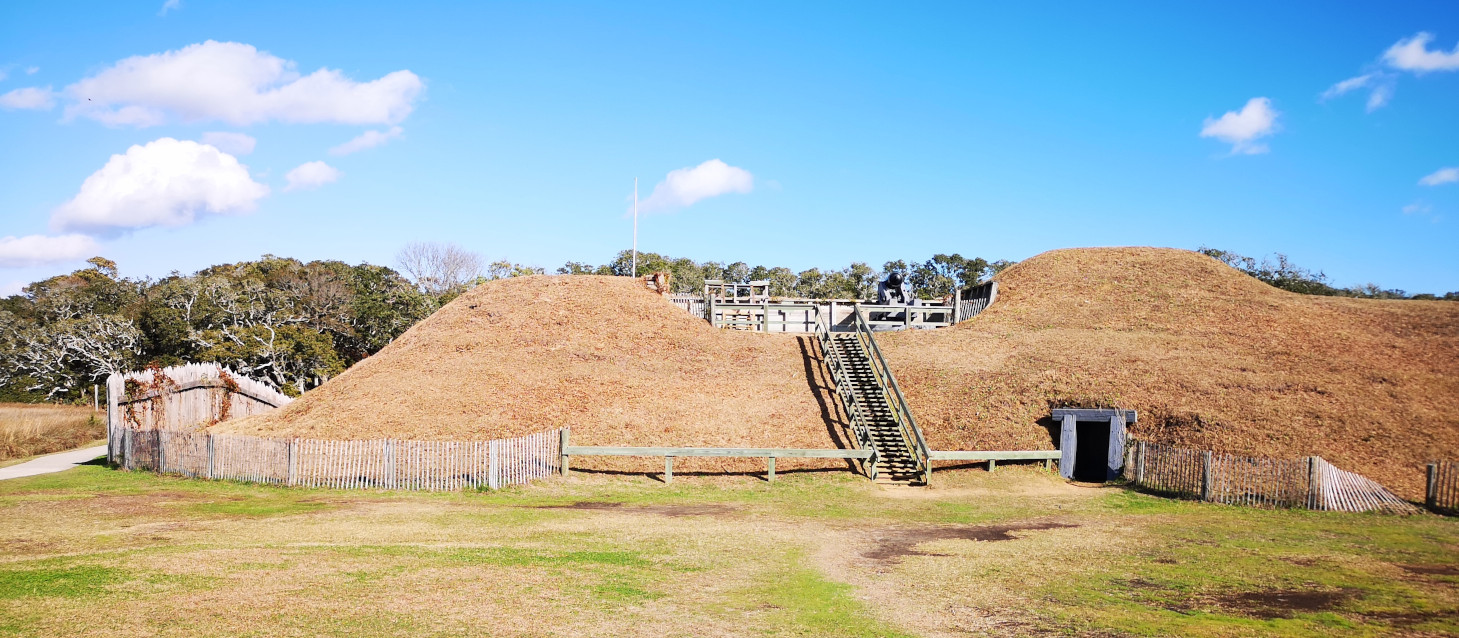
The next day we went to see Fort Fisher State Historic Site. This fort was the largest earthen coastal fortification in the Confederacy. Construction began in May of 1861 and completed in December of 1864. They built this fort to protect the Cape Fear River entrance to Wilmington (the largest city in NC at that time) harbour as this was where the blockade runner ships would transport Confederate supplies for the Civil War efforts. The two largest land-sea battles in history (up until that time) took place here on December 24-25 of 1864 and then on January 13-15 of 1865 resulting in the fall of the fort. The Union forces had 55 enemy warships off the coast and 10,000 land forces attacking the fort and the Confederates only had 1900 men in the fort. The fort was shaped like an upside-down L with the longer section along the coast and the shorter section protecting from land attacks. One of the most significant cannons was the Armstrong 150 pounder which was in Purdie Battery along the coast. They are building a brand-new visitor centre here to hold all the displays that detail the events from Fort Fisher. After looking around the displays we watched a video about the fort (here is a 42-minute YouTube video on the Fort: Fort Fisher). They have some excellent photos of the Fort after it fell as Civil War photographer Timothy O’Sullivan came to document the aftermath. After the visitor centre we quickly walked around the outside of the earthen fort as it was cold and windy. They are still doing excavations of the grounds and they also have an underwater archaeology team looking for artifacts at sea.
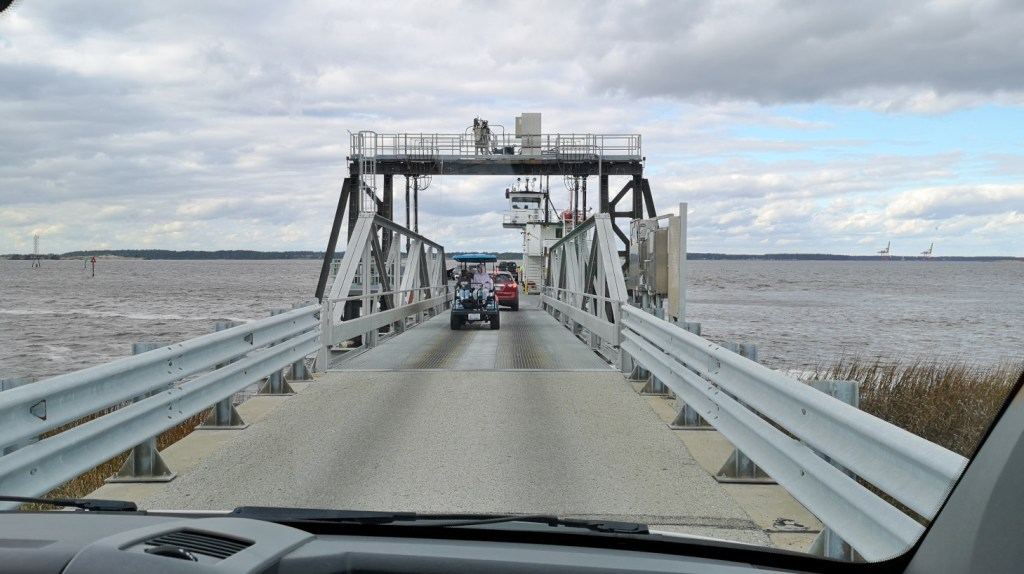
We saw there was a first come first serve ferry close to the Fort so we drove down to see if we could get on. No problem, we were on the water about 30 minutes later for the short ride across the Cape Fear River. This concludes our journey through North Carolina for now but we’ll likely come back through some of the more inland areas on our return trip.
Our next blog will start our journey in South Carolina.
 Joel & Sharon
The weather can be temperamental, but it’s great to visit without the crowds.
Your explanations are always very interesting!
What comfort for the crew, who slept 5 on the bunks. How many of them slept in the same room?
Good luck with the rest of your trip. I hope the weather will get better.
LikeLiked by 1 person
Thanks for your comments Patrick. There were multiple crew quarter rooms but our sign board said 146 men slept in that particular room. We’re hoping the weather will get better as we get further south but we just dodged a Tornado warning yesterday!! Luckily no damage in our area, just rain and wind.
LikeLike
I think the ski hostel I stayed at Big White B.C. felt like the crew sleeping quarter on this ship. LOL
LikeLiked by 1 person
😉
LikeLike
Despite the weather, you saw a lot and I loved the Venus fly trap photo – excellent!
LikeLiked by 1 person
Very cool plants and also lucky on our timing so the other people could point them out. They’re very tiny.
LikeLike